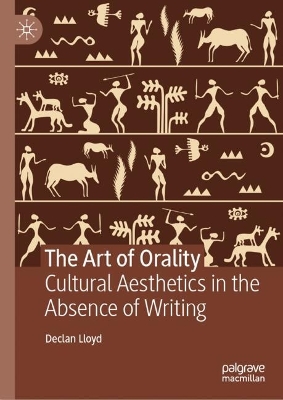
This book considers how the presence or absence of writing can influence a culture’s distinctive styles of visual art, proposing that many of the most profound developments in the art world are directly correlative with a cultural transition from orality to literacy (that is, from a culture which only has a spoken form of language, to one which has both a spoken and written form). The study contemplates how the ‘psychodynamics’ of orality might radically affect artistic expression, resulting in a range of visual traits which in many ways reflect the unique modes of speech within primary oral societies. Looking to the art of a diverse range of cultures and time periods – including Archaic Greek art, medieval art, African tribal art, child art, Outsider art and Modern art – The Art of Orality considers what new insights can be gleaned by bringing these styles into dialogue with orality and literacy studies.
Chapter 1: Introduction: Unifying Orality, Literacy and Art.
Chapter 2: The
Great Awakening: The Greek Revolution in Art and Orality.
Chapter 3: A
Curious Mixture: Medieval Art and the Question of Orality.
Chapter 4: The
Style Most Perfect: Tribal Art and Orality.
Chapter 5: An Enviable
Freedom: Child Art and Orality.
Chapter 6: A Pure and Elementary State:
Outsider Art and Orality.
Chapter 7: The Kingdom Where Each of Us Reigns:
Julian Jaynes, Art and Orality.
Chapter 8: Primordially Eternal: Modern
Art and Orality.
Chapter 9: Conclusion: The Future of Art and Orality.
Declan Lloyd has taught across a range of subjects at Lancaster University, UK, including within the art, history and literature departments. Other published works include Authors and Art Movements of the Twentieth Century: Painterly Poetics (2022), Digressions in Deep Time: Ecocritical Approaches to Literature and the Arts (2024. Editor, with Warren Mortimer) and Apocalyptic Ecolinguistics: Language, Landscape and Ecoanxiety in an Age of Ecological Crisis (2026. Editor, with Emil Tangham Hazelhurst). He has also written for The Guardian and The Conversation.

 Lisainfo e-raamatute kohta