Muutke küpsiste eelistusi

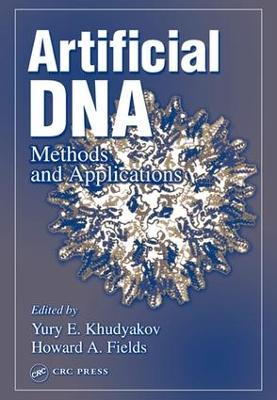
E-raamat: Artificial DNA: Methods and Applications

Edited by , Edited by
  • Formaat: PDF+DRM
  • Ilmumisaeg: 25-Sep-2002
  • Kirjastus: CRC Press Inc
  • Keel: eng
  • ISBN-13: 9781420040166
  • Formaat - PDF+DRM
  • Hind: 88,39 €*
  • * hind on lõplik, st. muud allahindlused enam ei rakendu
  • Lisa ostukorvi
  • Lisa soovinimekirja
  • See e-raamat on mõeldud ainult isiklikuks kasutamiseks. E-raamatuid ei saa tagastada.
  • Formaat: PDF+DRM
  • Ilmumisaeg: 25-Sep-2002
  • Kirjastus: CRC Press Inc
  • Keel: eng
  • ISBN-13: 9781420040166

DRM piirangud

  • Kopeerimine (copy/paste):

    ei ole lubatud

  • Printimine:

    ei ole lubatud

  • Kasutamine:

    Digitaalõiguste kaitse (DRM)
    Kirjastus on väljastanud selle e-raamatu krüpteeritud kujul, mis tähendab, et selle lugemiseks peate installeerima spetsiaalse tarkvara. Samuti peate looma endale  Adobe ID Rohkem infot siin. E-raamatut saab lugeda 1 kasutaja ning alla laadida kuni 6'de seadmesse (kõik autoriseeritud sama Adobe ID-ga).

    Vajalik tarkvara
    Mobiilsetes seadmetes (telefon või tahvelarvuti) lugemiseks peate installeerima selle tasuta rakenduse: PocketBook Reader (iOS / Android)

    PC või Mac seadmes lugemiseks peate installima Adobe Digital Editionsi (Seeon tasuta rakendus spetsiaalselt e-raamatute lugemiseks. Seda ei tohi segamini ajada Adober Reader'iga, mis tõenäoliselt on juba teie arvutisse installeeritud )

    Seda e-raamatut ei saa lugeda Amazon Kindle's. 

Khudyakov and Fields (both of the National Center for Infectious Diseases) present 11 contributions that describe how to engineer DNA proteins and suggest how the engineering of artificial DNA can be applied to manufacture vaccines, antigens, antibodies, and other medical materials. Specific topics include moves towards automation in the chemical synthesis of oligonucleotides, artificial hybridization probes, using peptides to mimic DNA, artificial nucleic acids and genome profiling, site-directed mutagenesis, mimotypes, and artificial genes for chimeric virus-like particles. Annotation c. Book News, Inc., Portland, OR (booknews.com)

Combining elements of biochemistry, molecular biology, and immunology, artificial DNA can be employed in a number of scientific disciplines. Some of the varied applications include site-specific mutagenesis, hybridization, amplification, protein engineering, anti-sense technology, DNA vaccines, protein vaccines, recombinant antibodies, screening for genetic and pathogenic diseases, development of materials with new biochemical and structural properties, and many more.

Artificial DNA: Methods and Applications introduces the concept of artificial DNA that has been rationally designed and explains how it may be exploited in order to develop products that will achieve your intended purpose. The first part of the book covers methods of oligonucleotide synthesis and direct applications of synthetic DNA. The second part describes methods of gene assembly from synthetic oligonucleotides and applications of synthetic genes. The authors also discuss the different trends and future developments within each application area .

With state-of-the art research, the contributing authors describe how to engineer proteins using rational and semi-rational design to exhibit the desired traits and detail the various amplification reactions and hybridization techniques for modeling evolution and for use in basic research. The only text devoted to this subject, Artificial DNA offers a comprehensive review that allows you to understand the strategy, design, and applications of synthetic oligonucleotides.
Chemical Synthesis of Oligonucleotides: From Dream to Automation, Richard T. Pon
Artificial Hybridization Probes, Salvatore A.E. Marras
Peptide Nucleic Acid (PNA): A DNA Mimic with a Pseudopeptide Backbone, Frederik Beck and Peter E. Nielsen
Synthetic DNA Used in Amplification Reactions, Lisa S. Kelly
Artificial Nucleic Acids and Genomic Profiling, Lilia M. Ganova-Raeva
Site-Directed Mutagenesis, John I. Glass and Beverly A. Heinz
Mimotopes, Renu Tuteja
Artificial Genes for Chimeric Virus-like Particles, Paul Pumpens and Elmar Grens
DNA Vaccines, Sang Won Han, Jane Zveiter de Moraes, CTlio Lopes Silva, Roger Chammas,and Muaurfcio Martins Rodrfgues
Towards Designer Diagnostic Antigens, Joy Chih-Wei Chang
Recombinant Antibodies, Ramon Montana and Flor H. Pujol


Yury E. Khudyakov, Howard A. Fields