The book
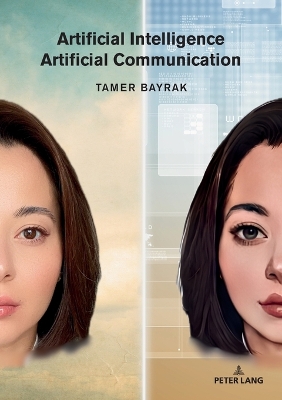
Artificial Intelligence Artificial Communication delves deeply into the development of artificial intelligence technology and its applications in language processing. It focuses particularly on how chatbots, virtual assistants, and social media algorithms are transforming human communication. The book combines theoretical approaches with practical examples, offering a comprehensive perspective on the ethical dimensions, societal impacts, and future trends of AI. Serving as a guide for researchers and students interested in understanding the intersection between communication sciences and AI, this work emphasizes the profound influence of AI on modern media and interaction while also proposing a model for effective prompt generation.
The book Artificial Intelligence Artificial Communication deeply examines artificial intelligence technology, particularly through the structure of natural language processing, and provides an extensive literature review.
List of Figures - Preface - Introduction - 1 Foundations of Artificial
Intelligence - 2 Artificial Communication Tools and Technologies - 3 Ethical
and Societal Impacts - 4 The Use of Artificial Intelligence in Communication
Sciences - Conclusion and General Evaluation - Bibliography
Tamer Bayrak earned his Ph.D. in Public Relations and Publicity at Istanbul Aydn Universitys Institute of Social Sciences and worked at the Faculty of Communication in the New Media and Communication Department as the department head after his doctorate. He founded the universitys Virtual Reality Laboratory. He has authored several books and directed short films. He conducts research in areas such as virtual reality technologies, brainwave analysis, eye-tracking techniques, digital games, technological determinism, surveillance societies, research methods, media literacy, technological obesity, gamification, and artificial intelligence and communication. He is authorized by YÖK (Council of Higher Education) as an evaluator for LEDAK (Communication Education Evaluation and Accreditation Board). He is the editor of the Journal of Communication Science Researches and the co-founder of the AI Labs Information Software and Management Consulting Services company.

 Lisainfo e-raamatute kohta