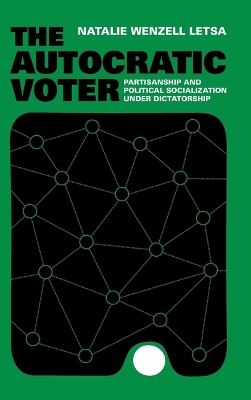
In The Autocratic Voter, Natalie Wenzell Letsa explores the motivations behind why citizens in electoral autocracies choose to participate in politics and support political parties. With electoral autocracies becoming the most common type of regime in the modern world, Letsa challenges the dominant materialist framework for understanding political behavior and presents an alternative view of partisanship as a social identity. Her book argues that despite the irrationality and obstacles to participating in autocratic politics, people are socialized into becoming partisans by their partisan friends and family. This socialization process has a cascading effect that can either facilitate support for regime change and democracy or sustain the status quo. By delving into the social identity of partisanship, The Autocratic Voter offers a new perspective on political behavior in electoral autocracies that has the potential to shape the future of these regimes.
Provides students of authoritarian politics and African studies insight into the political lives of ordinary citizens. Uses a mixed-methods approach and original data to understand why people get involved in politics, how and why they persuade others to join them, and what impact this has on politics in autocratic regimes.
Arvustused
'In The Autocratic Voter, Natalie Letsa offers a compelling, fresh perspective on political engagement under dictatorship. Challenging dominant views of political behavior rooted in material considerations, Letsa explores how partisanship in electoral autocracies emerges as a powerful social identity shaped by family and community networks. Drawing on rich qualitative and survey data from Cameroon, Letsa provides an insightful framework to understand political engagement's social and geographic basis in settings where electoral participation rarely brings change. It is an important read for those interested in the dynamics of partisanship in authoritarian politics and the social forces that sustain and undermine them. Guy Grossman, University of Pennsylvania
Muu info
Provides a social identity framework for understanding why ordinary people in autocratic regimes choose to get involved in politics.
1. Partisanship in electoral autocracies;
2. Social networks, political
geography, and partisan socialization;
3. The case of Cameroon;
4. Opposition
and ruling party partisanship as social identities;
5. Pathways to
partisanship;
6. Political influence within networks;
7. Processes of
political socialization;
8. The political geography of electoral autocracies;
9. Political realities in party strongholds;
10. The power and importance of
partisan identities; Appendix
1. Full sampling schedule of public opinion
survey; Appendix
2. Life histories of Henri, Titus, Patience and Justo;
Bibliography.
Natalie Wenzell Letsa is an Associate Professor of Political Science at the University of South Carolina. Her work has been published at the American Political Science Review, Perspectives on Politics, and the Journal of Modern African Studies, among other journals.

 Lisainfo e-raamatute kohta