Muutke küpsiste eelistusi

E-raamat: Bankers' Trust: How Social Relations Avert Global Financial Collapse

  • Formaat: EPUB+DRM
  • Sari: Cornell Studies in Money
  • Ilmumisaeg: 15-Jul-2025
  • Kirjastus: Cornell University Press
  • Keel: eng
  • ISBN-13: 9781501782602
  • Formaat - EPUB+DRM
  • Hind: 40,87 €*
  • * hind on lõplik, st. muud allahindlused enam ei rakendu
  • Lisa ostukorvi
  • Lisa soovinimekirja
  • See e-raamat on mõeldud ainult isiklikuks kasutamiseks. E-raamatuid ei saa tagastada.
  • Formaat: EPUB+DRM
  • Sari: Cornell Studies in Money
  • Ilmumisaeg: 15-Jul-2025
  • Kirjastus: Cornell University Press
  • Keel: eng
  • ISBN-13: 9781501782602

DRM piirangud

  • Kopeerimine (copy/paste):

    ei ole lubatud

  • Printimine:

    ei ole lubatud

  • Kasutamine:

    Digitaalõiguste kaitse (DRM)
    Kirjastus on väljastanud selle e-raamatu krüpteeritud kujul, mis tähendab, et selle lugemiseks peate installeerima spetsiaalse tarkvara. Samuti peate looma endale  Adobe ID Rohkem infot siin. E-raamatut saab lugeda 1 kasutaja ning alla laadida kuni 6'de seadmesse (kõik autoriseeritud sama Adobe ID-ga).

    Vajalik tarkvara
    Mobiilsetes seadmetes (telefon või tahvelarvuti) lugemiseks peate installeerima selle tasuta rakenduse: PocketBook Reader (iOS / Android)

    PC või Mac seadmes lugemiseks peate installima Adobe Digital Editionsi (Seeon tasuta rakendus spetsiaalselt e-raamatute lugemiseks. Seda ei tohi segamini ajada Adober Reader'iga, mis tõenäoliselt on juba teie arvutisse installeeritud )

    Seda e-raamatut ei saa lugeda Amazon Kindle's. 

"This book is about the 'who' of global finance, focused on key individuals tasked with managing global financial stability: central bank leaders. Interpersonal ties of trust between central bank leaders are shown to facilitate ad hoc and bilateral cooperation in several crisis rescue efforts roughly between 1920-2020"--

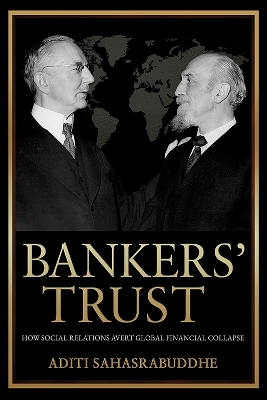
In Bankers' Trust, Aditi Sahasrabuddhe reveals a crucial element behind the resolution of global financial crises: trust between central bank leaders.


Central bank cooperation during global financial crises has been anything but consistent. While some crises are arrested with extensive cooperation, others are left to spiral. Going beyond explanations based on state power, interests, or resources, Sahasrabuddhe argues that central bank cooperation—or the lack thereof—often boils down to ties of trust, familiarity, and goodwill between bank leaders. These personal relations influence the likelihood of access to ad hoc, bilateral arrangements with more favorable terms.

Drawing on archival evidence and elite interviews, Sahasrabuddhe uncovers just how critical interpersonal trust between central bankers has been in managing global financial crises. She tracks the emergence of such relationships in the interwar 1920s, how they helped prop up the Bretton Woods system in the 1960s, and how they prevented the 2008 global financial crisis from turning into another Great Depression. When traditional signals of credibility fell short during these periods of crisis and uncertainty, established ties of trust between central bank leaders mediated risk calculations, alleviated concerns, and helped innovate less costly solutions.

Sahasrabuddhe challenges the idea that central banking is purely apolitical and technocratic. She pinpoints the unique transnational power central bank leaders hold as unelected figures who nonetheless play key roles in managing states' economies. By calling attention to the influence personal relationships can have on whether countries sink or swim during crises, Bankers' Trust asks us to reconsider the transparency and democratic accountability of global financial governance today.

Arvustused

Most accounts ascribe these episodes of central bank cooperation to geopolitical and national self-interest, but Sahasrabuddhe emphasizes the social relations of central bankers themselves. * Foreign Affairs * Sahasrabuddhe emphasizes the social relations of central bankers themselves. Central bankers often have common social and educational backgrounds, and they attend the same international meetings. * Foreign Affairs *

Aditi Sahasrabuddhe is Assistant Professor of Political Science at Brown University. She specializes in international political economy with a focus on global governance, the politics of international finance, central banking, and economic history.