Muutke küpsiste eelistusi

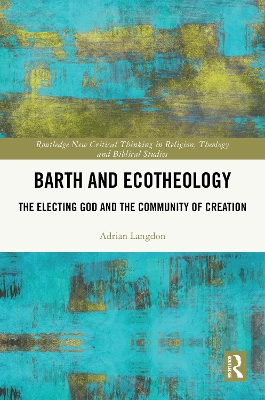
E-raamat: Barth and Ecotheology: The Electing God and the Community of Creation

  • Formaat - EPUB+DRM
  • Hind: 59,79 €*
  • * hind on lõplik, st. muud allahindlused enam ei rakendu
  • Lisa ostukorvi
  • Lisa soovinimekirja
  • See e-raamat on mõeldud ainult isiklikuks kasutamiseks. E-raamatuid ei saa tagastada.
  • Raamatukogudele

DRM piirangud

  • Kopeerimine (copy/paste):

    ei ole lubatud

  • Printimine:

    ei ole lubatud

  • Kasutamine:

    Digitaalõiguste kaitse (DRM)
    Kirjastus on väljastanud selle e-raamatu krüpteeritud kujul, mis tähendab, et selle lugemiseks peate installeerima spetsiaalse tarkvara. Samuti peate looma endale  Adobe ID Rohkem infot siin. E-raamatut saab lugeda 1 kasutaja ning alla laadida kuni 6'de seadmesse (kõik autoriseeritud sama Adobe ID-ga).

    Vajalik tarkvara
    Mobiilsetes seadmetes (telefon või tahvelarvuti) lugemiseks peate installeerima selle tasuta rakenduse: PocketBook Reader (iOS / Android)

    PC või Mac seadmes lugemiseks peate installima Adobe Digital Editionsi (Seeon tasuta rakendus spetsiaalselt e-raamatute lugemiseks. Seda ei tohi segamini ajada Adober Reader'iga, mis tõenäoliselt on juba teie arvutisse installeeritud )

    Seda e-raamatut ei saa lugeda Amazon Kindle's. 

"Barth and Ecotheology offers a critical and constructive reading of Karl Barth's theology in the context of the Anthropocene. It reflects on how a contemporary doctrine of creation must be broad enough to address issues such as climate change, colonialism and racism, sexism, as well as integrating modern science. Such a theology would resist the human domination of nature and the various forms of displacement occurring in modernity. With Barth, the author contends that a theology of creation grounded inthe self-revelation of God in Jesus Christ is the best place to rethink what it means to be human and to exist within the community of creation. Nevertheless, if we are to affirm the livingness of the world, creaturely differences, and a central place for land and place, then critical additions to Barth are needed. To accomplish this, the book provides constructive reinterpretations of Barth's theological method, doctrine of God, creation by the Word and Spirit, anthropology, and reconciliation. What emerges is a vision of the triune God of love as the source and ground of all that is. Along the way, Barth is brought into dialogue with ecotheology as well as theologians such as Wolfhart Pannenberg, Dietrich Bonhoeffer, and Bruce McCormack. The volume will be of particular interest to theologians focused on the doctrine of creation, ecotheology, and Barth studies"-- Provided by publisher.

Barth and Ecotheology offers a critical and constructive reading of Karl Barth’s theology in the context of the Anthropocene. It reflects on how a contemporary doctrine of creation must be broad enough to address issues such as climate change, colonialism and racism, sexism, as well as integrating modern science. Such a theology would resist the human domination of nature and the various forms of displacement occurring in modernity. With Barth, the author contends that a theology of creation grounded in the self-revelation of God in Jesus Christ is the best place to rethink what it means to be human and to exist within the community of creation. Nevertheless, if we are to affirm the livingness of the world, creaturely differences, and a central place for land and place, then critical additions to Barth are needed. To accomplish this, the book provides constructive reinterpretations of Barth’s theological method, doctrine of God, creation by the Word and Spirit, anthropology, and reconciliation. What emerges is a vision of the triune God of love as the source and ground of all that is. Along the way, Barth is brought into dialogue with ecotheology as well as theologians such as Wolfhart Pannenberg, Dietrich Bonhoeffer, and Bruce McCormack. The volume will be of particular interest to theologians focused on the doctrine of creation, ecotheology, and Barth studies.


Barth and Ecotheology offers a critical and constructive reading of Karl Barth’s theology in the context of the Anthropocene. It reflects on how a contemporary doctrine of creation must be broad enough to address issues such as climate change, colonialism and racism, sexism, as well as integrating modern science.

Arvustused

"Christian theology needs urgently to address the task of repairing our thinking and action in relation to fellow non-human creatures. Barths theology has the potential to resource and inspire such work, but needs both correction and extension. Langdons work is a landmark contribution to the reception of Barths thought in this area.

- David L. Clough, University of Aberdeen, UK

In these times of global ecojustice crisis, the great Karl Barth speaks to us afresh, thanks to this critical and insightful book. Be prepared to be challenged and instructed.

- H. Paul Santmire, author of Brother Earth (1970), The Travail of Nature (1985), and EcoActivist Testament (2022).

Could Karl Barth really be counted among the early exponents of Christian ecotheology? Adrian Langdon finds an avenue worth exploring, namely in a cosmic extension of Gods electing grace. He does so thoroughly and persuasively by engaging critically and constructively with Barths enormous legacy.

- Ernst M. Conradie, University of the Western Cape, South Africa

Adrian Langdons book is a constructive, creative, and compelling (and most welcomed!) new reading of Karl Barths theology in critical conversation with ecotheologies. This book offers readers both a timely and fresh perspective on current pressing planetary concerns of climate change and environmental degradation by providing a rich and impressive treatment of various dogmatic loci. The fruit of Langdons labor is a more expansive and liberative reading of Barths doctrine of creation, making this book a vital resource for contemporary theological discourse.

- Kaitlyn Dugan, Center for Barth Studies, Princeton Theological Seminary, USA

Preface; Introduction: Barth as Ecotheologian, Really?;
1. Dominion,
Displacement, and the Road to the Anthropocene;
2. Faith Seeking Knowledge
and Praxis: Method for a Theology of Nature;
3. God, Election, and the
Community of Creation;
4. The Shape of Nature: Jesus Christ and Creation;
5.
The Movement of Creation: The Spirits Gift of Time and Space;
6. All Our
Relations: Recovering Human Embeddedness;
7. Spatializing the Atonement:
Reconciliation and Other Animals; Conclusion; Bibliography; Index
Adrian Langdon is Director of Programs at The Leadership Centre, The Presbyterian College, Montreal, and an affiliate faculty in the School of Religious Studies at McGill University, Canada.