Muutke küpsiste eelistusi

E-raamat: Bioarchaeology of Mummies

  • Formaat: PDF+DRM
  • Ilmumisaeg: 03-Sep-2018
  • Kirjastus: Left Coast Press Inc
  • Keel: eng
  • ISBN-13: 9780429842467
  • Formaat - PDF+DRM
  • Hind: 53,29 €*
  • * hind on lõplik, st. muud allahindlused enam ei rakendu
  • Lisa ostukorvi
  • Lisa soovinimekirja
  • See e-raamat on mõeldud ainult isiklikuks kasutamiseks. E-raamatuid ei saa tagastada.
  • Formaat: PDF+DRM
  • Ilmumisaeg: 03-Sep-2018
  • Kirjastus: Left Coast Press Inc
  • Keel: eng
  • ISBN-13: 9780429842467

DRM piirangud

  • Kopeerimine (copy/paste):

    ei ole lubatud

  • Printimine:

    ei ole lubatud

  • Kasutamine:

    Digitaalõiguste kaitse (DRM)
    Kirjastus on väljastanud selle e-raamatu krüpteeritud kujul, mis tähendab, et selle lugemiseks peate installeerima spetsiaalse tarkvara. Samuti peate looma endale  Adobe ID Rohkem infot siin. E-raamatut saab lugeda 1 kasutaja ning alla laadida kuni 6'de seadmesse (kõik autoriseeritud sama Adobe ID-ga).

    Vajalik tarkvara
    Mobiilsetes seadmetes (telefon või tahvelarvuti) lugemiseks peate installeerima selle tasuta rakenduse: PocketBook Reader (iOS / Android)

    PC või Mac seadmes lugemiseks peate installima Adobe Digital Editionsi (Seeon tasuta rakendus spetsiaalselt e-raamatute lugemiseks. Seda ei tohi segamini ajada Adober Reader'iga, mis tõenäoliselt on juba teie arvutisse installeeritud )

    Seda e-raamatut ei saa lugeda Amazon Kindle's. 

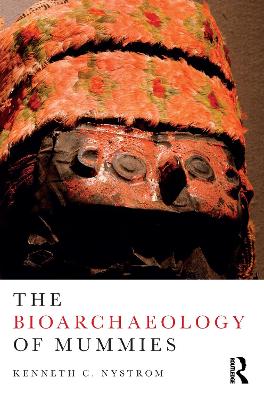
The modern manifestation of mummy studies began to take shape in the 1970s and has experienced significant growth during the last several decades, largely due to biomedical interest in soft tissue pathology. Although this points to a vibrant field, there are indications that we need to take stock of where it is today and how it may develop in the future, and this volume responds to those demands. In many ways, mummy studies and skeletal bioarchaeology are ‘sister-disciplines’, sharing data sources, methodologies, and practitioners. Given these close connections, this book considers whether paradigmatic shifts that influenced the development of the latter also impacted the former.

Whilst there are many available books discussing mummy research, most recent field-wide reviews adopt a biomedical perspective to explore on a particular mummy or collection of mummies. The Bioarchaeology of Mummies is a unique attempt at a synthetic, state-of-the-field critical analysis which considers the field from an explicitly anthropological perspective.

This book is written for both skeletal bioarchaeologists that may not be familiar with the scope of mummy research, and mummy researchers from biomedical fields that may not be as acquainted with current research trends within bioarchaeology.

Arvustused

Building upon the excellent biomedical baseline established by Drs. Arthur Aufderheide, Aidan Cockburn, Mike Zimmermann and colleagues, this volume adds a contextual, bioarchaeological perspective to mummy science. By considering theoretical perspectives on the body, along with ancient mummified bodies themselves, Nystrom presents a global stock-taking, as he also points to new and exciting future directions. This volume is a "must-read" for all specialists and non-specialist alike who wish a contemporary statement about these fascinating remnants of humankinds past.

Jane Buikstra, Arizona State University, USA

What a great resource this will be to bioarchaeology students and researchers alike! This is the only book of its kind. It integrates studies of mummified human remains with bioarcheological approaches in a seamless and convincing manner. Prior to this book, research using mummies has had its own separate trajectory. However, the creative use of many case studies and examples in this book provides a compelling call for continuing the integration of mummy studies into broader anthropological approaches. What is most unique in this history and review of mummy studies is the number of innovative ways that social theory, new methodologies and important questions are provided as examples for how to take mummy studies into new areas of research, and the importance of doing so.

Debra L. Martin, University of Nevada/Las Vegas, USA

List of Figures
viii
List of Tables
xii
Preface xiii
Acknowledgments xvi
Introduction 1(4)
1 Mummies: Definition and Mechanisms
5(27)
2 History of Bioarchaeology and Mummy Studies
32(14)
3 Publication Trends and Content Analysis
46(52)
4 Mummy Studies and Social Theory
98(25)
5 Methods in Mummy Research
123(22)
6 Mummy Studies and Bioarchaeology
145(20)
Appendix I 165(1)
Bibliography 166(47)
Index 213
Kenneth C. Nystrom is an Associate Professor in the Department of Anthropology at the State University of New York at New Paltz, USA. His research interests center on examining the interaction between biology and culture and how we can reconstruct behavior in the past by studying human remains.