Muutke küpsiste eelistusi

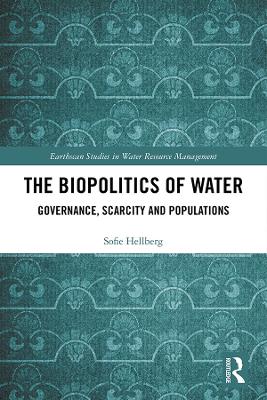
E-raamat: Biopolitics of Water: Governance, Scarcity and Populations

(University of Gothenburg, Sweden)
  • Formaat - EPUB+DRM
  • Hind: 58,49 €*
  • * hind on lõplik, st. muud allahindlused enam ei rakendu
  • Lisa ostukorvi
  • Lisa soovinimekirja
  • See e-raamat on mõeldud ainult isiklikuks kasutamiseks. E-raamatuid ei saa tagastada.

DRM piirangud

  • Kopeerimine (copy/paste):

    ei ole lubatud

  • Printimine:

    ei ole lubatud

  • Kasutamine:

    Digitaalõiguste kaitse (DRM)
    Kirjastus on väljastanud selle e-raamatu krüpteeritud kujul, mis tähendab, et selle lugemiseks peate installeerima spetsiaalse tarkvara. Samuti peate looma endale  Adobe ID Rohkem infot siin. E-raamatut saab lugeda 1 kasutaja ning alla laadida kuni 6'de seadmesse (kõik autoriseeritud sama Adobe ID-ga).

    Vajalik tarkvara
    Mobiilsetes seadmetes (telefon või tahvelarvuti) lugemiseks peate installeerima selle tasuta rakenduse: PocketBook Reader (iOS / Android)

    PC või Mac seadmes lugemiseks peate installima Adobe Digital Editionsi (Seeon tasuta rakendus spetsiaalselt e-raamatute lugemiseks. Seda ei tohi segamini ajada Adober Reader'iga, mis tõenäoliselt on juba teie arvutisse installeeritud )

    Seda e-raamatut ei saa lugeda Amazon Kindle's. 

Biopolitics refers to a form of politics concerned with the administering and regulating the conditions of life at the aggregated level of populations. This book provides a biopolitical perspective on water governance and its effects. Drawing on the work of Foucault, it explores how notions of scarcity are used in strategies of governance and how such governance differentiates between different populations. Furthermore, the author investigates what such biopolitical regulation means for people’s lifestyles and the way they understand themselves and their moral responsibilities as humans,individuals and citizens. 

The book begins by investigating the global water agenda with particular emphasis on its focus on water for basic needs, and provides different examples of hydromentalities around the world. It also presents rich empirical details of one local case in South Africa. By carefully exploring water users water ‘stories’, the book provides new perspectives on the relationship between water and power. Additionally, it offers an innovative methodological framework through which we can study the workings of governance more generally, and water governance specifically. It thereby contributes to the scholarship on water governance in relation to how water governance and technologies are part of producing subjectivities, notions of life and lifestyles and, more specifically, in terms of how the global water agenda can work so as to produce, or further entrench, distinctions between different lives and lifestyles. Ultimately, such differences between individual and populations produced as an effect of water governance are assessed in relation to social sustainability.

List of acronyms and abbreviations
viii
1 The power and politics of water
1(24)
2 (Green) governmentality and biopolitics
25(35)
3 Global water governance: scarcity, populations, distinctions
60(35)
4 Hydromentalities
95(38)
5 Understanding biopolitical `effects' locally: life(styles), subjectivities, and moral obligations
133(37)
6 The biopolitics of water
170(13)
Index 183
Sofie Hellberg is a Postdoctoral Researcher at the University of Gothenburg, Sweden and the University of the Witwatersrand, South Africa.