"Branding Authoritarian Nations offers a novel approach to the study of nation branding as a strategy for political legitimation in authoritarian regimes using the example of military-ruled Thailand. The book argues that nation branding is as a politicalact that is integral to state legitimation processes, particularly in the context of authoritarian regimes. It applies its alternative reading of nation branding to eight different sectors: tourism, economy, foreign direct investment, foreign policy, education, culture, public relations and the private sector. The author explains that nation branding produces specific kinds of applied national myths, referred to as 'strategic national myths'. She shows that nation branding is an inherently inward-lookingstrategy aimed at shaping the social attitudes and behaviours of the nation's citizens in line with the government's domestic agenda and legitimation needs. Providing the first comprehensive analysis of nation branding in Thailand and the first book-length account of the country's political developments since the 2014 military coup, the book is primarily aimed at academics in the disciplines of politics, international relations, communication and area studies as well as business, cultural and intercultural studies"--
Branding Authoritarian Nations offers a novel approach to the study of nation branding as a strategy for political legitimation in authoritarian regimes using the example of military-ruled Thailand. It is aimed at academics of politics, IR, communication, area studies, business, cultural and intercultural studies.
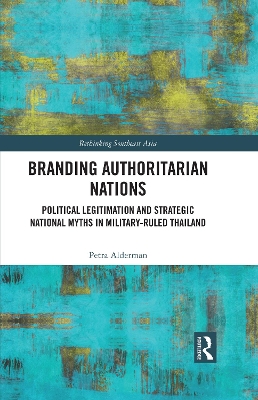
Branding Authoritarian Nations offers a novel approach to the study of nation branding as a strategy for political legitimation in authoritarian regimes using the example of military-ruled Thailand.
The book argues that nation branding is a political act that is integral to state legitimation processes, particularly in the context of authoritarian regimes.
It applies its alternative reading of nation branding to eight different sectors: tourism, economy, foreign direct investment, foreign policy, education, culture, public relations, and the private sector. The author explains that nation branding produces specific kinds of applied national myths, referred to as ‘strategic national myths.’ She shows that nation branding is an inherently inward-looking strategy aimed at shaping the social attitudes and behaviours of the nation’s citizens in line with the government’s domestic agenda and legitimation needs.
Providing the first comprehensive analysis of nation branding in Thailand and the first book-length account of the country’s political developments since the 2014–2019 military rule, the book is primarily aimed at academics in the disciplines of politics, international relations, communication, and area studies as well as business, cultural, and intercultural studies.

 Lisainfo e-raamatute kohta