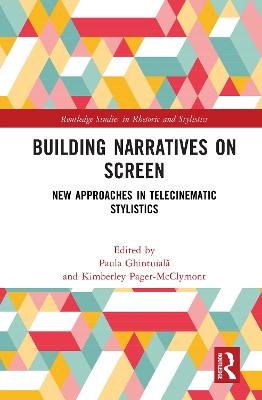
This collection seeks to advance the growing field of telecinematic stylistics, building on burgeoning research in the stylistic study of aural and visual cinematic discourse through interdisciplinary perspectives and innovative methodologies.
This collection seeks to advance the growing field of telecinematic stylistics, building on burgeoning research in the stylistic study of aural and visual cinematic discourse through interdisciplinary perspectives and innovative methodologies.
The volume expands on new approaches in stylistics, which have moved beyond monomodal emphasis and pragmatic-based analyses. Drawing on a wide range of cinematic texts across genres, contributions showcase both qualitative and quantitative research and their affordances for rich analyses of how telecinematic media use narrative elements to entertain and engage audiences. Examples range from classics such as the Star Trek series and Fargo to contemporary films such as Promising Young Woman and Aftersun. Established and emerging scholars explore such topics as the evolution of style in adaptations, feminist readings, the effect of metaphors, and building worlds through a stylistic lens.
Bringing the study of production and performance analysis together with traditional stylistic approaches to stylistic texts, this book will be of particular interest to students and scholars in stylistics, multimodality, film studies, and media studies.
Foreword (Christian R. Hoffmann), Introduction from Book Editors (Paula
Ghintuiala, Kimberley Pager-McClymont)
1. What I means and what I says is
two different things: Analysing the creative, deviating stylistic structures
of Dahls The BFG and its multimodal adaptations on the big screen (Paul
Flanagan)
2. Characterizing Diana: Metaphors, Symbols, and Schemas in The
Crown (Kimberley Pager-McClymont)
3. Multimodal Complications of
Characterization in Modernized Televisual Adaptations: Parameter-pushing
Extrapolations and Object-mediated Linkages in Richard Eyres King Lear (Yi
Fan)
4. Intertextuality and characterisation in The Mirror Crackd. (Clara
Neary and Simon Statham)
5. Its every guys worst nightmare, getting
accused like that. - Can you guess what every girls worst nightmare is?: a
telecinematic stylistic analysis of womens and mens portrayal in Promising
Young Woman. (Paula Ghintuiala, Aston University, Kimberley Pager-McClymont)
6. Humour in comedy discourse: A pragma-stylistic analysis of the American TV
series The Office. (Urszula Kizelbach)
7. Youre a f**ing liar:
Pragmastylistic approaches to (im)politeness, storytelling and untruthfulness
in Fargo (1996). (Aoife Beville)
8. E. Bloody fucking amazing!
Re-Evaluating Emotionality in US Hollywood Screenplays. (Christian R.
Hoffmann)
9. BBuilding fantasy worlds from page to screen: a corpus-stylistic
approach to The Eye of the World and The Wheel of Time. (Adriįn Castro)
10.
SShow, dont tell! A scheme for telecinematic glossopoesis. (Israel A. C.
Noletto)
11. The art of restraint: Showing a tragedy in Aftersun (Wells,
2022). (Paula Ghintuiala), Concluding Remarks (Paula Ghintuiala, Kimberley
Pager-McClymont), Index
Paula Ghintuial is a teaching fellow in the English Department at Aston University, Birmingham.
Kimberley Pager-McClymont is a curriculum leader in English Language at the University of Aberdeens International Study Centre.

 Lisainfo e-raamatute kohta