Muutke küpsiste eelistusi

E-raamat: Buried in the Borderlands: An Artefact Typology and Chronology for the Netherlands in the Early Medieval Period on the Basis of Funerary Archaeology

(Headland Archaeology)
  • Formaat: PDF+DRM
  • Ilmumisaeg: 11-Jan-2024
  • Kirjastus: Archaeopress Archaeology
  • Keel: eng
  • ISBN-13: 9781803275741
Teised raamatud teemal:
  • Formaat - PDF+DRM
  • Hind: 17,68 €*
  • * hind on lõplik, st. muud allahindlused enam ei rakendu
  • Lisa ostukorvi
  • Lisa soovinimekirja
  • See e-raamat on mõeldud ainult isiklikuks kasutamiseks. E-raamatuid ei saa tagastada.
  • Formaat: PDF+DRM
  • Ilmumisaeg: 11-Jan-2024
  • Kirjastus: Archaeopress Archaeology
  • Keel: eng
  • ISBN-13: 9781803275741
Teised raamatud teemal:

DRM piirangud

  • Kopeerimine (copy/paste):

    ei ole lubatud

  • Printimine:

    ei ole lubatud

  • Kasutamine:

    Digitaalõiguste kaitse (DRM)
    Kirjastus on väljastanud selle e-raamatu krüpteeritud kujul, mis tähendab, et selle lugemiseks peate installeerima spetsiaalse tarkvara. Samuti peate looma endale  Adobe ID Rohkem infot siin. E-raamatut saab lugeda 1 kasutaja ning alla laadida kuni 6'de seadmesse (kõik autoriseeritud sama Adobe ID-ga).

    Vajalik tarkvara
    Mobiilsetes seadmetes (telefon või tahvelarvuti) lugemiseks peate installeerima selle tasuta rakenduse: PocketBook Reader (iOS / Android)

    PC või Mac seadmes lugemiseks peate installima Adobe Digital Editionsi (Seeon tasuta rakendus spetsiaalselt e-raamatute lugemiseks. Seda ei tohi segamini ajada Adober Reader'iga, mis tõenäoliselt on juba teie arvutisse installeeritud )

    Seda e-raamatut ei saa lugeda Amazon Kindle's. 
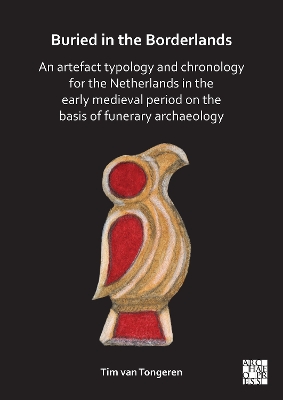
Buried in the Borderlands is the result of a large-scale yet detailed study of early medieval grave furnishings from the Netherlands, aiming at the creation of a comprehensive artefact typology and updated relative chronology for this under-explored period in the Low Countries.


During the early medieval period, the present-day Netherlands occupied a unique position as a border zone between the Frisians, Saxons and Merovingian Franks. For this large-scale research, grave goods were analysed from approximately 2500 inhumations from 21 cemeteries distributed across the country and incorporating the material culture of the aforementioned peoples. The resulting database was studied using the statistical research method Correspondence Analysis. A date was generated for individual artefact types and grave contexts. Creating the finds database confirmed that the varied Dutch material culture of the early medieval period cannot be analysed by only using a German or French typology. To simplify and locally embed future research as well as to allow for international comparison, a holistic typology has been developed which includes artefact types with roots in Germany, France and the surrounding countries as well as locally produced objects. All artefact types are provided with a revised date based on Dutch find contexts.

Arvustused

Insgesamt liegt der wesentliche Gewinn dieses Bandes darin das betont auch van Tongeren wiederholt (z. B. S. 83) , für die Niederlande eine Typochronologie für den gesamten Fundstoff in einer Hand beisammenzuhaben und nicht mehr verschiedene Chronologiesysteme in verschiedenen Sprachen konsultieren zu müssen. [ translated] Overall, the principal merit of this volume liesas van Tongeren himself repeatedly emphasizes (e.g. p. 83)in having, for the Netherlands, a typochronology for the entire body of finds assembled in a single work, rather than having to consult different chronological systems in different languages. Thomas Meier (2024): GERMANIA Volume 102, 1st-2nd Issue

Introduction


Historiography


The Netherlands in the early medieval period


Methodology


Introduction to the cemeteries


A revised date for inhumations from the Netherlands


Typology


Buckles and belt fittings


Pottery


Glassware


Spearheads


Seaxes


Shield bosses


Axes


Swords


Arrow heads


Brooches


Pins


Earrings


Pendants and amulets


Bracelets


Finger rings


Combs


Tweezers


Rings and chatelaines


Keys


Tools and utensils


Metal vessels


Wooden vessels


Beads


Furnished burial in the Netherlands


Conclusions


Bibliography


Appendix


Inhumation chronology
Tim van Tongeren is a finds specialist and independent researcher. He works as a Post-Excavation Project Officer for Headland Archaeology in the West Midlands. He obtained his degree in archaeology from Leiden University in the Netherlands (2014) and subsequently relocated to Wales where he studied the archaeology of the Anglo-Saxon and Viking period in Britain and Ireland. He obtained a masters degree with distinction from Cardiff University in 2016 and a doctorate in archaeology from Canterbury Christ Church University in 2021.