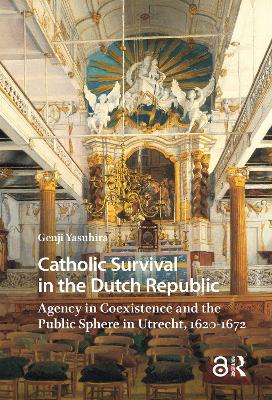
1. social-historical study of early modern Dutch Catholic survival, which will demonstrate an alternative interpretation of religious coexistence in the Dutch Republic by revealing Catholic agency in the realization of a multi-confessional society 2. systematic analyses of primary sources, among them legal documents, which will correct the previous impressionistic images of Dutch religious toleration and persecution of Dutch Catholics 3. construction of a new analytic framework for future comparative studies on religious coexistence in the early modern world, shedding light on politico-religious minorities’ roles in distinguishing the public and private spheres Even in adversity, Catholics exercised considerable agency in post-Reformation Utrecht. Through the political practices of repression and toleration, Utrecht’s magistrates, under constant pressure from the Reformed Church, attempted to exclude Catholics from the urban public sphere. However, by mobilizing their social status and networks, Catholic Utrechters created room to live as pious Catholics and honourable citizens, claiming more rights in the public sphere through their spatial practices and in discourses of self-representation. This book explores how Catholic priests and laypeople cooperated and managed to survive the Reformed regime by participating in a communal process of delimiting the public, continuing to rely on the medieval legacy and adapting to early modern religious diversity. Deploying their own understandings of publicness, Catholic Utrechters not only enabled their survival in the city and the Catholic revival in the Dutch Republic but also contributed to shaping a multi-religious society in the Northern Netherlands.

 Lisainfo e-raamatute kohta