Muutke küpsiste eelistusi

E-raamat: Charlemagne's Defeat in the Pyrenees: The Battle of Rencesvals

  • Formaat - EPUB+DRM
  • Hind: 59,79 €*
  • * hind on lõplik, st. muud allahindlused enam ei rakendu
  • Lisa ostukorvi
  • Lisa soovinimekirja
  • See e-raamat on mõeldud ainult isiklikuks kasutamiseks. E-raamatuid ei saa tagastada.

DRM piirangud

  • Kopeerimine (copy/paste):

    ei ole lubatud

  • Printimine:

    ei ole lubatud

  • Kasutamine:

    Digitaalõiguste kaitse (DRM)
    Kirjastus on väljastanud selle e-raamatu krüpteeritud kujul, mis tähendab, et selle lugemiseks peate installeerima spetsiaalse tarkvara. Samuti peate looma endale  Adobe ID Rohkem infot siin. E-raamatut saab lugeda 1 kasutaja ning alla laadida kuni 6'de seadmesse (kõik autoriseeritud sama Adobe ID-ga).

    Vajalik tarkvara
    Mobiilsetes seadmetes (telefon või tahvelarvuti) lugemiseks peate installeerima selle tasuta rakenduse: PocketBook Reader (iOS / Android)

    PC või Mac seadmes lugemiseks peate installima Adobe Digital Editionsi (Seeon tasuta rakendus spetsiaalselt e-raamatute lugemiseks. Seda ei tohi segamini ajada Adober Reader'iga, mis tõenäoliselt on juba teie arvutisse installeeritud )

    Seda e-raamatut ei saa lugeda Amazon Kindle's. 

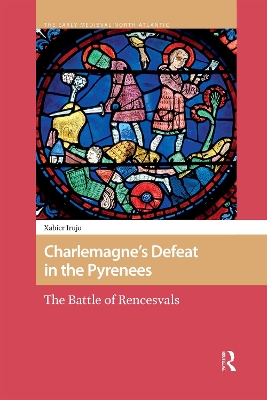
Despite its impact, the battle has not been studied in detail. There is indeed no book dedicated to the comprehensive description of the battle, including its genesis and subsequent resonance in the political affairs of the continent. Focusing on British historiography of the battle we must conclude that although there are many and extensive studies on the reign of Charlemagne and his times there is no book dealing exclusively on the battle, which represents the worst military disaster in the emperor's life and one of the major defeats of a royal army confronting a small number of adversaries in the Middle Ages. While the history of Vasconia has been analyzed in Basque, Spanish and even French, very few studies in English have discussed the genesis and further development of Vasconia during the eighth century or the formation of the kingdom of Pamplona in 824. By the same token, many of the most prominent historical figures, such as the Basque leaders Eudo the Great, Hunald, Waiofar or Lupus II Otsoa have little or no literature in English. The same is true of Eneko Aritza, and of his allies, the Islamized Basques of the Banu Qasi family. The book is based entirely on original sources, contemporaneous with the events, many of which were published in the Monumenta Germaniae Historica collection and have been translated from Latin, Romance or Basque by the author. Some of these contemporary sources are here first presented in English, as well as most Arabic sources and fragments of the Basque tradition recounting the battle. Finally, there is no other topographical study of the battle’s locale. For ten consecutive years I have had the assistance and support of the forest rangers of the Government of Navarre from Altzuzate Pass to the Pyrenean Zize Pass in my efforts to understand the landscape of the battle and wider context. No other scholar has had such access. The Battle of Errozabal (Rencesvals) is the one of the most significant historical events of eighth century Vasconia and in all Western Europe. The present monograph examines Charlemagne’s campaign from the perspective of military history but also as part of a complex socio-political process that began after the Muslim conquest of the Iberian Peninsula in 711 and culminated with the creation of the Kingdom of Pamplona in 824. The battle had major (and largely underappreciated) consequences for the Carolingian Empire. It also enjoyed a remarkable legacy as the topic of one of the oldest European epic poems, La Chanson de Roland. The events that took place in the Pyrenean pass of Errozabal on 15 August 778 defined the development of the Carolingian world, and lie at the heart of the early medieval contribution to the later medieval period.

Arvustused

"The Basque perspective is largely unaddressed in studies of Charlemagne and the infamous battle at Rencesvals/Errozabal during which the great emperors rearguard suffered a catastrophic defeat. Xabier Irujos book not only addresses that lack but puts forward a series of compelling arguments as to why the Basque involvement has not received more in-depth study. As such, this book provides an interesting example of how reading absence in the archive can yield fruitful and transformative perspectives." - Geneviève Young, Medium Aevum, 91.1

''Xabier Irujo has produced another in a string of fine studies examining the pious fictions and malevolent lies told about or perpetrated upon the Basques.'' - Michael Vargas, Speculum 98/4 October (2023)

Preface 7(8)
1 Precedents of the Battle
15(22)
The Paderborn Diet, 777
15(10)
The Marca Hlspanlca: A New Political Project
25(12)
2 The Campaign of 778
37(34)
March on Vasconia
40(17)
Siege and Capture of Pamplona
57(5)
At the Gates of Zaragoza
62(5)
Retreat from and Destruction of Pamplona
67(4)
3 The Battle of Errozabal in Light of the Frankish Sources
71(50)
4 Consequences of the Battle
121(18)
5 Impact of the Battle in the Medieval Tradition
139(62)
The Battle According to the Chanson de Roland
152(13)
The Battle as Described in the Historia Caroli Magni et Rotholandi
165(13)
Interpretation of the Stained-glass Window of Chartres Cathedral
178(23)
Epilogue 201(14)
Appendix 215(18)
Bibliography 233(14)
Index 247
Xabier Irujo (Chair of the Center for Basque Studies, University of Nevada, Reno) holds three Mas in linguistics, history and philosophy and two PhDs in history and philosophy. He has lectured and published on topics related to Basque history.