Muutke küpsiste eelistusi

E-raamat: Chinese and the Iron Road: Building the Transcontinental Railroad

  • Formaat: EPUB+DRM
  • Sari: Asian America
  • Ilmumisaeg: 30-Apr-2019
  • Kirjastus: Stanford University Press
  • Keel: eng
  • ISBN-13: 9781503609259
  • Formaat - EPUB+DRM
  • Hind: 15,75 €*
  • * hind on lõplik, st. muud allahindlused enam ei rakendu
  • Lisa ostukorvi
  • Lisa soovinimekirja
  • See e-raamat on mõeldud ainult isiklikuks kasutamiseks. E-raamatuid ei saa tagastada.
  • Formaat: EPUB+DRM
  • Sari: Asian America
  • Ilmumisaeg: 30-Apr-2019
  • Kirjastus: Stanford University Press
  • Keel: eng
  • ISBN-13: 9781503609259

DRM piirangud

  • Kopeerimine (copy/paste):

    ei ole lubatud

  • Printimine:

    ei ole lubatud

  • Kasutamine:

    Digitaalõiguste kaitse (DRM)
    Kirjastus on väljastanud selle e-raamatu krüpteeritud kujul, mis tähendab, et selle lugemiseks peate installeerima spetsiaalse tarkvara. Samuti peate looma endale  Adobe ID Rohkem infot siin. E-raamatut saab lugeda 1 kasutaja ning alla laadida kuni 6'de seadmesse (kõik autoriseeritud sama Adobe ID-ga).

    Vajalik tarkvara
    Mobiilsetes seadmetes (telefon või tahvelarvuti) lugemiseks peate installeerima selle tasuta rakenduse: PocketBook Reader (iOS / Android)

    PC või Mac seadmes lugemiseks peate installima Adobe Digital Editionsi (Seeon tasuta rakendus spetsiaalselt e-raamatute lugemiseks. Seda ei tohi segamini ajada Adober Reader'iga, mis tõenäoliselt on juba teie arvutisse installeeritud )

    Seda e-raamatut ei saa lugeda Amazon Kindle's. 

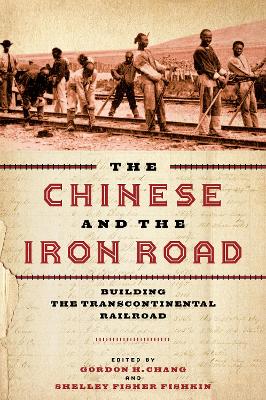
This landmark volume sheds light on the lives and experiences of the Chinese workers who made up 90% of the workforce that built the Central Pacific Railroad—but who have been little understood and largely invisible in traditional accounts of the building of the First Transcontinental Railroad.

The completion of the transcontinental railroad in May 1869 is usually told as a story of national triumph and a key moment for American Manifest Destiny. The railroad made it possible to cross the country in a matter of days instead of months, paved the way for new settlers to come out West, and helped speed America's entry onto the world stage as a modern nation that spanned a full continent. It also created vast wealth for its four owners, including the fortune with which Leland Stanford would found Stanford University some two decades later. But while the transcontinental has often been celebrated in national memory, little attention has been paid to the Chinese workers who made up 90% of the workforce on the Western portion of the line. The railroad could not have been built without Chinese labor, but the lives of Chinese railroad workers themselves have been little understood and largely invisible.

This landmark volume shines new light on the Chinese railroad workers and their place in cultural memory. The Chinese and the Iron Road illuminates more fully than ever before the interconnected economies of China and the US, how immigration across the Pacific changed both nations, the dynamics of the racism the workers encountered, the conditions under which they labored, and their role in shaping both the history of the railroad and the development of the American West.

Arvustused

"The long-awaited The Chinese and the Iron Road makes visible the previously invisible Chinese railroad workers who built America's first transcontinental railroad. They are given names, family lives, homes, spiritual beliefs, and agency. The research is astounding. The wide variety of interdisciplinary, international, and collaborative perspectivesfrom archaeology to family historyis revelatory and a model for future collaborative projects. This timely and essential volume preserves the humanity of the often-ignored and forgotten immigrant worker, while also uncovering just how important Chinese American railroad workers were in the making of America and its place in the world."Erika Lee, author of The Making of Asian America "Destined to become the go-to resource about Chinese railroad workers in the American West. This anthology assembles an international, interdisciplinary team of leading scholars to conduct the most extensive and thoughtful exploration of these near-mythic, yet heretofore scantly researched, historical subjects producing insights not only into the material conditions of their labor and lives but also the ideological implications of their ubiquity contrasted against their individual illegibility."Madeline Hsu, author of The Good Immigrants: How the Yellow Peril Became the Model Minority "To understand the emergence of the United States as a major player on the world stage, we must recognize the importance of its two-ocean power, which the transcontinental railroad made possible. Deeply researched and richly detailed, The Chinese and the Iron Road brings to life the Chinese immigrants whose work was essential to the railroad's construction."Thomas Bender, author of A Nation Among Nations: America's Place in World History "When I wrote a play in the early 1980s about Chinese workers on the American transcontinental railroad, information was scarce, and often of questionable accuracy. Gordon H. Chang and Shelley Fisher Fishkin's meticulously researched and beautifully written book fills this critical gap in our nation's history. The Chinese and the Iron Road brings to life the stories of workers who defied incredible odds and gave their lives to unite these states into a nation."David Henry Hwang, Tony Awardwinning playwright of The Dance and the Railroad and M. Butterfly "[ An] eclectic and comprehensive study that brings visibility to the monumental and very intimate human stories too long submerged beneath the pageantry of the golden spike ceremony."Timothy Dean Draper, Journal of American Ethnic History "Scholars Gordon Chang [ and Shelley Fisher Fishkin] deserve praise for this...memorial, a commemoration to the almost entirely nameless thousands whose labor became the biographical [ Stanford] university itself."William Deverell, Pacific Historical Review "Gordon H. Chang and Shelley Fisher Fishkin's monumental edited work The Chinese and the Iron Road is an impressive collection of interdisciplinary essays....This collection is essential and provides tools for scholars seeking to understand not only the lives of Chinese railroad workers but also the U.S. West and any other groups that left behind few written sources. Specialists and lay readers alike are encouraged to read this engaging work."Stephanie Hinnershitz, Journal of American History "[ This] exciting collection of scholarly articles represents a major contribution to labor history and to the new wave of Chinese-American studies that is global in scope but intensely focused on recovering and illuminating the lives of the ten- to fifteen- thousand Chinese workers who constructed the Central Pacific Railroad section of the Transcontinental Railroad."Robert Cliver, Technology and Culture "[ Detailed] and informative. The anthology shows the care that these authors and scholars who are part of the Chinese Railroad Workers in North America Project took in trying to piece together a largely unknown narrative. The sheer attempt of such a project is commendable."Marimas Hosan Mostiller, China Review International "[ A] generous and beautiful [ offering] to the ghosts of California's landscapes, necessary for the deep reckoning that is sorely needed in that storied place."Douglas Cazaux Sackman, Reviews in American History

Introduction
 -Gordon H. Chang, Shelley Fisher Fishkin, and Hilton Obenzinger
1. Chinese Railroad Workers and the US Transcontinental Railroad in Global
Perspective
 -Gordon H. Chang
2. Chinese Labor Migrants to the Americas in the Nineteenth Century: An
Inquiry into Who They Were and the World They Left Behind
 -Evelyn Hu-DeHart
3. The View from Home: Dreams of Chinese Railroad Workers Across the
Pacific
 -Zhang Guoxiong, with Roland Hsu
4. Overseas Remittances of Chinese Railroad Workers in North America
 -Yuan Ding, with Roland Hsu
5. Chinese Railroad Workers' Remittance Networks: Insights Based on
Qiaoxiang Documents
 -Liu Jin, with Roland Hsu
6. Archaeological Contributions to Research on Chinese Railroad Workers in
North America
 -Barbara L. Voss
7. Living between Misery and Triumph: The Material Practices of Chinese
Railroad Workers in North America
 -Barbara L. Voss
8. Landscapes of Change: Culture, Nature, and the Archaeological Heritage
of Transcontinental Railroads in the North American West
 -Kelly J. Dixon, with contributions by Gary Weisz, Christopher Merritt,
Robert Weaver, and James Bard
9. The Health and Well-being of Chinese Railroad Workers
 -J. Ryan Kennedy, Sarah Heffner, Virginia Popper, Ryan P. Harrod, and John
J. Crandall
10. Religion on the Road: How Chinese Migrants Adapted Popular Religion to
an American Context
 -Kathryn Gin Lum
11. Tracking Memory: Encounters between Chinese Railroad Workers and Native
Americans
 -Hsinya Huang
12. Railroad Frames: Landscapes and the Chinese Railroad Worker in
Photography, 18651869
 -Denise Khor
13. 'Les fils du Ciel': European Travelers' Accounts of Chinese Railroad
Workers
 -Greg Robinson
14. The Chinese Railroad Worker in United States History Textbooks: A
Historical Genealogy, 1849-1965
 -William Gow
15. Representing Chinese Railroad Workers in North America: Chinese
Historiography and Literature, 19492015
 -Yuan Shu
16. History Lessons: Remembering Chinese Railroad Workers in Dragon's Gate
and Donald Duk
 -Pin-chia Feng
17. The Chinese as Railroad Builders after Promontory
 -Shelley Fisher Fishkin
18. The Construction of the Canadian Pacific Railway and the Transpacific
Chinese Diaspora, 18801885
 -Zhongping Chen
19. Beyond Railroad Work: Chinese Contributions to the Development of
Winnemucca and Elko, Nevada
 -Sue Fawn Chung
20. The Remarkable Life of a Sometimes Railroad Worker: Chin Gee Hee,
18441929
 -Beth Lew-Williams
21. The Chinese and the Stanfords: Nineteenth-Century America's Fraught
Relationship with the China Men
 -Gordon H. Chang
Gordon H. Chang and Shelley Fisher Fishkin are Co-Directors of the Chinese Railroad Workers in North America Project at Stanford; Hilton Obenzinger is Associate Director and Roland Hsu is Director of Research.