Muutke küpsiste eelistusi

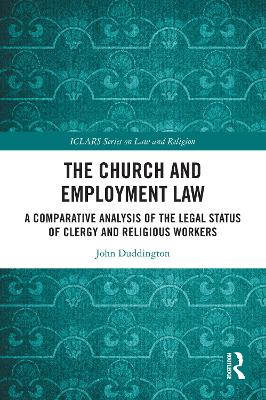
E-raamat: Church and Employment Law: A Comparative Analysis of The Legal Status of Clergy and Religious Workers

  • Formaat - EPUB+DRM
  • Hind: 54,59 €*
  • * hind on lõplik, st. muud allahindlused enam ei rakendu
  • Lisa ostukorvi
  • Lisa soovinimekirja
  • See e-raamat on mõeldud ainult isiklikuks kasutamiseks. E-raamatuid ei saa tagastada.

DRM piirangud

  • Kopeerimine (copy/paste):

    ei ole lubatud

  • Printimine:

    ei ole lubatud

  • Kasutamine:

    Digitaalõiguste kaitse (DRM)
    Kirjastus on väljastanud selle e-raamatu krüpteeritud kujul, mis tähendab, et selle lugemiseks peate installeerima spetsiaalse tarkvara. Samuti peate looma endale  Adobe ID Rohkem infot siin. E-raamatut saab lugeda 1 kasutaja ning alla laadida kuni 6'de seadmesse (kõik autoriseeritud sama Adobe ID-ga).

    Vajalik tarkvara
    Mobiilsetes seadmetes (telefon või tahvelarvuti) lugemiseks peate installeerima selle tasuta rakenduse: PocketBook Reader (iOS / Android)

    PC või Mac seadmes lugemiseks peate installima Adobe Digital Editionsi (Seeon tasuta rakendus spetsiaalselt e-raamatute lugemiseks. Seda ei tohi segamini ajada Adober Reader'iga, mis tõenäoliselt on juba teie arvutisse installeeritud )

    Seda e-raamatut ei saa lugeda Amazon Kindle's. 

This book examines the current law on the employment status of ministers of religion together with religious workers and volunteers and suggests reforms in this area of the law to meet the need for ministers to be given a degree of employment protection. It also considers the constant theme in Christian history that the clergy should not be subject to the ordinary courts and asks whether this is justified with the growth of areas such as employment law. The work questions whether it is possible to arrive at a satisfactory definition of who is a minister of religion and, along with this, who would be the employer of the minister if there was a contract of employment. Taking a comparative perspective, it evaluates the case law on the employment status of Christian and non-Christian clergy and assesses whether this shows any coherent theme or line of development. The work also considers the issue of ministerial employment status against the background of the autonomy of churches and other religious bodies from the State, together with their ecclesiology. The book will be of interest to academics and researchers working in the areas of law and religion, employment law and religious studies, together with both legal practitioners and human resources practitioners in these areas.


This book examines the current law on the employment status of ministers of religion and suggests reforms for ministers to be given a degree of employment protection. It considers the constant theme in Christian history that the clergy should not be subject to the ordinary courts and asks if this is justified with the growth of employment law.

Acknowledgements

Preface

PART 1

Who are the clergy and religious workers and who is their employer?

1 Volunteers

2 Religious workers

3 The clergy as ministers of religion

PART 2

The status of ministers of religion in employment law

4 Employment status of the clergy: A comparative perspective

5 How can the employment relationship between a member of the clergy and their religious body be analysed?

6 The legal status of the clergy under employment law as employees and workers

PART 3

The perspectives from church-state relations and from the churches themselves and a possible way forward

7 The autonomy of religious bodies

8 The perspectives of the churches on the legal status of the clergy

9 A solution?: Potential reforms to achieve a degree of employment protection for clergy and other religious workers

General Index

Table of Cases

Table of Statutes
John Duddington is a member of the Centre for Law and Religion, Cardiff University, UK, and editor of Law and Justice, the Christian Law Review. He was formerly Head of the Law School at Worcester College of Technology and is now a Visiting Lecturer at the University of Worcester.