Muutke küpsiste eelistusi

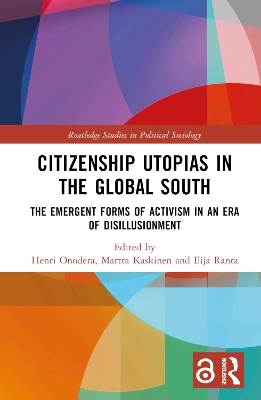
E-raamat: Citizenship Utopias in the Global South: The Emergent Forms of Activism in an Era of Disillusionment

Edited by (University of Helsinki, Finland), Edited by (University of Helsinki, Finland), Edited by (University of Helsinki, Finland)
  • Formaat - PDF+DRM
  • Hind: 4,47 €*
  • * hind on lõplik, st. muud allahindlused enam ei rakendu
  • Lisa ostukorvi
  • Lisa soovinimekirja
  • See e-raamat on mõeldud ainult isiklikuks kasutamiseks. E-raamatuid ei saa tagastada.

DRM piirangud

  • Kopeerimine (copy/paste):

    ei ole lubatud

  • Printimine:

    ei ole lubatud

  • Kasutamine:

    Digitaalõiguste kaitse (DRM)
    Kirjastus on väljastanud selle e-raamatu krüpteeritud kujul, mis tähendab, et selle lugemiseks peate installeerima spetsiaalse tarkvara. Samuti peate looma endale  Adobe ID Rohkem infot siin. E-raamatut saab lugeda 1 kasutaja ning alla laadida kuni 6'de seadmesse (kõik autoriseeritud sama Adobe ID-ga).

    Vajalik tarkvara
    Mobiilsetes seadmetes (telefon või tahvelarvuti) lugemiseks peate installeerima selle tasuta rakenduse: PocketBook Reader (iOS / Android)

    PC või Mac seadmes lugemiseks peate installima Adobe Digital Editionsi (Seeon tasuta rakendus spetsiaalselt e-raamatute lugemiseks. Seda ei tohi segamini ajada Adober Reader'iga, mis tõenäoliselt on juba teie arvutisse installeeritud )

    Seda e-raamatut ei saa lugeda Amazon Kindle's. 

"Citizenship Utopias in the Global South is an edited collection of empirical research that explores emergent forms of activism in Africa, Asia, and Latin America in times of multiple crises. At the intersection of hope and disillusionment, the diverse and thought-provoking chapters investigate emerging forms of activism in the Global South--including youth activisms, anti-racism struggles, feminist initiatives, online dissent, and Indigenous movements. In the 2020s, many parts of the world are witnessing contradictory processes of popular claims to rights, livelihoods, and social justice, and subsequent forms of populist authoritarianism and the securitization of civil society. Previously hopeful calls for dignity, democracy, and social justice--throughprotesting, strikes, civil society campaigns, legal reforms, and elections, for example--have been met with disdain and civic disengagement. This book investigates the re-imagination and pursuit of citizen activism in such times of popular disillusionment. It explores citizenship utopias as social imaginaries that are enacted and that articulate an ideal social order or democratic polity with ideal forms of experiencing citizenship. Its chapters interrogate conventional approaches to citizenship by introducing a nuanced and empirically grounded exploration of the complex ways in which people experience, negotiate, and engage in the societal changes that they aspire towards. The examination of citizenship utopias outlines contemporary signals for transformative futures and their possibilities. The book undertakes a fresh effort at contributing to the shifting terrain of critical development studies, political anthropology, political sociology, and decolonising scholarship by engaging in discussions about citizenship, activism, disillusionment, and future societal alternatives in times of multiple global challenges"--

Citizenship Utopias in the Global South is an edited collection of empirical research that explores emergent forms of activism in Africa, Asia, and Latin America in times of multiple crises.


Citizenship Utopias in the Global South is an edited collection of empirical research that explores emergent forms of activism in Africa, Asia, and Latin America in times of multiple crises. At the intersection of hope and disillusionment, the diverse and thought-provoking chapters investigate emerging forms of activism in the Global South – including youth activisms, anti-racism struggles, feminist initiatives, online dissent, and Indigenous movements.

In the 2020s, many parts of the world are witnessing contradictory processes of popular claims to rights, livelihoods, and social justice, and subsequent forms of populist authoritarianism and the securitization of civil society. Previously hopeful calls for dignity, democracy, and social justice – through protesting, strikes, civil society campaigns, legal reforms, and elections, for example – have been met with disdain and civic disengagement. This book investigates the re-imagination and pursuit of citizen activism in such times of popular disillusionment. It explores citizenship utopias as social imaginaries that are enacted and that articulate an ideal social order or democratic polity with ideal forms of experiencing citizenship. Its chapters interrogate conventional approaches to citizenship by introducing a nuanced and empirically grounded exploration of the complex ways in which people experience, negotiate, and engage in the societal changes that they aspire towards. The examination of citizenship utopias outlines contemporary signals for transformative futures and their possibilities.

The book undertakes a fresh effort at contributing to the shifting terrain of critical development studies, political anthropology, political sociology, and decolonising scholarship by engaging in discussions about citizenship, activism, disillusionment, and future societal alternatives in times of multiple global challenges.

Arvustused

Citizenship Utopias in the Global South offers a timely and engaging work that combines critique with action. This compelling volume that models transnational scholarship, portrays how citizen activists from Latin America, Africa, the Middle East, and Asia imagine, reinvent, and challenge reactionary and unjust forms of power. Through imaginative forms of creative activism they strive to overcome the disillusionment of contemporary politics. Chapters on digital communications, new youth movements, anti-corruption campaigns, anti-racism, non-violent strategies, to name a few, convey how people join forces to forge alternative futures grounded in dignity and justice. A valuable addition to the work on new youth movements, political change, and alternative activism in the Global South.

Linda Herrera, Professor of Education Policy, University of Illinois, Urbana-Champaign, USA

In the era of post-pandemic dystopias, this book offers a myriad of citizens utopias emerging from the Global South. It collects the voices of young feminists, ecologists, anti-racists, pacifists, queer individuals, students, and trade unionists from a dozen countries in Africa, Asia, and Latin America, who engage to build micro-utopian communities from below. Lessons for a period of old fears and new hopes.

Carles Feixa, Professor of Social Anthropology, Universitat Pompeu Fabra, Barcelona, Spain

1. Citizenship utopias in the Global South: Emerging activisms,
re-imagining citizenships

PART I: Activism in times of disillusionment

2. Activist contestations in contemporary socio-political change making in
Kenya

3. Disavowing politics: An alternative way of doing politics for young
Algerians

4. Communication in coronavirus crisis: A case study of communication
practices of activists in Johannesburg in the COVID-19 pandemic

5. The Chilean awakening in a global decade of social movements

PART II: Decolonising the state

6. Everyday citizenship and decolonising utopias in Cotacachi county,
Ecuador

7. Black feminist and anti-racist activism: Past and present of struggles for
racial justice in Cuba

8. Higher education under neoliberalism: A perspective from South African
student activists

9. Fighting for racial equality: Hope, disillusionment, and perseverance in
post-revolutionary Tunisia

PART III: Re-imagining citizenships

10. Governing through corruption: Young men, the state, and citizenship in
interior Tunisia

11. Imaginaries of social change in Algeria: Nonviolent acts of citizenship
of the autonomous trade union activists

12. Carrot and stick: Cooperative citizenship and the pedagogic state in
Vietnam

13. Hindu nationalism or collaborative social justice? The role of queer
communities in furthering democracy in India

14. Afterword: Citizenship Utopias in an Age of Polycrises?
Henri Onodera is a University Lecturer in Global Development Studies at the University of Helsinki.

Martta Kaskinen is a PhD Researcher in Global Development Studies at the University of Helsinki.

Eija Ranta is an Academy of Finland Research Fellow at the University of Helsinki.