Muutke küpsiste eelistusi

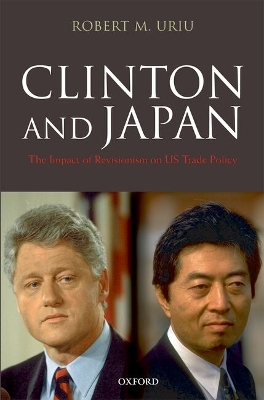
E-raamat: Clinton and Japan: The Impact of Revisionism on US Trade Policy

(Associate Professor of Political Science, University of California, Irvine)
  • Formaat: PDF+DRM
  • Ilmumisaeg: 22-Oct-2009
  • Kirjastus: Oxford University Press
  • Keel: eng
  • ISBN-13: 9780191571183
  • Formaat - PDF+DRM
  • Hind: 77,79 €*
  • * hind on lõplik, st. muud allahindlused enam ei rakendu
  • Lisa ostukorvi
  • Lisa soovinimekirja
  • See e-raamat on mõeldud ainult isiklikuks kasutamiseks. E-raamatuid ei saa tagastada.
  • Raamatukogudele
    • Oxford Scholarship Online e-raamatud
  • Formaat: PDF+DRM
  • Ilmumisaeg: 22-Oct-2009
  • Kirjastus: Oxford University Press
  • Keel: eng
  • ISBN-13: 9780191571183

DRM piirangud

  • Kopeerimine (copy/paste):

    ei ole lubatud

  • Printimine:

    ei ole lubatud

  • Kasutamine:

    Digitaalõiguste kaitse (DRM)
    Kirjastus on väljastanud selle e-raamatu krüpteeritud kujul, mis tähendab, et selle lugemiseks peate installeerima spetsiaalse tarkvara. Samuti peate looma endale  Adobe ID Rohkem infot siin. E-raamatut saab lugeda 1 kasutaja ning alla laadida kuni 6'de seadmesse (kõik autoriseeritud sama Adobe ID-ga).

    Vajalik tarkvara
    Mobiilsetes seadmetes (telefon või tahvelarvuti) lugemiseks peate installeerima selle tasuta rakenduse: PocketBook Reader (iOS / Android)

    PC või Mac seadmes lugemiseks peate installima Adobe Digital Editionsi (Seeon tasuta rakendus spetsiaalselt e-raamatute lugemiseks. Seda ei tohi segamini ajada Adober Reader'iga, mis tõenäoliselt on juba teie arvutisse installeeritud )

    Seda e-raamatut ei saa lugeda Amazon Kindle's. 

This book chronicles how a controversial set of policy assumptions about the Japanese economy, known as revisionism, rose to become the basis of the trade policy approach of the Clinton administration. In the context of growing fear over Japan's increasing economic strength, revisionists argued that Japan represented a distinctive form of capitalism that was inherently closed to imports and that posed a threat to U.S. high-tech industries. Revisionists advocated a "managed trade" solution in which the Japanese government would be forced to set aside a share of the market for foreign goods.

The author describes the role that various American academics, government officials, and business leaders played in developing revisionist thought. Revisionism was at its peak just as the Clinton administration came into office. The author uses extensive interviews with policy makers to trace the internal discussions inside the Clinton White House, which culminated in the adoption of revisionist policy and then to demands for "results-oriented" trade agreements during the Framework negotiations. This book details how Japan refused to accept these managed trade solutions, and fought to discredit revisionism and to rally global support against American unilateralism.
List of Interviews (selected) xv
List of Tables and Figures xviii
List of Abbreviations xix
Part I Setting the Stage: The Rise of Revisionism
1. Explaining the Framework Negotiations
3
The Importance of Policy Assumptions
7
From Ideas to Policy Assumptions: Revisionism Defined
15
2. Traditionalist Views and the Emergence of Revisionism
24
Traditionalist Assumptions Defined
26
The Early Roots of Revisionism: The 1960's and 1970's
34
Revisionism in the Early 1980's: Japan's High-tech Threat
42
Revisionism's Early Impact: The Semiconductor Agreement
53
3. 'The Japan Problem': The Coalescence of the Revisionist Paradigm
60
America's Economic Crisis
60
The Coalescence of Revisionist Thinking
64
Revisionism and the Policy Process in the Bush Administration
79
Part II The Clinton Transition: Institutionalizing Revisionist Assumptions
4. Out with the Old, In with the New
89
The 1992 Campaign
89
The New Administration's Early Months
94
Revising Japan Policy: The Deputies Committee
101
The DC Deliberations
107
5. Implementing the New Japan Policy
122
The US Signals its New Approach
122
Negotiating with Japan
130
The Early Framework Dynamics: The American View
137
Part III Contested Norms, Rejected Norms
6. Getting to No: The Evolution of Japan's Rejectionist Line
143
Contested International Norms
144
Japan's Growing Discontent with the Cooperationist Approach
147
The Development of Japan's Rejectionist Line
156
Reading Clinton's Policy: Japan Tries to Say No
164
Japan's Rejectionists Coalesce
175
7. Negotiating the Framework: Doomed from the Start?
179
Japan's Diplomatic Offensive: The Managed Trade Mantra
180
The US Wavers
187
America Retreats, Japan Advances
193
The Hosokawa Summit Fails
202
8. The Auto End Game: From Potential Blowup to Anticlimax
209
The Re-emergence of Traditionalist Voices
209
The US After the Summit: Moderates Versus Hard-liners
214
Japan After the Summit: The Rejectionists Remain in Control
221
The Auto End Game: The Sanctions Decision
225
9. The Return to Balance
232
Assessing the Framework: A Post-mortem
232
The Framework Aftermath: Revisionist Assumptions Undermined
239
Japan Policy Since 1995: The Return to Traditionalism
244
The Impact of New Policy Assumptions: A Recap
250
References 257
Index 267
Robert M. Uriu is an Associate Professor of Political Science and Director of Graduate Studies at the University of California at Irvine. Professor Uriu is a specialist in international relations and international political economy. His region of expertise is East Asia, with an emphasis on Japan, U.S.-Japan relations, and American foreign policy toward East Asia. In 1996-97 Professor Uriu served as a Director of Asian Affairs at the National Security Council. While at the NSC he was involved in policy making toward all aspects of U.S.-Japan relations. He is a two-time Fulbright scholar: in 1996 he was awarded a Fulbright Grant for Research in Japan, as well as being named an International Affairs Fellow by the Council on Foreign Relations, and his earlier research was funded by a grant from the Fulbright-Hays Commission. Professor Uriu has also been a Visiting Foreign Scholar at Keio University, the University of Tokyo, and Japan's Ministry of International Trade and Industry.