Muutke küpsiste eelistusi

E-raamat: On Common Interests: A Political Philosophy

  • Formaat: 368 pages
  • Ilmumisaeg: 10-Jul-2025
  • Kirjastus: Bloomsbury Academic
  • Keel: eng
  • ISBN-13: 9798765143506
  • Formaat - EPUB+DRM
  • Hind: 111,15 €*
  • * hind on lõplik, st. muud allahindlused enam ei rakendu
  • Lisa ostukorvi
  • Lisa soovinimekirja
  • See e-raamat on mõeldud ainult isiklikuks kasutamiseks. E-raamatuid ei saa tagastada.
  • Formaat: 368 pages
  • Ilmumisaeg: 10-Jul-2025
  • Kirjastus: Bloomsbury Academic
  • Keel: eng
  • ISBN-13: 9798765143506

DRM piirangud

  • Kopeerimine (copy/paste):

    ei ole lubatud

  • Printimine:

    ei ole lubatud

  • Kasutamine:

    Digitaalõiguste kaitse (DRM)
    Kirjastus on väljastanud selle e-raamatu krüpteeritud kujul, mis tähendab, et selle lugemiseks peate installeerima spetsiaalse tarkvara. Samuti peate looma endale  Adobe ID Rohkem infot siin. E-raamatut saab lugeda 1 kasutaja ning alla laadida kuni 6'de seadmesse (kõik autoriseeritud sama Adobe ID-ga).

    Vajalik tarkvara
    Mobiilsetes seadmetes (telefon või tahvelarvuti) lugemiseks peate installeerima selle tasuta rakenduse: PocketBook Reader (iOS / Android)

    PC või Mac seadmes lugemiseks peate installima Adobe Digital Editionsi (Seeon tasuta rakendus spetsiaalselt e-raamatute lugemiseks. Seda ei tohi segamini ajada Adober Reader'iga, mis tõenäoliselt on juba teie arvutisse installeeritud )

    Seda e-raamatut ei saa lugeda Amazon Kindle's. 
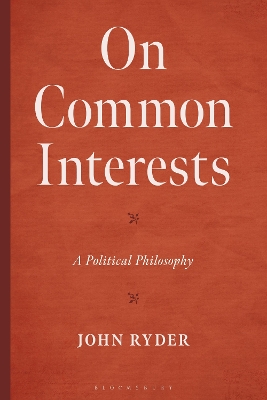
This book offers a political philosophy that is grounded in the overlapping sets of interests that people share, interests that provide social cohesion and define our individual aspirations and social activities.

This book develops an original theory that grounds political principles and practices in common interests among citizens and residents of a country. This theory differs from most prevalent political philosophies in that they focus on common ideas which emphasize how we might think rather than how we actually live, or on competing or conflicting interests for the purpose of balancing or advancing one set of interests over another. On Common Interests offers principles, possible structures, and practices that enable government to help us advance the interests we share. As a political philosophy, it values cooperation and collaboration over conflict and competition.

Arvustused

Ryder develops a detailed and tightly reasoned pragmatic alternative to political philosophies constructed on left/right/center and liberal/anti-liberal assumptions. His innovative approach is pluralistic and ecumenical. He urges consensus-building motivated not by what people think or believe, but by how their experiences shape their lives as individuals and members of communities. -- Larry A. Hickman, former director, Center for Dewey Studies, Southern Illinois University Carbondale, USA This is a radical exercise of the political imagination, in the sense that the author at every turn attempts to get to the root of the matter, digging deeper than any other contemporary theorist is disposed to do. John Ryder is unafraid to draw out disconcertingly novel implications from his historical observations and theoretical conclusions, to entertain utterly unorthodox possibilities. He does so in an historically informed, philosophically rigorous, and rhetorically engaging manner. This is a very serious and, in the best sense, disturbing work. His position does not neatly fit into any traditional categoryso much the worse for those categories, so much to the credit of this author. -- Vincent Colapietro, professor emeritus of philosophy, Pennsylvania State University, USA

Muu info

This book offers a political philosophy that is grounded in the overlapping sets of interests that people share, interests that provide social cohesion and define our individual aspirations and social activities.
Acknowledgements
Preface
Introduction
Part I: Preliminary Considerations and Background Conceptions
Chapter
1. The Failure of Political Philosophy
Chapter
2. The Varieties of Political Experience
Chapter
3. Practice Over Propositions
Chapter
4. Experience and Social Values
Part II: Political Principles, Common Interests, and the Polity
Chapter
5. Political Principles
Chapter
6. The Plurality and Diversity of Common Interests
Chapter
7. Common Interests and the Polity
Conclusion
Bibliography
Index
About the Author
John Ryder has been a professor of philosophy and a senior administrator at several universities in the United States and abroad. He is the author or editor of over one hundred publications, as well as a former president of the Alliance of Universities for Democracy, and co-founder of the Central European Pragmatist Forum.