Muutke küpsiste eelistusi

E-raamat: Constraints and Compromises: Trade Policy in a Democracy: The Case of the U.S.-Israel Free Trade Area

  • Formaat - EPUB+DRM
  • Hind: 31,19 €*
  • * hind on lõplik, st. muud allahindlused enam ei rakendu
  • Lisa ostukorvi
  • Lisa soovinimekirja
  • See e-raamat on mõeldud ainult isiklikuks kasutamiseks. E-raamatuid ei saa tagastada.

DRM piirangud

  • Kopeerimine (copy/paste):

    ei ole lubatud

  • Printimine:

    ei ole lubatud

  • Kasutamine:

    Digitaalõiguste kaitse (DRM)
    Kirjastus on väljastanud selle e-raamatu krüpteeritud kujul, mis tähendab, et selle lugemiseks peate installeerima spetsiaalse tarkvara. Samuti peate looma endale  Adobe ID Rohkem infot siin. E-raamatut saab lugeda 1 kasutaja ning alla laadida kuni 6'de seadmesse (kõik autoriseeritud sama Adobe ID-ga).

    Vajalik tarkvara
    Mobiilsetes seadmetes (telefon või tahvelarvuti) lugemiseks peate installeerima selle tasuta rakenduse: PocketBook Reader (iOS / Android)

    PC või Mac seadmes lugemiseks peate installima Adobe Digital Editionsi (Seeon tasuta rakendus spetsiaalselt e-raamatute lugemiseks. Seda ei tohi segamini ajada Adober Reader'iga, mis tõenäoliselt on juba teie arvutisse installeeritud )

    Seda e-raamatut ei saa lugeda Amazon Kindle's. 
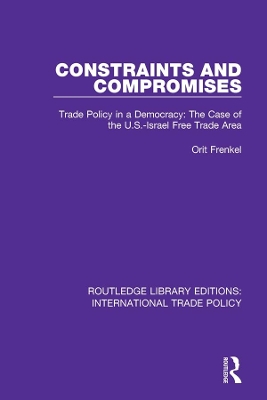
The negotiation of the Free Trade Area between the US and Israel was, at the time, a remarkable political accomplishment, and is a useful case study because it includes all of the industrial and agricultural sectors, thus spanning the full spectrum of issues that would be dealt with in negotiations. In addition, it has the advantage of involving just two countries and lasting only fifteen months from start to finish, facilitating a comprehensive analysis. This book, first published in 1990, provides a valuable analysis of this vital case study of an FTA from commencement to completion.

1. Introduction
2. Literature Review and Theoretical Framework 2.1.
Economic Theory and the Determinants of Protection 2.2. Industry Differences
in Obtaining Protection 2.3. Industry Differences in Trade Negotiations 2.4.
The Role of Politics in Trade Policy Formation 2.5. Developing a Framework
3.
Economic Framework of the FTA 3.1. Trade Overview 3.2. The Free Trade Area
Agreement 3.3. Analysing the Effect of the US-Israel FTA
4. The Trade Policy
Process 4.1. The Partnership Between Congress and the Executive Branch in the
Trade Policy Process 4.2. The Decision to Negotiate a Free Trade Area 4.3.
The Role of Congress in the US-Israel FTA 4.4. The ITC Report 4.5. The Role
of Pressure Groups
5. The US-Israel Free Trade Area: The Negotiation Process
5.1. Initial Objectives and Opening Moves 5.2. The Negotiation Process and
Subsequent Moves
6. Empirical Analysis 6.1. The Model and the Hypothesis 6.2.
The Variables and their Expected Signs 6.3. Empirical Results
7. Summary and
Conclusions
Orit Frenkel