Muutke küpsiste eelistusi

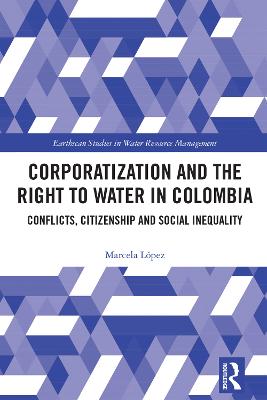
E-raamat: Corporatization and the Right to Water in Colombia: Conflicts, Citizenship and Social Inequality

Teised raamatud teemal:
  • Formaat - EPUB+DRM
  • Hind: 54,59 €*
  • * hind on lõplik, st. muud allahindlused enam ei rakendu
  • Lisa ostukorvi
  • Lisa soovinimekirja
  • See e-raamat on mõeldud ainult isiklikuks kasutamiseks. E-raamatuid ei saa tagastada.
Teised raamatud teemal:

DRM piirangud

  • Kopeerimine (copy/paste):

    ei ole lubatud

  • Printimine:

    ei ole lubatud

  • Kasutamine:

    Digitaalõiguste kaitse (DRM)
    Kirjastus on väljastanud selle e-raamatu krüpteeritud kujul, mis tähendab, et selle lugemiseks peate installeerima spetsiaalse tarkvara. Samuti peate looma endale  Adobe ID Rohkem infot siin. E-raamatut saab lugeda 1 kasutaja ning alla laadida kuni 6'de seadmesse (kõik autoriseeritud sama Adobe ID-ga).

    Vajalik tarkvara
    Mobiilsetes seadmetes (telefon või tahvelarvuti) lugemiseks peate installeerima selle tasuta rakenduse: PocketBook Reader (iOS / Android)

    PC või Mac seadmes lugemiseks peate installima Adobe Digital Editionsi (Seeon tasuta rakendus spetsiaalselt e-raamatute lugemiseks. Seda ei tohi segamini ajada Adober Reader'iga, mis tõenäoliselt on juba teie arvutisse installeeritud )

    Seda e-raamatut ei saa lugeda Amazon Kindle's. 

This book explores how conflicts around access to water shape cities, citizenship and infrastructures by tracing how water is commodified and controlled by the Public Enterprises of Medellín (EPM), one of the most successful publicly owned utility companies in the global South.

Why are water inequalities dramatically increasing in Medellín, a city that is located in an area of bountiful water resources and owns a successful, established utility company? This book explains this paradoxical situation by weaving together two central threads. The first is a critical historical analysis of the political, economic and ecological conditions that enabled the citys utility company to grow and expand internationally, and the second is a rich account of the everyday practices and struggles of residents in low-income areas to secure access to water and demand citizenship rights. The EPM is a case of global significance as the company continues to expand its commercial operations in the Latin American services market by taking over the utilities in Panama, El Salvador and Guatemala, Mexico and Chile. Although its successful international expansion has been a source of pride and admiration for many Colombians, the implementation of market-oriented operating principles in all activities of the utility company raises important and complex questions about its public character and responsibility in the provision of basic services, which has much wider implications given how it is poised to be a model for other for-profit municipal service operations in other Latin American countries. This book advances the empirical knowledge of corporatized utilities, with a globally significant case, as well as providing new theoretical insights with which to understand the limits, challenges and opportunities faced by public utility companies to provide affordable and equal access to water in cities.

This book will be of great interest to students and scholars of water resource management, corporatization, privatisation and commodification of natural resources, urban studies, citizenship and human rights, environmental sociology and Latin American studies.

Arvustused

"This path-breaking book provides an in-depth look at the way that a publicly-owned and operated utility has increasingly come to behave like private utility. It also outlines a alternative ways to think about public services, highlighting how struggles by low-income residents for decommodification can shape public utilities in progressive and democratic ways. This highly readable book is a must read for anyone concerned about the future of public services in the global South with lessons for the global North as well." Susan Spronk, Associate Professor, School of International Development and Global Studies, University of Ottawa. Canada.

"Lopez offers a penetrating assessment of one of the most confounding debates in public services today: corporatized utilities. Public Enterprises of Medellín (EPM) is widely considered to be the most successful publicly-owned utility in Latin America, but paradoxes abound. From widespread service cutoffs to the manic development of environmentally destructive infrastructure, EPM operates as a Janus-faced symbol of public, illustrating how marketized forms of corporatization can strip public utilities of their potential for equitable and sustainable forms of public services. But Lopez avoids simplistic conceptualizations, seeking to disrupt an often-polarized debate while introducing concrete suggestions for more democratic public reforms. Lessons for Colombia, and lessons for the world." David McDonald, Director, Municipal Services Project, and Professor of Global Development Studies, Queen's University, Canada.

"Corporatization and the Right to Water in Colombia is fascinating detailed research that addresses how a state-owned company implements a complex relationship of infrastructures-citizenship based on the notion of water as public service for consumers. Marcela Lopezs book is a rigorous analysis from the perspective of political ecology of water that unveils how infrastructures supported by new technical-political processes, and ideals of environmental development and progress produce inequalities in access to water. But at the same time, it shows in a critical way the emergence of local struggles and daily practices over access to public water and demands of rights that allow reconfigurations of citizenship rights. The book becomes an outstanding contribution that encourages us to rethink water as a common, and new insights to rights to water with urban contexts of inequality." Astrid Ulloa, Professor of Geography, National University of Colombia

Introduction; PART I Commodification; 1 Municipalization (19551990); 2
Corporatization (1991Present); PART II Decommodification; 3 Unaffordable
Water; 4 Heterogeneous Water(s); PART III Potentials and Limits; 5 Unruly
Water; 6 Conclusion; References; Index
Marcela López is an associated fellow at the Center for Metropolitan Studies and senior lecturer in the Urban Management Program at the Technical University Berlin, Germany.