Muutke küpsiste eelistusi

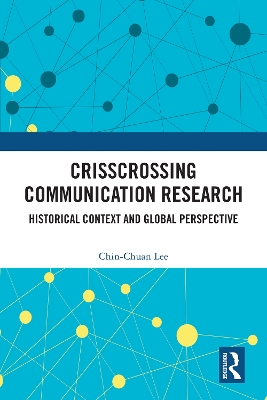
E-raamat: Crisscrossing Communication Research: Historical Context and Global Perspective

  • Formaat: PDF+DRM
  • Ilmumisaeg: 28-Oct-2024
  • Kirjastus: Routledge
  • Keel: eng
  • ISBN-13: 9781040185698
  • Formaat - PDF+DRM
  • Hind: 72,79 €*
  • * hind on lõplik, st. muud allahindlused enam ei rakendu
  • Lisa ostukorvi
  • Lisa soovinimekirja
  • See e-raamat on mõeldud ainult isiklikuks kasutamiseks. E-raamatuid ei saa tagastada.
  • Raamatukogudele
  • Formaat: PDF+DRM
  • Ilmumisaeg: 28-Oct-2024
  • Kirjastus: Routledge
  • Keel: eng
  • ISBN-13: 9781040185698

DRM piirangud

  • Kopeerimine (copy/paste):

    ei ole lubatud

  • Printimine:

    ei ole lubatud

  • Kasutamine:

    Digitaalõiguste kaitse (DRM)
    Kirjastus on väljastanud selle e-raamatu krüpteeritud kujul, mis tähendab, et selle lugemiseks peate installeerima spetsiaalse tarkvara. Samuti peate looma endale  Adobe ID Rohkem infot siin. E-raamatut saab lugeda 1 kasutaja ning alla laadida kuni 6'de seadmesse (kõik autoriseeritud sama Adobe ID-ga).

    Vajalik tarkvara
    Mobiilsetes seadmetes (telefon või tahvelarvuti) lugemiseks peate installeerima selle tasuta rakenduse: PocketBook Reader (iOS / Android)

    PC või Mac seadmes lugemiseks peate installima Adobe Digital Editionsi (Seeon tasuta rakendus spetsiaalselt e-raamatute lugemiseks. Seda ei tohi segamini ajada Adober Reader'iga, mis tõenäoliselt on juba teie arvutisse installeeritud )

    Seda e-raamatut ei saa lugeda Amazon Kindle's. 

"Drawing on studies of international communication and late Qing and Republican newspapers, this book examines the intellectual and practical development of communication from a global and historical perspective. The book is organized in two parts. The first part explores the "domestication" and fragmentation of communication studies, examining how domestic communication paradigms have been transformed into "refined mediocrity" and how international communication is now included in discussions of "moderntheory". Focusing on the newspapers of China's Republican era, the second part explores the history of journalism from a variety of perspectives and addresses several key research issues. By exploring ways to connect theories in the humanities and socialsciences, bridging the gap between Eastern and Western cultures, and interweaving case studies and macro-level theorizing, the author shows that communication analysis is necessarily dialectical, specific, complementary, and conditional. The book sheds important light on how acting locally while thinking globally can help us reconstruct the epistemological and methodological foundations of international communication. The title will appeal to scholars and students in communication studies, journalism, and the social sciences, especially those interested in international communication"--

Drawing on studies of international communication and late Qing and Republican newspapers, this book examines the intellectual and practical development of communication from a global and historical perspective.

The book is organized in two parts. The first part explores the “domestication” and fragmentation of communication studies, examining how domestic communication paradigms have been transformed into “refined mediocrity” and how international communication is now included in discussions of “modern theory”. Focusing on the newspapers of China’s Republican era, the second part explores the history of journalism from a variety of perspectives and addresses several key research issues. By exploring ways to connect theories in the humanities and social sciences, bridging the gap between Eastern and Western cultures, and interweaving case studies and macro-level theorizing, the author shows that communication analysis is necessarily dialectical, specific, complementary, and conditional. The book sheds important light on how acting locally while thinking globally can help us reconstruct the epistemological and methodological foundations of international communication.

The title will appeal to scholars and students in communication studies, journalism, and the social sciences, especially those interested in international communication.


Drawing on studies of international communication and late Qing and Republican newspapers, this book examines the intellectual and practical development of communication from a global and historical perspective.
1 The Space-Time Coordinates of Communication Research

Part I

International Communication: China Connects with the World

2 The "Involution" of Communication Studies: A Brief Review of the Paradigm
and Identity of Mainstream Research in the United States

3 International Communication Research: Critical Reflections and a New Point
of Departure

4 Local Experiences, Cosmopolitan Theories on Cultural Relevance in
International Communication Research

5 Perspectives and Communication: Dialogue Between Chinese Social Media
Studies and Western Mainstream Scholarship

Part II

Newspaper in the Republic of China: Connections Between Journalism and
History

6 The Scholars Political Commentary in Modern China

7 Journalists Feelings and National Imagination

8 Semi-Colonialism and Journalistic Sphere of Influence: British-American
Press Competition in Early 20th-Century China

9 Public Opinion in Modern China: Is It a Dialogue of the Deaf, or Public
Dialogue?

10 American Pragmatism and Chinese Modernization: Importing the Missouri
Model of Journalism Education to Modern China

Postscript: Crisscrossing Academic Career in 50 Years
Chin-Chuan Lee, Yu Shan Chair Professor of Communication at National Chengchi University in Taiwan, is an elected Fellow of the International Communication Association (ICA) and recipient of its B. Aubrey Fisher Mentorship Award. He is Professor Emeritus of Journalism and Mass Communication at the University of Minnesota, and Emeritus Professor of Media and Communication at City University of Hong Kong. He has published in both English and Chinese, and in a wide range of topics, including global communication, media and social change, social theories, media political economy, and media history.