Muutke küpsiste eelistusi

E-raamat: Crop Systems Dynamics: An ecophysiological simulation model of genotype-by-environment interactions

  • Formaat: PDF+DRM
  • Ilmumisaeg: 28-Aug-2023
  • Kirjastus: Wageningen Academic Publishers
  • Keel: eng
  • ISBN-13: 9789086865390
  • Formaat - PDF+DRM
  • Hind: 93,92 €*
  • * hind on lõplik, st. muud allahindlused enam ei rakendu
  • Lisa ostukorvi
  • Lisa soovinimekirja
  • See e-raamat on mõeldud ainult isiklikuks kasutamiseks. E-raamatuid ei saa tagastada.
  • Formaat: PDF+DRM
  • Ilmumisaeg: 28-Aug-2023
  • Kirjastus: Wageningen Academic Publishers
  • Keel: eng
  • ISBN-13: 9789086865390

DRM piirangud

  • Kopeerimine (copy/paste):

    ei ole lubatud

  • Printimine:

    ei ole lubatud

  • Kasutamine:

    Digitaalõiguste kaitse (DRM)
    Kirjastus on väljastanud selle e-raamatu krüpteeritud kujul, mis tähendab, et selle lugemiseks peate installeerima spetsiaalse tarkvara. Samuti peate looma endale  Adobe ID Rohkem infot siin. E-raamatut saab lugeda 1 kasutaja ning alla laadida kuni 6'de seadmesse (kõik autoriseeritud sama Adobe ID-ga).

    Vajalik tarkvara
    Mobiilsetes seadmetes (telefon või tahvelarvuti) lugemiseks peate installeerima selle tasuta rakenduse: PocketBook Reader (iOS / Android)

    PC või Mac seadmes lugemiseks peate installima Adobe Digital Editionsi (Seeon tasuta rakendus spetsiaalselt e-raamatute lugemiseks. Seda ei tohi segamini ajada Adober Reader'iga, mis tõenäoliselt on juba teie arvutisse installeeritud )

    Seda e-raamatut ei saa lugeda Amazon Kindle's. 
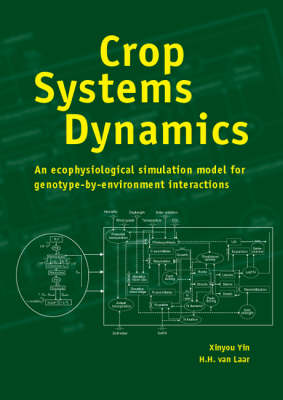
"This book presents a generic process-based crop growth model, GECROS (Genotype-by-Environment interaction on CROp growth Simulator), recently developed in Wageningen. The model uses robust yet simple algorithms to summarize the current knowledge of individual physiological processes and their interactions and feedback mechanisms. It was structured from the basics of whole-crop systems dynamics to embody the physiological causes rather than descriptive algorithms of the emergent consequences. It also attempts to model each process at a consistent level of detail, so that no area is overemphasized and similarly no area is treated in a trivial manner. Main attention has been paid to interactive aspects in crop growth such as photosynthesis-transpiration coupling via stomatal conductance, carbon-nitrogen interaction on leaf area index, functional balance between shoot and root activities, and interplay between source supply and sink demand on reserve formation and remobilization. GECROS combines robust model algorithm, high computational efficiency, and accurate model output with minimum number of input parameters that require periodical destructive sampling to estimate."
Preface; 1 Introduction 1; Brief summary of existing models 1; The need
for improved crop growth simulation models 3; Towards improved model
algorithms and structure 4; Towards improved model input parameters 5; The
crop growth simulation model - GECROS 6; Reader's guide 8; 2 Photosynthesis
and transpiration 9; Potential leaf photosynthesis 9; Potential leaf
transpiration and its coupling with potential photosynthesis 11; Actual leaf
transpiration and photosynthesis if water stress occurs 14; Spatial
integration 14; Temporal integration 18; 3 Respiration 20; Growth respiration
20; Respiration for symbiotic di-nitrogen (N2) fixation 21; Respiration for
ammonium-nitrogen uptake 21; Respiration for nitrate uptake and reduction 21;
Respiration for uptake of other ions 22; Respiration for phloem loading 22;
Other, less quantifiable respiration components 22; 4 Nitrogen assimilation
24; Nitrogen demand 24; Nitrogen fixation 27; Nitrogen uptake 27; 5
Assimilate partitioning and reserve dynamics 28; Partitioning between root
and shoot 28; Within-shoot carbon partitioning 29; Carbon reserves and their
remobilization
31. Within-shoot nitrogen partitioning 32; 6 Crop morphology,
senescence, and crop phenology 34; Leaf area index 34; Leaf senescence 35;
Root senescence 38; Plant height 39; Root depth 39; Phenological development
40; 7 Input requirements and model implementation in FST 43; Initialization
and biophysical inputs 43; Model constants 43; Crop-specific parameters 44;
Intra-crop genotypic-specific parameters 46; Crop carbon and nitrogen balance
check 48; Model evaluation 49; Model application 50; Model implementation in
FST 51; Making your first run of GECROS 54; References 55; Appendices 65;
Appendix A Summary of equations related to the leaf photosynthesis model 67;
Appendix B Calculations of input variables of Eqn (2): rt, rbh, rbw, and Rn
71; Appendix C Derivation of Eqn (9) 72; Appendix D Solar elevation,
daylength, and direct and diffuse solar radiation 73; Appendix E Canopy
extinction and reflection coefficients 75; Appendix F Derivations of Eqns
(15a-c) 77; Appendix G Derivation of Eqns (16a-c) 78; Appendix H Time course
of solar radiation and air temperature 79; Appendix I Derivation of Eqn (22)
80; Appendix J Derivation of Eqn (45) 82; Appendix K Derivation of Eqn (46)
83; Appendix L List of symbols (with units) used in the text 84; Appendix M
The example soil simulation model 91; Appendix N Listing of the FST program
for the model
98. Appendix O List of variables used in the model program 127;
The CROP part (the GECROS model) 127; The part for the example soil model
141; Appendix P A sample weather data file 145; Appendix Q Simulation outputs
using the sample weather data 147; Index 151.