Muutke küpsiste eelistusi

E-raamat: Culture and Addiction: Neuroscience and Affective Scaffolding

  • Formaat: PDF+DRM
  • Sari: Religion and Philosophy
  • Ilmumisaeg: 10-Feb-2026
  • Kirjastus: Palgrave Macmillan
  • Keel: eng
  • ISBN-13: 9783032091673
  • Formaat - PDF+DRM
  • Hind: 147,58 €*
  • * hind on lõplik, st. muud allahindlused enam ei rakendu
  • Lisa ostukorvi
  • Lisa soovinimekirja
  • See e-raamat on mõeldud ainult isiklikuks kasutamiseks. E-raamatuid ei saa tagastada.
  • Formaat: PDF+DRM
  • Sari: Religion and Philosophy
  • Ilmumisaeg: 10-Feb-2026
  • Kirjastus: Palgrave Macmillan
  • Keel: eng
  • ISBN-13: 9783032091673

DRM piirangud

  • Kopeerimine (copy/paste):

    ei ole lubatud

  • Printimine:

    ei ole lubatud

  • Kasutamine:

    Digitaalõiguste kaitse (DRM)
    Kirjastus on väljastanud selle e-raamatu krüpteeritud kujul, mis tähendab, et selle lugemiseks peate installeerima spetsiaalse tarkvara. Samuti peate looma endale  Adobe ID Rohkem infot siin. E-raamatut saab lugeda 1 kasutaja ning alla laadida kuni 6'de seadmesse (kõik autoriseeritud sama Adobe ID-ga).

    Vajalik tarkvara
    Mobiilsetes seadmetes (telefon või tahvelarvuti) lugemiseks peate installeerima selle tasuta rakenduse: PocketBook Reader (iOS / Android)

    PC või Mac seadmes lugemiseks peate installima Adobe Digital Editionsi (Seeon tasuta rakendus spetsiaalselt e-raamatute lugemiseks. Seda ei tohi segamini ajada Adober Reader'iga, mis tõenäoliselt on juba teie arvutisse installeeritud )

    Seda e-raamatut ei saa lugeda Amazon Kindle's. 
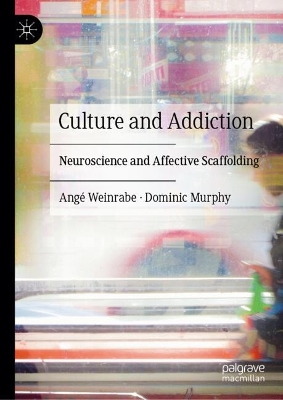
This book rethinks one of the most pressing issues of our time. Addiction is often framed solely as a brain disease, yet it reflects conditions that can touch anyone, shaped by culture, society, and the emotional worlds we inhabit. Culture and Addiction: Neuroscience and Affective Scaffolding suggests that a philosophical approach and critique of the reified addiction-as-disease concept is needed, before addressing the impact that non-evolutionary and evolutionary factors may have on human behavior. Presenting an ambitious interdisciplinary synthesis, this book challenges exclusively biomedical paradigms in addiction studies through what the authors term: "An Integrated Approach." It highlights the crucial role of affective, sensory, and spatial landscapes, while rigorously examining the cultural mechanisms that shape the emergence and remediation of addictive phenomena. By viewing addiction through the lens of scaffolding theory, cultural interaction, and social cognition, this book moves beyond conventional treatment models to reveal deeper, more nuanced ways of understanding compulsive behaviours and choices. The central aim is to integrate biological, psychological, and cultural dimensions, resisting the tendency to reduce addiction to either a purely medical condition or a purely social problem. Appealing to scholars, clinicians, policymakers, and advanced students in medicine, philosophy, and law, this book offers a transformative lens on one of society’s most urgent challenges.

Part I. Understanding Addiction and Its Explanatory Models.-
1.
Presenting the Addiction Landscape.-
2. The Scaffolding and the Plumbing.-
3.
Is Addiction a Disease?.- Part II. The Philosophical and Cultural Dimensions
of Addiction.-
4. Redirecting the Addiction Debate.-
5.
Culture-as-Interaction (CAI).-
6. Culture-as-Practice (CAP).-
7. Conclusion:
Rethinking Addiction Through Culture and Scaffolding.
Angé Weinrabe is a research affiliate at The University of Sydney, Australia.


Dominic Murphy is Professor of History and Philosophy of Science at The University of Sydney, Australia.