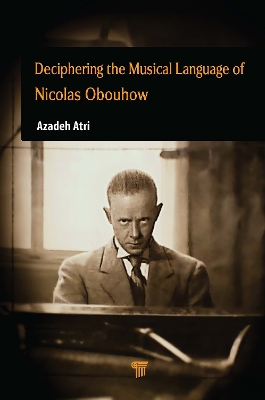
Nicolas Borisovich Obouhow (18921954) plays a significant role as an avant-garde composer who experimented, very early, with a 12-tone system and electronic sounds. This monograph reveals that Obouhow composed under the guise of a highly organised system which was formed and influenced by a mystical search that places him in a broader international cultural context associated with the occult and a belief in the transcendental power of sound. Through detailed and intelligible analysis of his compositions, the author also deciphers how Obouhows 12-tone harmonies and synthetic scale systems operate.
The story of Obouhow and his life-long quest, through his craft, for peace and unity, in a world destabilised by the upheavals of the 20th century, amidst war, revolution and expatriation, is not just the curious tale of a maverick émigré of bygone, tumultuous days. He embarked on his search more than a century ago, and his journey is still relevant today in a world that continues to experience upheavals and wars. This research examines the way Obouhows views were expressed in musical terms and how Obouhow contributed to the early decades of modernism with his highly creative methods and original musical language.
Prologue Introduction
1. The Russian and the Paris Periods
2. Structural
Characteristics
3. In Search of a New Harmonic Language
4. Scales and
Intervallic Series that Defy Tonal Gravity
5. Glissandi and Ostinati: Two
Extensively Used Techniques
6. Variants as Evolutionary Steps towards
Orchestration Epilogue Appendices
Azadeh Atri is a PersianAustralian composer, pianist, music educator, scholar, and essayist. She gained first-class honors for writing piano compositions of pedagogical intent, becoming the first composer to incorporate aspects of traditional Persian sources into pedagogical pieces. These works are available on the website of the National Library of Australia. Dr Atri completed her doctoral degree at the Australian National University, and her primary research area is the compositional methods of early 20th-century composers, particularly those of Nicolas Obouhow. Her research interests also include arts education and the professional development of arts teachers. An article to which she contributed was published in the UNESCO Observatory Multi-Disciplinary Journal in the Arts. Dr Atris philosophical essays and short stories, titled Deliriums, were published by Ginninderra Press in 2018.

 Lisainfo e-raamatute kohta