Muutke küpsiste eelistusi

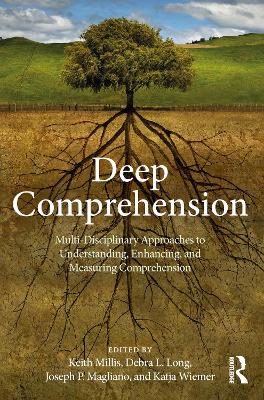
E-raamat: Deep Comprehension: Multi-Disciplinary Approaches to Understanding, Enhancing, and Measuring Comprehension

Edited by (Northern Illinois University, USA), Edited by (Northern Illinois University, USA), Edited by , Edited by
  • Formaat: EPUB+DRM
  • Ilmumisaeg: 25-Sep-2018
  • Kirjastus: Routledge
  • Keel: eng
  • ISBN-13: 9781351613262
Teised raamatud teemal:
  • Formaat - EPUB+DRM
  • Hind: 54,59 €*
  • * hind on lõplik, st. muud allahindlused enam ei rakendu
  • Lisa ostukorvi
  • Lisa soovinimekirja
  • See e-raamat on mõeldud ainult isiklikuks kasutamiseks. E-raamatuid ei saa tagastada.
  • Formaat: EPUB+DRM
  • Ilmumisaeg: 25-Sep-2018
  • Kirjastus: Routledge
  • Keel: eng
  • ISBN-13: 9781351613262
Teised raamatud teemal:

DRM piirangud

  • Kopeerimine (copy/paste):

    ei ole lubatud

  • Printimine:

    ei ole lubatud

  • Kasutamine:

    Digitaalõiguste kaitse (DRM)
    Kirjastus on väljastanud selle e-raamatu krüpteeritud kujul, mis tähendab, et selle lugemiseks peate installeerima spetsiaalse tarkvara. Samuti peate looma endale  Adobe ID Rohkem infot siin. E-raamatut saab lugeda 1 kasutaja ning alla laadida kuni 6'de seadmesse (kõik autoriseeritud sama Adobe ID-ga).

    Vajalik tarkvara
    Mobiilsetes seadmetes (telefon või tahvelarvuti) lugemiseks peate installeerima selle tasuta rakenduse: PocketBook Reader (iOS / Android)

    PC või Mac seadmes lugemiseks peate installima Adobe Digital Editionsi (Seeon tasuta rakendus spetsiaalselt e-raamatute lugemiseks. Seda ei tohi segamini ajada Adober Reader'iga, mis tõenäoliselt on juba teie arvutisse installeeritud )

    Seda e-raamatut ei saa lugeda Amazon Kindle's. 

This volume provides an overview of research from the learning sciences into understanding, enhancing, and measuring "deep comprehension" from a psychological, educational, and psychometric perspective. It describes the characteristics of deep comprehension, what techniques may be used to improve it, and how deep levels of comprehension may be distinguished from shallow ones. It includes research on personal-level variables; how intelligent tutors promote comprehension; and the latest developments in psychometrics. The volume will be of interest to senior undergraduate and graduate students of cognitive psychology, learning, cognition and instruction, and educational technology.

Arvustused

One of the hallmarks of an educated mind is the ability to think critically and analytically about what is read, seen, or heard; in effect, to look beyond the words to the message that lies within. That very ability is the essence of deep comprehension and the theme that weaves through the pages of this thoughtful and invaluable book by Millis, Long, Magliano, and Wiemer. Given the complex and often confusing world in which we find ourselves, there is no more essential topic to be explored than what it means to understand textin its many formsdeeply. This edited volume not only seeks to address that timely topic, but also to arm educators with the knowledge required to measure depth of understanding accurately and to facilitate students engagement in deep learning effectively. There is no more thorough treatment of these vital topics than Deep Comprehensiona must read for anyone who values the ability to think beyond the words read, seen, or heard to the message that lies within. Professor Patricia Alexander, Ph.D., University of Maryland, College Park

List of Contributors
x
Introduction xiv
Keith Millis
Debra L. Long
Joseph P. Magliano
Katja Wiemer
PART I Understanding Deep Comprehension
1(96)
1 Prose Comprehension Beyond the Page
3(13)
Jennifer Wiley
Tricia A. Guerrero
2 Prose Comprehension Beyond the Word Revisited
16(11)
Rolf A. Zwaan
3 A Memory Retrieval View of Text Comprehension
27(14)
Debra L. Long
Erin M. Freed
4 Standards of Coherence in Reading: Variations in Processing and Comprehension of Text
41(11)
Marja Oudega
Paul van den Broek
5 What Do We Think About When We Learn?
52(16)
Sidney K. D'Mello
6 Reusing Neural Networks for Deep Comprehension
68(12)
Manuel de Vega
David Beltran
7 What Are We Reading For? A Disciplinary Literacy Perspective on Purpose
80(17)
Susan R. Goldman
MariAnne George
PART II Using Technology to Increase Deep Comprehension
97(98)
8 Learning Tasks in Electronic Environments: Advances Towards Interactive eTextbooks
99(15)
Eduardo Vidal-Abarca
Tomas Martinez
Laura Gil
Arantxa Garcia
Ignacio Manez
9 How Can FACT Encourage Collaboration and Self-Correction?
114(14)
Kurt VanLehn
Hugh Burkhardt
Salman Cheema
Daniel Read
Alan Schoenfeld
Jon Wetzel
10 Design Principles for Virtual Humans in Educational Technology Environments
128(12)
Scotty D. Craig
Noah L. Schroeder
11 AutoTutor: An Intelligent Tutoring System and Its Authoring Tools
140(14)
Zhiqiang Cai
Xiangen Hu
12 The Unreasonable Effectiveness of AutoTutor
154(12)
Andrew M. Olney
13 Scaffolding Adult Learners' Reading Strategies in the Intelligent Tutoring System
166(14)
Haiying Li
Whitney Baer
14 Learning Scientific Inquiry from a Serious Game that Uses AutoTutor
180(15)
Keith Millis
Carol Forsyth
Katja Wiemer
Patricia Wallace
Christian Steciuch
PART III Measuring Deep Comprehension
195(83)
15 Using Scenario-Based Assessments to Measure Deep Learning
197(12)
Tenaha O'Reilly
John Sabatini
Zuowei Wang
16 Eliciting Deeper Evidence through Conversation-Based Assessments
209(15)
Blair Lehman
G. Tanner Jackson
17 NLP: Getting Computers to Understand Discourse
224(13)
Danielle S. McNamara
Laura K. Allen
Kathryn S. McCarthy
Renu Balyan
18 Deep and Shallow Natural Language Understanding for Identifying Explanation Structure
237(16)
Peter Hastings
M. Anne Britt
Kathryn Rupp
Kristopher Kopp
Simon Hughes
19 Deep Comprehension of Text Revealed by Talking and Writing While Reading
253(12)
Joseph P. Magliano
Karyn Higgs
Keith Millis
20 Big Data for Thick Description of Deep Learning
265(13)
David Williamson Shaffer
Index 278
Keith Millis is Professor of Psychology at Northern Illinois University and Deputy Director of the Center for the Interdisciplinary Study of Language and Literacy (CISLL). He studies comprehension and learning from text.

Debra L. Long is Professor of Psychology at the University of California, Davis. She studies the knowledge and processes that are involved in text comprehension using behavioral, electrophysiological, and individual difference techniques.

Joseph P. Magliano is Professor of Psychology at Northern Illinois University and Director of the Center for the Interdisciplinary Study of Language and Literacy (CISLL). He studies comprehension processes for text and film.

Katja Wiemer is Professor of Psychology at Northern Illinois University and Co-Director of the Cognitive Science program. Her research focuses on abstract concepts, embodiment, and causal relations in scientific explanations.