Muutke küpsiste eelistusi

E-raamat: Digital Nationalism and Affective Governance: Propaganda, Public Sentiment, and Soft Authoritarianism in China

  • Formaat: EPUB+DRM
  • Ilmumisaeg: 26-May-2026
  • Kirjastus: Routledge
  • Keel: eng
  • ISBN-13: 9781040919002
  • Formaat - EPUB+DRM
  • Hind: 59,79 €*
  • * hind on lõplik, st. muud allahindlused enam ei rakendu
  • See e-raamat ei ole veel ilmunud. Saate seda tellida alles alates: 26-May-2026
  • Lisa soovinimekirja
  • See e-raamat on mõeldud ainult isiklikuks kasutamiseks. E-raamatuid ei saa tagastada.
  • Formaat: EPUB+DRM
  • Ilmumisaeg: 26-May-2026
  • Kirjastus: Routledge
  • Keel: eng
  • ISBN-13: 9781040919002

DRM piirangud

  • Kopeerimine (copy/paste):

    ei ole lubatud

  • Printimine:

    ei ole lubatud

  • Kasutamine:

    Digitaalõiguste kaitse (DRM)
    Kirjastus on väljastanud selle e-raamatu krüpteeritud kujul, mis tähendab, et selle lugemiseks peate installeerima spetsiaalse tarkvara. Samuti peate looma endale  Adobe ID Rohkem infot siin. E-raamatut saab lugeda 1 kasutaja ning alla laadida kuni 6'de seadmesse (kõik autoriseeritud sama Adobe ID-ga).

    Vajalik tarkvara
    Mobiilsetes seadmetes (telefon või tahvelarvuti) lugemiseks peate installeerima selle tasuta rakenduse: PocketBook Reader (iOS / Android)

    PC või Mac seadmes lugemiseks peate installima Adobe Digital Editionsi (Seeon tasuta rakendus spetsiaalselt e-raamatute lugemiseks. Seda ei tohi segamini ajada Adober Reader'iga, mis tõenäoliselt on juba teie arvutisse installeeritud )

    Seda e-raamatut ei saa lugeda Amazon Kindle's. 
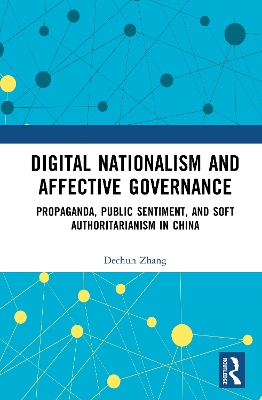
This book examines how government propaganda and everyday online activity shaped China’s digital nationalism in response to the first wave of the Covid-19 pandemic.


This book examines how government propaganda and everyday online activity shaped China’s digital nationalism in response to the first wave of the Covid-19 pandemic.

With a focus on Weibo, it demonstrates how state media promoted nationalism and how the public responded by either supporting or quietly challenging official narratives, or reshaping them. Using a variety of methods, including large-scale social media analysis and focused case studies, the book shows how digital platforms became pivotal communication hubs during the pandemic. The book also examines state-led digital propaganda by outlets such as People's Daily, public reactions to China's vaccine policy, and the anger surrounding the Wuhan Red Cross scandal. Together, these cases reveal how emotion, visibility and participation interact to sustain 'soft authoritarianism', a form of governance based not only on censorship, but also on managing public sentiment and engagement. Accessible and timely, this book provides a new perspective on the relationship between propaganda, nationalism and digital media. It illustrates how nationalism and political authority are co-produced online and how governments and citizens negotiate power in an increasingly digital society.

This book will be invaluable for scholars and students of political communication and digital media, as well as for those interested in the digital society of China.

Arvustused

"The recent pandemic generated both intense online nationalism in China but also the expression of grievances. This well-researched book provides fascinating insights into the role played by social media, which may be a harbinger of things to come."

Ralph Schroeder, University of Oxford, UK

"Using the first wave of the COVID-19 pandemic as a case study, this book examines how nationalism is co-produced by state actors and citizens in China. It is particularly valuable for its detailed mapping of the discourses on one social media platformSina Weiboin these processes."

Guobin Yang, University of Pennsylvania, USA

"This book offers a sharp, timely analysis of how digital nationalism took shape on Weibo during COVID-19, revealing the dynamic interplay between state messaging and grassroots expression. Through rich cases and a mixed-methods approach, it demonstrates how digital platforms mediate power, identity, and emotion, making a valuable contribution to understanding politics in the digital age."

Taberez Ahmed Neyazi, National University of Singapore, Singapore

1. Introduction
2. Society and Nationalism Turning Digital
3. Digital
Propaganda and Nationalism in Peoples Daily
4. The Emotional Mobilization in
COVID-19 Propaganda
5. Chinas Vaccine Nationalism from Top-Down and
Bottom-Up
6. Digital Populist Nationalism and the Red Cross Scandal
7.
Conclusion: Negotiating Power and Nationalism Online
Dechun Zhang (PhD, Leiden University) is a Postdoctoral Researcher in the Department of Communication at the University of Copenhagen. His work examines political communication, digital politics, propaganda, and online activism. He has published widely in international journals and edited volumes on political communication and digital media.