Muutke küpsiste eelistusi

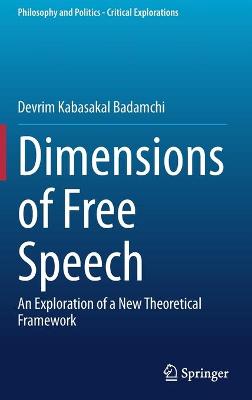
E-raamat: Dimensions of Free Speech: An Exploration of a New Theoretical Framework

  • Formaat - EPUB+DRM
  • Hind: 110,53 €*
  • * hind on lõplik, st. muud allahindlused enam ei rakendu
  • Lisa ostukorvi
  • Lisa soovinimekirja
  • See e-raamat on mõeldud ainult isiklikuks kasutamiseks. E-raamatuid ei saa tagastada.

DRM piirangud

  • Kopeerimine (copy/paste):

    ei ole lubatud

  • Printimine:

    ei ole lubatud

  • Kasutamine:

    Digitaalõiguste kaitse (DRM)
    Kirjastus on väljastanud selle e-raamatu krüpteeritud kujul, mis tähendab, et selle lugemiseks peate installeerima spetsiaalse tarkvara. Samuti peate looma endale  Adobe ID Rohkem infot siin. E-raamatut saab lugeda 1 kasutaja ning alla laadida kuni 6'de seadmesse (kõik autoriseeritud sama Adobe ID-ga).

    Vajalik tarkvara
    Mobiilsetes seadmetes (telefon või tahvelarvuti) lugemiseks peate installeerima selle tasuta rakenduse: PocketBook Reader (iOS / Android)

    PC või Mac seadmes lugemiseks peate installima Adobe Digital Editionsi (Seeon tasuta rakendus spetsiaalselt e-raamatute lugemiseks. Seda ei tohi segamini ajada Adober Reader'iga, mis tõenäoliselt on juba teie arvutisse installeeritud )

    Seda e-raamatut ei saa lugeda Amazon Kindle's. 

This book offers a new theoretical framework for free speech by critically analyzing the major justifications for free speech. 

Unlike most theories that justify free speech on single grounds, this book argues for a justification; namely the double grounded principled approach; that combines and revises the arguments of equal autonomy and democratic participation at the same time. It claims that a revised and critical blending of these two justifications can serve free speech to be grounded on strong principled arguments. The book has both a theoretical and practical focus: first, it discusses the conceptual circumstances of free speech and major theoretical justifications for free speech and then, it applies the developed theoretical framework to the cases of academic freedom, media freedom and hate speech separately. 

This volume will appeal to readers who are interested in general free speech theories as well as readers who look for an alternative view on specific topics such as academic freedom, media freedom and hate speech.

Chapter
1. Sceptic and Absolutist Views on Free Speech.
Chapter
2. Setting the Conceptual Ground.
Chapter
3. How to Justify Free Speech.
Chapter
4. Academic Freedom and Free Speech.
Chapter
5. Media Freedom, Free Speech and Regulation of Online Speech.
Chapter
6. Hate Speech and the Limits of Free Speech.
Dr. Devrim Kabasakal Badamchi earned her bachelors degree from Ankara University in 2000, her masters degree from Middle East Technical University in 2002 and her PhD from Luiss Guido Carli University in Italy in 2009. She held teaching and research positions in Turkey and England. Since July 2020, she is a lecturer at the Department of Political Science, Leiden University. Her research falls within the field of contemporary political theory with a focus on liberalism. She specializes in topics such as free speech, hate speech, toleration, multiculturalism and pluralism. Dr. Badamchi has published articles in various peer reviewed journals including Turkish Studies and Philosophy and Social Criticism.