Muutke küpsiste eelistusi

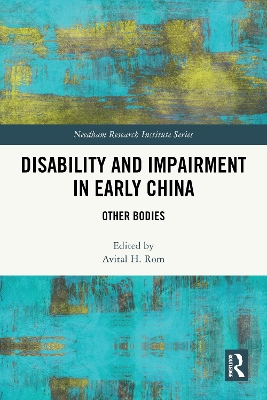
E-raamat: Disability and Impairment in Early China: Other Bodies

Edited by
  • Formaat - PDF+DRM
  • Hind: 59,79 €*
  • * hind on lõplik, st. muud allahindlused enam ei rakendu
  • Lisa ostukorvi
  • Lisa soovinimekirja
  • See e-raamat on mõeldud ainult isiklikuks kasutamiseks. E-raamatuid ei saa tagastada.
  • Raamatukogudele

DRM piirangud

  • Kopeerimine (copy/paste):

    ei ole lubatud

  • Printimine:

    ei ole lubatud

  • Kasutamine:

    Digitaalõiguste kaitse (DRM)
    Kirjastus on väljastanud selle e-raamatu krüpteeritud kujul, mis tähendab, et selle lugemiseks peate installeerima spetsiaalse tarkvara. Samuti peate looma endale  Adobe ID Rohkem infot siin. E-raamatut saab lugeda 1 kasutaja ning alla laadida kuni 6'de seadmesse (kõik autoriseeritud sama Adobe ID-ga).

    Vajalik tarkvara
    Mobiilsetes seadmetes (telefon või tahvelarvuti) lugemiseks peate installeerima selle tasuta rakenduse: PocketBook Reader (iOS / Android)

    PC või Mac seadmes lugemiseks peate installima Adobe Digital Editionsi (Seeon tasuta rakendus spetsiaalselt e-raamatute lugemiseks. Seda ei tohi segamini ajada Adober Reader'iga, mis tõenäoliselt on juba teie arvutisse installeeritud )

    Seda e-raamatut ei saa lugeda Amazon Kindle's. 

This book is the first collection of scholarly works fully dedicated to exploring disability and impairment in early Chinese history.

Early Chinese understandings of disability are effectively revealed through investigations of a wide range of aspects, such as terminological, legal, political, and etiological. The volume explores how early Chinese disability was socially negotiated as a means for creating enabled, and at times empowered identities. It shows how oppression and empowerment, when viewed through the prism of such negotiations of identity, were not mutually exclusive. Through such examinations the volume demonstrates how an approach sensitive to both the separability and the interconnectedness of disability and impairment enables a more nuanced understanding of Chinese disability history specifically, and Chinese notions of embodiment more generally.

Bringing together international academics to examine a plethora of topics relating to disability and bodily impairment in early Chinese history, with an eye on their socio-political implications, this book will appeal to students and scholars of Chinese History, History of Medicine and Disability Studies.


This book is the first collection of scholarly works fully dedicated to exploring disability and impairment in early Chinese history.

Introduction Part 1: Conceptualizing Disability in and Around Court
1.
Accounting for the disabled in early China: A Review of the Terminology Used
to Describe and Define Disability
2. 'Disability in the Laws of Early and
Middle Period China
3. Entangled Bodies and the Birth of a Disabled King
4.
Etiologies of Perceptual Impairment and the Responsibilities of Rulership
Part 2: Mind the Body: Disabling Impairment
5. Ambiguities of Blindness in
Early China: Respected Blind Musicians (Gu) Versus Pitied Visually
Disabled People (Gu/Mang)
6. Sound Minds: Deafness and Deaf Metaphors in
Early Chinese Texts
7. Three Views of Kuang (Madness) in Early Chinese
Thought
8. Records of Dementia and Brain Damage (Kuang ) in Early and
Medieval China Part 3: Negotiating Identities: Enabling Impairment
9.
Empowering Mutilations: Political Aspects of Disability in Early China
10.
Deviant and Defiant Bodies in Early China: the Case of the Hunched Zhili Shu
11. Dwarfs in Early China
Avital H. Rom is a Leverhulme Early Career Fellow at the Faculty of Asian and Middle Eastern Studies and a Gulbenkian Research Fellow at Churchill College, University of Cambridge.