Muutke küpsiste eelistusi
  • Formaat - EPUB+DRM
  • Hind: 59,79 €*
  • * hind on lõplik, st. muud allahindlused enam ei rakendu
  • Lisa ostukorvi
  • Lisa soovinimekirja
  • See e-raamat on mõeldud ainult isiklikuks kasutamiseks. E-raamatuid ei saa tagastada.
  • Raamatukogudele

DRM piirangud

  • Kopeerimine (copy/paste):

    ei ole lubatud

  • Printimine:

    ei ole lubatud

  • Kasutamine:

    Digitaalõiguste kaitse (DRM)
    Kirjastus on väljastanud selle e-raamatu krüpteeritud kujul, mis tähendab, et selle lugemiseks peate installeerima spetsiaalse tarkvara. Samuti peate looma endale  Adobe ID Rohkem infot siin. E-raamatut saab lugeda 1 kasutaja ning alla laadida kuni 6'de seadmesse (kõik autoriseeritud sama Adobe ID-ga).

    Vajalik tarkvara
    Mobiilsetes seadmetes (telefon või tahvelarvuti) lugemiseks peate installeerima selle tasuta rakenduse: PocketBook Reader (iOS / Android)

    PC või Mac seadmes lugemiseks peate installima Adobe Digital Editionsi (Seeon tasuta rakendus spetsiaalselt e-raamatute lugemiseks. Seda ei tohi segamini ajada Adober Reader'iga, mis tõenäoliselt on juba teie arvutisse installeeritud )

    Seda e-raamatut ei saa lugeda Amazon Kindle's. 

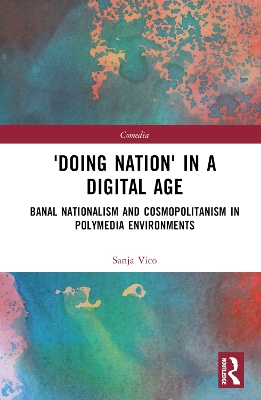
This book introduces a new theory of national identity, arguing that the nation does not only represent an abstract “imagined community”, but that it also represents embodied cultural and discursive practices.


This book introduces a new theory of national identity, arguing that the nation does not only represent an abstract “imagined community” but also represents embodied cultural and discursive practices.

Drawing upon a detailed case study of Serbian Londoners, this truly interdisciplinary study positions media as constitutive of national identities. The author contends that nations come into being and are sustained through everyday interpersonal communication practices that have increasingly become mediated, especially for migrants. She develops the concept of "doing nation" to argue that we should think of the nation as a dynamic process. Situated first within a particular migration context, the concept is then applied more broadly as everyday communication practices are becoming increasingly mediated worldwide.

Covering a breadth of key theories and concepts in this field, including diaspora, ethnicity, nationalism, cosmopolitanism, social media affordances and polymedia, this book will appeal to scholars and students researching digital media, migration, identities, nationalism and cosmopolitanism in the social science disciplines.

Chapter 1: Introduction

Chapter 2: National and Cosmopolitan Identities

Chapter 3: Digital Media Environments in the Context of Migration

Chapter 4: Research Design and Methodology

Chapter 5: Who are the Serbian Londoners?

Chapter 6: Destigmatisation Strategies of Serbian Londoners in Polymedia

Chapter 7: Polymedia Environments of Serbian Londoners: Privately and
Publicly Oriented Platforms

Chapter 8: The Role of Mediated Interpersonal Communication in Doing
Nation

Chapter 9: Conclusion
Sanja Vico is a lecturer in Communications and Digital Media at the University of Exeter. She previously worked as a researcher (postdoc) on an ERC-funded project "Justice Interactions and Peacebuilding" (JUSTINT) at the London School of Economics and Political Sciences (LSE). She obtained a PhD in Media and Communications from Goldsmiths, University of London, having previously graduated from the LSE and the University of Belgrade. She has published on issues of digital media in contexts of migration, nationalism, identity and post-conflict justice and peacebuilding. She received an honourable mention Best Paper Award Senior Scholar from the European Communication Research and Education Association (ECREA) for her paper "Globalized difference:" identity politics on social media.