Muutke küpsiste eelistusi

E-raamat: Economics of Lawmaking

  • Formaat: PDF+DRM
  • Ilmumisaeg: 29-Dec-2008
  • Kirjastus: Oxford University Press Inc
  • Keel: eng
  • ISBN-13: 9780199705863
  • Formaat - PDF+DRM
  • Hind: 64,00 €*
  • * hind on lõplik, st. muud allahindlused enam ei rakendu
  • Lisa ostukorvi
  • Lisa soovinimekirja
  • See e-raamat on mõeldud ainult isiklikuks kasutamiseks. E-raamatuid ei saa tagastada.
  • Raamatukogudele
    • Oxford Scholarship Online e-raamatud
  • Formaat: PDF+DRM
  • Ilmumisaeg: 29-Dec-2008
  • Kirjastus: Oxford University Press Inc
  • Keel: eng
  • ISBN-13: 9780199705863

DRM piirangud

  • Kopeerimine (copy/paste):

    ei ole lubatud

  • Printimine:

    ei ole lubatud

  • Kasutamine:

    Digitaalõiguste kaitse (DRM)
    Kirjastus on väljastanud selle e-raamatu krüpteeritud kujul, mis tähendab, et selle lugemiseks peate installeerima spetsiaalse tarkvara. Samuti peate looma endale  Adobe ID Rohkem infot siin. E-raamatut saab lugeda 1 kasutaja ning alla laadida kuni 6'de seadmesse (kõik autoriseeritud sama Adobe ID-ga).

    Vajalik tarkvara
    Mobiilsetes seadmetes (telefon või tahvelarvuti) lugemiseks peate installeerima selle tasuta rakenduse: PocketBook Reader (iOS / Android)

    PC või Mac seadmes lugemiseks peate installima Adobe Digital Editionsi (Seeon tasuta rakendus spetsiaalselt e-raamatute lugemiseks. Seda ei tohi segamini ajada Adober Reader'iga, mis tõenäoliselt on juba teie arvutisse installeeritud )

    Seda e-raamatut ei saa lugeda Amazon Kindle's. 

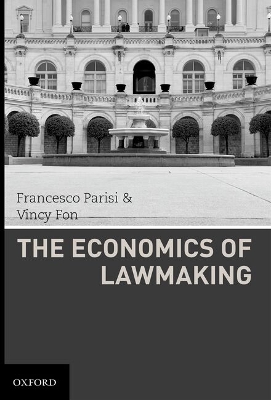
The Economics of Lawmaking explores the relative advantages and limits of alternative sources of law. Francesco Parisi and Vincy Fon explore the process of legal rule production while considering issues of institutional design from a law and economics point of view.
The authors provide a comprehensive overview of the four fundamental sources of law: legislation, judge-made law. customary law, and international law. The defining features of these four sources are then dissected and closely examined using economic analysts and public choice theory. Each part includes an introduction into the lawmaking process for each source, and goes on to discuss such other issues as the optimal specificity of law in legislation to the theories of legal precedent, and to changes in customary lawmaking.

The Economics of Lawmaking explores the relative advantages and limits of alternative sources of law. Professors Francesco Parisi and Vincy Fon view the sources of law through a law and economics lens, and consider the important issue of institutional design in lawmaking. They consider the respective advantages and proper scope of application of four fundamental sources of law: legislation, judge-made law, customary law, and international law. The defining features of these four sources of law are examined using the formal methods of public choice theory: lawmaking through legislation; lawmaking through adjudication; lawmaking through practice; and lawmaking through agreement.

This book begins by examining the sources of law dependent on collective political decision-making, such as legislation. Multiple issues are considered, such as optimal specificity of law, optimal timing of legal intervention and optimal territorial scope of law, and include a thorough discussion on the sources of law derived from judges' decisions, such as common law. Parisi and Fon provide an extensive study on the roles of litigation and judicial path-dependence on judge-made law, biases in the evolution of legal remedies through litigation, and the effect of alternative doctrines of legal precedent, such as stare decisis and jurisprudence constante. They also consider the customary sources of law, with special attention on the mechanisms that determine their emergence and evolution, and explore sources of law derived from international treaties and conventions. The Economics of Lawmaking is the first systematic law and economics treatment of this field and will shed new light on the process of lawmaking.
Acknowledgements ; Introduction ; PART I ? Lawmaking through
Legislation: Codified Law ;
Chapter
1. ; Lawmaking through Legislation: An
Introduction ;
Chapter
2. ; Optimal Specificity of Laws: Rules versus
Standards ;
Chapter
3. ; Optimal Timing of Legal Intervention: Lawmaking
under Uncertainty ;
Chapter
4. ; Optimal Territorial Scope of Laws:
Subsidiarity and Legal Harmonization ; PART II ? Lawmaking through
Adjudication: Judge-Made Law ;
Chapter
5. ; Lawmaking through Adjudication:
An Introduction ;
Chapter
6. ; Litigation and the Evolution of Legal
Remedies ;
Chapter
7. ; Judicial Path-Dependence and Legal Change ;
Chapter
8. ; Theories of Legal Precedent: Stare Decisis and Jurisprudence Constante
; PART III ? Lawmaking through Practice: Customary Law ;
Chapter
9. ;
Lawmaking through Practice: An Introduction ;
Chapter
10. ; Fostering the
Emergence of Customary Law ;
Chapter
11. ; Customary Law and Articulation
Theories ;
Chapter
12. ; Stability and Change in Customary Law ; PART IV ?
Lawmaking through Agreement: Treaty Law ;
Chapter
13. ; Lawmaking through
Agreement: An Introduction ;
Chapter
14. ; Formation and Accession to
Treaties ;
Chapter
15. ; Ratification and Reservations: The Effects of
Reciprocity ;
Chapter
16. ; The Hidden Bias of Treaty Law ; Conclusions
Francesco Parisi is a Professor of Law at the University of Minnesota Law School and a Professor of Economics at the University of Bologna, Department of Economics. In 2002, he was appointed Professore Ordinario per Chiara Fama at the University of Milan (Statale) where he held a Chair in Private Law. From 1993 to 2006, he taught at George Mason University where he served as Professor of Law & Director of the Law and Economics Program and as an Associate Director of the J.M. Buchanan Center for Political Economy. Professor Parisi received his D.Jur. degree from the University of Rome "La Sapienza", an LL.M., a J.S.D. and an M.A. degree in Economics from the University of California at Berkeley and a Ph.D in Economics from George Mason University. He is the author of ten books and over one-hundred and fifty papers in the field of law and economics. Professor Parisi currently serves as Editor-in-Chief of the Review of Law and Economics and the Supreme Court Economic Review. He is a

member of the board of editors of the International Review of Law and Economics, the journal of Public Choice, and the American Journal of Comparative Law.

Vincy Fon received her PhD in economics from the University of Kansas. Her research areas include law and economics and applied microeconomics. Among other courses, she teaches graduate microeconomics, undergraduate law and economics, and undergraduate game theory. She has served as a program director in the economics program at the National Science Foundation and as a consultant for the World Bank.