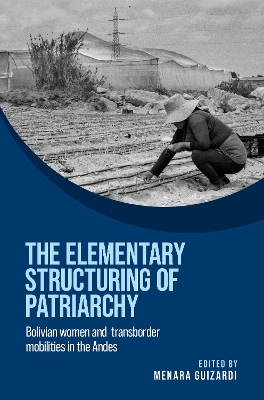
Based on an ethnographic study on the Andean Tri-border (between Chile, Peru, and Bolivia), this volume addresses the experience of Aymara cross-border women from Bolivia employed in the rural valleys on the outskirts of Arica (Chile’s northernmost city). As protagonists of transborder mobility circuits, these women are intersectionally impacted by different forms of social vulnerability. With a feminist anthropological perspective, the book investigates how the boundaries of gender are constructed in the (multi)situated experience of these transborder women. By building a bridge between classical anthropological studies on kinship and contemporary debates on transnational and transborder mobility, the book invites us to rethink structuralist theoretical assertions on the elementary character of family alliances.
Based on ethnographic material and the life histories of indigenous women, the volume establishes a bridge between the classical anthropological studies on kinship and the contemporary research on the gender inequalities in transnational and transborder migrant families. This ethnographically informed exercise establishes a critical feminist contribution to the study of border territories.
Part I: The volume and its theoretical approaches
Introduction Menara Guizardi and Herminia Gonzįlvez
1 The elemental triad Menara Guizardi
2 (Re)thinking complementarity Menara Guizardi, Herminia Gonzįlvez, Esteban
Nazal, and Lina Magalhćes
Part II: The Chilean and Bolivian sides of the Andean Tri-border
3 The interstices of history Menara Guizardi, Felipe Valdebenito, and Pablo
Mardones
4 The context through images Menara Guizardi, Claudio Casparrino, and
Felipe Valdebenito
5 Gendered mobility Menara Guizardi, Esteban Nazal, and Lina Magalhćes
Part III: Migratory insertion and transborder violence
6 Care across gender boundaries Menara Guizardi, Herminia Gonzįlvez, and
Eleonora López
7 On gifts and multiple presence Menara Guizardi, Isabel Araya, and Lina
Magalhćes
8 Borderization is gendered Menara Guizardi, Carolina Stefoni, and Eleonora
López
9 The hidden sites of violence Menara Guizardi, Carolina Stefoni, Isabel
Araya, Lina Magalhćes, and Eleonora López
Epilogue Menara Guizardi
Index -- .
Menara Guizardi is Adjunct Researcher at the National Council for Scientific and Technical Research of Argentina, and an associate researcher at the University of Tarapacį. -- .

 Lisainfo e-raamatute kohta