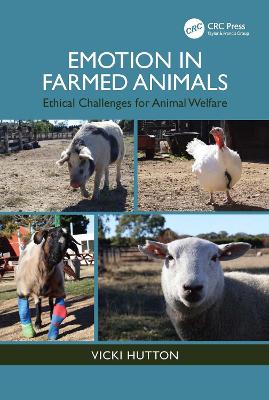
Farmed animals all have stories to tell but few get the chance to do so; this book amplifies their unique voices via the narratives of rescued animals. Each chapter looks at a species’ entwined history with humanity as well as the biological and neurological structures that confirm their ability to experience positive and negative emotions.
The emergence of scientific data confirming the capacity of nonhuman animals to feel what is happening to them and experience positive and negative emotions has created an uncomfortable moral dilemma for many humans. To meet demand for animal products in the 21st century, millions of animals are confined and suffer in industrial farm settings.
Acknowledging that a sense of helplessness to end this entrenched suffering on such a large scale can lead to inertia, this book instead seeks to bring change through stories of individual animals now living on farmed animal sanctuaries. These rescued animals have narratives that reveal them as individuals with emotional capacity and a future. Each chapter looks at a particular species’ entwined history with humanity, as well as the biological and neurological structures that unequivocally confirm their ability to experience positive and negative emotions. This aspect is brought to life through the stories of individual animals living the good life after rescue and rehabilitation.
Farmed animals all have stories to tell but few get the chance to do so; this book amplifies the voices of those who have been able to reclaim basic rights in a human-dominated world with their stories providing insight into the uniqueness of every pig, cow, bird, rabbit and more intended for our plates and others for companionship or sheer joy.
This book will be of interest to those studying or working in animal ethics, welfare and law; veterinary science; running a farmed animal sanctuary; or simply seeking to understand more about the animals with whom we share this planet.
Introduction
1. Welfare, ethics and productivity: An incompatible mix?
2. Farmed animal sanctuaries: A growing movement
3. Cattlesentient animals,
not raw materials
4. Pigscomplex and intelligent individuals
5.
Sheepresilient and unique personalities
6. Goatsmischievous and fun-loving
characters
7. Chickensforaging with friends
8. Roostersfriends and
protectors
9. Turkeysunique individuals, not celebratory meals
10.
Geeseintelligent, emotional and charming
11. Duckswater-loving and social
individuals
12. Alpacas and llamascharismatic and sensitive personalities
13. Camelsmajestic and resilient wanderers
14. Donkeys and mulessentient
animals, not beasts of burden
15. Rabbitssensitive and curious companions
16. ConclusionCrossroads in animal welfare
Vicki Hutton is passionate about animals and their welfare, having lived with, worked with, observed and written about animals for many years. After starting her career in the health and community sectors as a mental health therapist, Vicki now focuses on animal welfare and ethics, and the human-animal relationship. She currently lives with an assortment of animals who all contribute in their unique ways to her writing.

 Lisainfo e-raamatute kohta