Muutke küpsiste eelistusi

E-raamat: Empire of Conspiracy: The Culture of Paranoia in Postwar America

  • Formaat: EPUB+DRM
  • Ilmumisaeg: 01-Dec-2016
  • Kirjastus: Cornell University Press
  • Keel: eng
  • ISBN-13: 9781501713002
  • Formaat - EPUB+DRM
  • Hind: 27,65 €*
  • * hind on lõplik, st. muud allahindlused enam ei rakendu
  • Lisa ostukorvi
  • Lisa soovinimekirja
  • See e-raamat on mõeldud ainult isiklikuks kasutamiseks. E-raamatuid ei saa tagastada.
  • Formaat: EPUB+DRM
  • Ilmumisaeg: 01-Dec-2016
  • Kirjastus: Cornell University Press
  • Keel: eng
  • ISBN-13: 9781501713002

DRM piirangud

  • Kopeerimine (copy/paste):

    ei ole lubatud

  • Printimine:

    ei ole lubatud

  • Kasutamine:

    Digitaalõiguste kaitse (DRM)
    Kirjastus on väljastanud selle e-raamatu krüpteeritud kujul, mis tähendab, et selle lugemiseks peate installeerima spetsiaalse tarkvara. Samuti peate looma endale  Adobe ID Rohkem infot siin. E-raamatut saab lugeda 1 kasutaja ning alla laadida kuni 6'de seadmesse (kõik autoriseeritud sama Adobe ID-ga).

    Vajalik tarkvara
    Mobiilsetes seadmetes (telefon või tahvelarvuti) lugemiseks peate installeerima selle tasuta rakenduse: PocketBook Reader (iOS / Android)

    PC või Mac seadmes lugemiseks peate installima Adobe Digital Editionsi (Seeon tasuta rakendus spetsiaalselt e-raamatute lugemiseks. Seda ei tohi segamini ajada Adober Reader'iga, mis tõenäoliselt on juba teie arvutisse installeeritud )

    Seda e-raamatut ei saa lugeda Amazon Kindle's. 

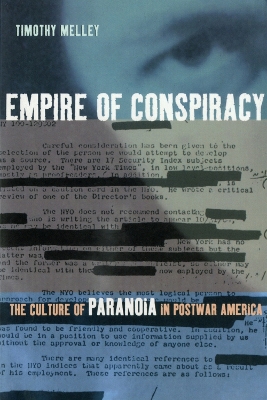
Why, Timothy Melley asks, have paranoia and conspiracy theory become such prominent features of postwar American culture? In Empire of Conspiracy, Melley explores the recent growth of anxieties about thought-control, assassination, political indoctrination, stalking, surveillance, and corporate and government plots. At the heart of these developments, he believes, lies a widespread sense of crisis in the way Americans think about human autonomy and individuality. Nothing reveals this crisis more than the remarkably consistent form of expression that Melley calls "agency panic"—an intense fear that individuals can be shaped or controlled by powerful external forces. Drawing on a broad range of forms that manifest this fear—including fiction, film, television, sociology, political writing, self-help literature, and cultural theory—Melley provides a new understanding of the relation between postwar American literature, popular culture, and cultural theory.Empire of Conspiracy offers insightful new readings of texts ranging from Joseph Heller's Catch-22 to the Unabomber Manifesto, from Vance Packard's Hidden Persuaders to recent addiction discourse, and from the "stalker" novels of Margaret Atwood and Diane Johnson to the conspiracy fictions of Thomas Pynchon, William Burroughs, Don DeLillo, and Kathy Acker. Throughout, Melley finds recurrent anxieties about the power of large organizations to control human beings. These fears, he contends, indicate the continuing appeal of a form of individualism that is no longer wholly accurate or useful, but that still underpins a national fantasy of freedom from social control.

Why, Timothy Melley asks, have paranoia and conspiracy theory become such prominent features of postwar American culture? In Empire of Conspiracy, Melley explores the recent growth of anxieties about thought-control, assassination, political...

Arvustused

Melley identifies an emerging irony that a 'supposedly individualist culture conserves its individualism by continually imagining it to be in imminent peril.'... Melley's commentary on the new significance of the corporation in the postwar period makes up one of the most interesting sections of his study... Empire of Conspiracy makes an important contribution to the current re-examination of Cold War culture, especially to the debate over human agency.

- David Seed, Liverpool University (Journal of American Studies) Since the 1950's, paranoia and conspiracy theory have increasingly surfaced in not only avant-garde literature, but marginal political discourse as well. Timothy Melley... calls these expressions of anxiety about the loss of personal control 'agency panic.'... He draws connections between... Thomas Pynchon, Don DeLillo and others to explain the culturewide significance of this syndrome.

(Publishers Weekly)

Timothy Melley is Associate Professor of English at Miami University of Ohio.