Muutke küpsiste eelistusi

E-raamat: Empire of Trauma: An Inquiry into the Condition of Victimhood

  • Formaat: PDF+DRM
  • Ilmumisaeg: 05-May-2026
  • Kirjastus: Princeton University Press
  • Keel: eng
  • ISBN-13: 9780691296715
  • Formaat - PDF+DRM
  • Hind: 38,67 €*
  • * hind on lõplik, st. muud allahindlused enam ei rakendu
  • Lisa ostukorvi
  • Lisa soovinimekirja
  • See e-raamat on mõeldud ainult isiklikuks kasutamiseks. E-raamatuid ei saa tagastada.
  • Formaat: PDF+DRM
  • Ilmumisaeg: 05-May-2026
  • Kirjastus: Princeton University Press
  • Keel: eng
  • ISBN-13: 9780691296715

DRM piirangud

  • Kopeerimine (copy/paste):

    ei ole lubatud

  • Printimine:

    ei ole lubatud

  • Kasutamine:

    Digitaalõiguste kaitse (DRM)
    Kirjastus on väljastanud selle e-raamatu krüpteeritud kujul, mis tähendab, et selle lugemiseks peate installeerima spetsiaalse tarkvara. Samuti peate looma endale  Adobe ID Rohkem infot siin. E-raamatut saab lugeda 1 kasutaja ning alla laadida kuni 6'de seadmesse (kõik autoriseeritud sama Adobe ID-ga).

    Vajalik tarkvara
    Mobiilsetes seadmetes (telefon või tahvelarvuti) lugemiseks peate installeerima selle tasuta rakenduse: PocketBook Reader (iOS / Android)

    PC või Mac seadmes lugemiseks peate installima Adobe Digital Editionsi (Seeon tasuta rakendus spetsiaalselt e-raamatute lugemiseks. Seda ei tohi segamini ajada Adober Reader'iga, mis tõenäoliselt on juba teie arvutisse installeeritud )

    Seda e-raamatut ei saa lugeda Amazon Kindle's. 

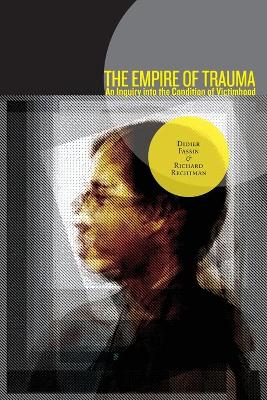
Today we are accustomed to psychiatrists being summoned to scenes of terrorist attacks, natural disasters, war, and other tragic events to care for the psychic trauma of victims--yet it has not always been so. The very idea of psychic trauma came into being only at the end of the nineteenth century and for a long time was treated with suspicion. The Empire of Trauma tells the story of how the traumatic victim became culturally and politically respectable, and how trauma itself became an unassailable moral category. Basing their analysis on a wide-ranging ethnography, Didier Fassin and Richard Rechtman examine the politics of reparation, testimony, and proof made possible by the recognition of trauma. They study the application of psychiatric victimology to victims of the 1995 terrorist bombings in Paris and the 2001 industrial disaster in Toulouse; the involvement of humanitarian psychiatry with both Palestinians and Israelis during the second Intifada; and the application of the psychotraumatology of exile to asylum seekers victimized by persecution and torture. Revealing how trauma has come to authenticate the suffering of victims, The Empire of Trauma provides critical perspective on some of the moral and political issues at stake in the contemporary world.

Arvustused

Winner of the 2010 William A. Douglass Prize for Best Book in Europeanist Anthropology, Society for the Anthropology of Europe/American Anthropological Association "A model contribution to this collective effort at understanding and mitigating the world's misery... [ This] calm and mighty book is no less than a staccato history of military and civilian suffering since 1914... Splendid."--Fred Inglis, Times Higher Education "A must read for those interested in trauma, this book looks at the ubiquity of trauma and the development of a new vocabulary and discourse of traumatic events."--A.N. Douglas, Choice "[ A]s Didier Fassin and Richard Rechtman elegantly describe in their new book, ... what has happened is nothing less than a fundamental change in what it means to be 'traumatised'... [ M]ental health professionals never seem far away from either challenge or crisis, which is why the work is so demanding but also stimulating and never dull. Much the same is true of Empire of Trauma."--Simon Wessely, British Medical Journal "A model of social inquiry, The Empire of Trauma is a major contribution not only to our understanding of trauma and the nature of victimhood but to our purchase on the times in which we live."--Joseph E. Davis, Canadian Journal of Sociology "This is an unusual book for the psychiatric bookshelf, because the authors seek to stand free of the scientific facts altogether and to ask simply what impact the emergence of the trauma narrative has had upon the world. This, they argue, is the anthropological stance: to ask how ideas emerge in a society and come to be seen as true, and what follows from that truth, without asking whether those ideas are in fact true. Because of this stance, the book will be read as provocative; but it should be read, because the authors have something to say."--Tanya M. Luhrmann, American Journal of Psychiatry "The Empire of Trauma: An Inquiry into the Condition of Victimhood makes a signal contribution to the genre of 'the history of the present'... The detail and finesse with which theory and data are woven together for each case makes this book compelling... [ I]ndeed, a splendid achievement."--Veena Das, American Journal of Sociology "[ T]his book presents a well-reasoned discourse on the concepts of trauma, trauma-related disorders, treatment and their relationships to social, political and economic considerations. It will appeal to scholars in a number of disciplines including anthropology, psychiatry, psychology, history and sociology."--Shameran Slewa-Younan, Metascience

Muu info

An enormous achievement. The Empire of Trauma offers not only an understanding of the anthropology of the concept of trauma in general, but also a very interesting discussion of the development of values and value systems in our globalized world. This is one of the best books I have read in a long time on the issue of trauma. -- David Becker, Free University Berlin The Empire of Trauma is a nuanced study of the complex and contradictory histories of practices and debates within psychiatry, military medicine, psychoanalysis, political activism, and international humanitarianism. It is a much-needed reflection on the overwhelming hegemony of discourses of trauma and reparation, one that does not dismiss the reality of the experience, but instead aims at clearing a space where the painful utterance may reclaim its evocative force and its effectiveness, and may be heard once again. -- Stefania Pandolfo, University of California, Berkeley
Preface to the English Edition xi
Introduction: A New Language of the Event 1
PART ONE: The Reversing of the Truth 13
CHAPTER ONE A Dual Genealogy
25
The Significance of a Controversy
27
The Birth of Trauma
30
Labor Laws
34
CHAPTER TWO The Long Hunt
40
Cowardice or Death
41
The Brutalization of Therapy
43
After the War
50
A French History
54
CHAPTER THREE The Intimate Confession
58
War Psychoanalysis
59
A Profitable Sickness
64
Victims of the Self
66
The Issue of Survival
70
CHAPTER FOUR An End to Suspicion
77
Women and Children First
78
The Consecration of the Event
84
The Last Witnesses
88
The Humanity of Criminals
93
PART TWO: The Politics of Reparation 99
CHAPTER FIVE Psychiatric Victimology
107
Victims' Rights
108
The Resistance of Psychiatry
115
An Ambiguous Origin
119
A Relative Autonomy
124
CHAPTER SIX Toulouse
128
The Summons to Trauma
130
Emergency Care in Question
135
Inequalities and Exclusions
140
Consolation and Compensation
148
PART THREE: The Politics of Testimony 155
CHAPTER SEVEN Humanitarian Psychiatry
163
One Origin, Two Accounts
164
In the Beginning Was Humanitarianism
171
On the Margins of War
177
The Frontiers of Humanity
183
CHAPTER EIGHT Palestine
189
The Need to Testify
192
The Chronicles of Suffering
197
The Equivalence of Victims
203
Histories without a History
209
PART FOUR: The Politics of Proof 217
CHAPTER NINE The Psychotraumatology of Exile
225
The immigrant, Between Native and Foreigner
226
The Clinical Practice of Asylum
231
A Change of Paradigm
236
The Evidence of the Body
249
CHAPTER TEN Asylum
250
The Illegitimate Refugee
252
Recognizing the Sign
258
The Truth of Writing
264
The Meaning of Words
269
CONCLUSION The Moral Economy of Trauma 275
Bibliography 285
Index of Names 299
Index of Subjects 303
Didier Fassin, one of France's leading social anthropologists and a physician in internal medicine, is the James D. Wolfensohn Professor in the School of Social Science at the Institute for Advanced Study in Princeton. Richard Rechtman, a psychiatrist and anthropologist, is medical director of the Institut Marcel Riviere in France. Both are members of the Interdisciplinary Research Institute on Social Issues (IRIS).