Muutke küpsiste eelistusi

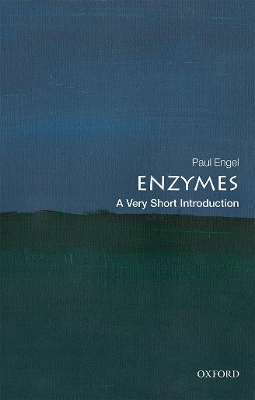
E-raamat: Enzymes: A Very Short Introduction

(Emeritus Professor of Biochemistry, University College Dublin)
  • Formaat: PDF+DRM
  • Sari: Very Short Introductions
  • Ilmumisaeg: 26-Nov-2020
  • Kirjastus: Oxford University Press
  • Keel: eng
  • ISBN-13: 9780192558800
Teised raamatud teemal:
  • Formaat - PDF+DRM
  • Hind: 7,30 €*
  • * hind on lõplik, st. muud allahindlused enam ei rakendu
  • Lisa ostukorvi
  • Lisa soovinimekirja
  • See e-raamat on mõeldud ainult isiklikuks kasutamiseks. E-raamatuid ei saa tagastada.
  • Formaat: PDF+DRM
  • Sari: Very Short Introductions
  • Ilmumisaeg: 26-Nov-2020
  • Kirjastus: Oxford University Press
  • Keel: eng
  • ISBN-13: 9780192558800
Teised raamatud teemal:

DRM piirangud

  • Kopeerimine (copy/paste):

    ei ole lubatud

  • Printimine:

    ei ole lubatud

  • Kasutamine:

    Digitaalõiguste kaitse (DRM)
    Kirjastus on väljastanud selle e-raamatu krüpteeritud kujul, mis tähendab, et selle lugemiseks peate installeerima spetsiaalse tarkvara. Samuti peate looma endale  Adobe ID Rohkem infot siin. E-raamatut saab lugeda 1 kasutaja ning alla laadida kuni 6'de seadmesse (kõik autoriseeritud sama Adobe ID-ga).

    Vajalik tarkvara
    Mobiilsetes seadmetes (telefon või tahvelarvuti) lugemiseks peate installeerima selle tasuta rakenduse: PocketBook Reader (iOS / Android)

    PC või Mac seadmes lugemiseks peate installima Adobe Digital Editionsi (Seeon tasuta rakendus spetsiaalselt e-raamatute lugemiseks. Seda ei tohi segamini ajada Adober Reader'iga, mis tõenäoliselt on juba teie arvutisse installeeritud )

    Seda e-raamatut ei saa lugeda Amazon Kindle's. 

Enzymes are the astonishing, tiny molecular machines that make life possible. Each one of these small proteins speeds up a single chemical reaction inside a living organism many millionfold. Working together, teams of enzymes carry out all the processes that collectively we recognise as life, from making DNA to digesting food.

This Very Short Introduction explains the why and the how of speeding up these reactions - catalysis - before going on to reveal how we have evolved these catalysts of such extraordinary power and exquisite selectivity. Paul Engel shows how X-ray crystallography has revealed the complex molecular shapes that allow enzymes to function at an extraordinarily sophisticated level. He also examines medical aspects of enzymes, both in the way faulty enzymes cause disease and in the way enzymes can be used for diagnosis and therapy. Finally, he looks at the many varied ways in which individual enzymes, taken out of their biological context, are used nowadays as tools - in washing powders, food production, waste treatment, and chemical synthesis.

ABOUT THE SERIES:
The Very Short Introductions series from Oxford University Press contains hundreds of titles in almost every subject area. These pocket-sized books are the perfect way to get ahead in a new subject quickly. Our expert authors combine facts, analysis, perspective, new ideas, and enthusiasm to make interesting and challenging topics highly readable.

Arvustused

A fairly comprehensive textbook that provides a decent technical grounding in enzymology and will no doubt teach many professional biologists a thing or two * Nadia Abbott AMRSB, The Biologist * This book would be an excellent accompaniment to an undergraduate biology student or someone with a scientific background who wishes to know more about enzymology. * Lucy Elphick, The Biochemist * It would be perfect for students who want to have a (somewhat more than) basic understanding of the subject before delving deeper ... my overall understanding of the subject is more rounded. Thanks Professor Engel! * Mary Staunton, University College Dublin Today *

List of illustrations
xv
Acknowledgements xix
1 No Enzymes, No Life
1(11)
2 Making Things Happen---Catalysis
12(15)
3 The Chemical Nature Of Enzymes
27(22)
4 Structure For Catalysis
49(13)
5 Enzymes In Action
62(23)
6 Metabolic Pathways And Enzyme Evolution
85(16)
7 Enzymes And Disease
101(16)
8 Enzymes As Tools
117(11)
9 Enzymes And Genes---New Horizons
128(21)
References 149(8)
Further reading 157(2)
Index 159
Paul Engel is an Emeritus Professor of Biochemistry at University College Dublin. He lectured at Sheffield for many years before taking up the Chair of Biochemistry at University College Dublin in 1994, where his research career focussed on enzymology, kinetics, and protein engineering. Paul Engel has taken an active interest in the public awareness of science and started a programme at UCD for training Ph. D. students in presenting science to the public. Elected a Member of the Royal Irish Academy in 2001, he has also chaired its Life Sciences Committee. In 2010 he was awarded the Biochemical Irish Area Section's Medal for outstanding research carried out in Ireland.