Muutke küpsiste eelistusi

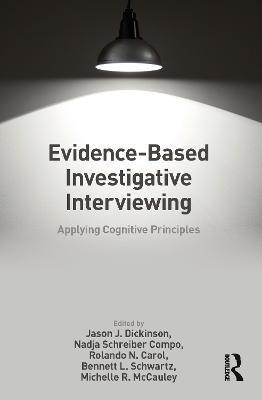
E-raamat: Evidence-based Investigative Interviewing: Applying Cognitive Principles

Edited by (Florida International University USA), Edited by (Middlebury College, USA), Edited by (Montclair State University, USA), Edited by (Florida International University, USA), Edited by (Auburn University at Montgomery, USA)
  • Formaat: PDF+DRM
  • Ilmumisaeg: 21-Feb-2019
  • Kirjastus: Routledge
  • Keel: eng
  • ISBN-13: 9781351662017
  • Formaat - PDF+DRM
  • Hind: 58,49 €*
  • * hind on lõplik, st. muud allahindlused enam ei rakendu
  • Lisa ostukorvi
  • Lisa soovinimekirja
  • See e-raamat on mõeldud ainult isiklikuks kasutamiseks. E-raamatuid ei saa tagastada.
  • Formaat: PDF+DRM
  • Ilmumisaeg: 21-Feb-2019
  • Kirjastus: Routledge
  • Keel: eng
  • ISBN-13: 9781351662017

DRM piirangud

  • Kopeerimine (copy/paste):

    ei ole lubatud

  • Printimine:

    ei ole lubatud

  • Kasutamine:

    Digitaalõiguste kaitse (DRM)
    Kirjastus on väljastanud selle e-raamatu krüpteeritud kujul, mis tähendab, et selle lugemiseks peate installeerima spetsiaalse tarkvara. Samuti peate looma endale  Adobe ID Rohkem infot siin. E-raamatut saab lugeda 1 kasutaja ning alla laadida kuni 6'de seadmesse (kõik autoriseeritud sama Adobe ID-ga).

    Vajalik tarkvara
    Mobiilsetes seadmetes (telefon või tahvelarvuti) lugemiseks peate installeerima selle tasuta rakenduse: PocketBook Reader (iOS / Android)

    PC või Mac seadmes lugemiseks peate installima Adobe Digital Editionsi (Seeon tasuta rakendus spetsiaalselt e-raamatute lugemiseks. Seda ei tohi segamini ajada Adober Reader'iga, mis tõenäoliselt on juba teie arvutisse installeeritud )

    Seda e-raamatut ei saa lugeda Amazon Kindle's. 

For as long as we have been researching human memory, psychologists have been investigating how people remember and forget. This research is regularly drawn upon in our legal systems. Historically, we have relied upon eyewitness memory to help judge responsibility and adjudicate truth, but memory is malleable, prone to error, and susceptible to bias. Even confident eyewitnesses make mistakes, and even accurate witnesses sometimes find their testimony subjected to harsh scrutiny.

Emerging from this environment, the Cognitive Interview (CI) became a means of assisting cooperative witnesses with recalling more information without sacrificing accuracy. First used by police interviewing adult witnesses, it is now used with many populations in many contexts, including public health, accident reconstruction, and the interrogation of terror suspects. Evidence-Based Investigative Interviewing reviews the application of cognitive research to investigative interviewing, revealing how principles of cognition, memory, and social dynamics may increase the accuracy of eyewitness testimony. It provides evidence-based applications for investigators beyond the forensic domain in areas such as eyewitness identification, detecting deception, and interviewing children.

Drawing together the work of thirty-three authors across both the academic and practice communities, this comprehensive collection is essential reading for researchers in psychology, forensics, and disciplines such as epidemiology and gerontology.

List of Illustrations
vii
Notes on Contributors viii
Foreword xviii
1 Expanding the Cognitive Interview to Non-Criminal Investigations
1(28)
Ronald P. Fisher
R. Edward Geiselman
2 The Impact of the Cognitive Interview in the UK and Recent Research in Portugal
29(13)
Ray Bull
Rui Paulo
Pedro Albuquerque
3 Expanding the Legacy of the Cognitive Interview: Developments and Innovations in Evidence-Based Investigative Interviewing
42(14)
Lorraine Hope
Fiona Gabbert
4 The Cognitive Interview: A Tiered Approach in the Real World
56(18)
Becky Milne
Andy Griffiths
Colin Clarke
Coral Dando
5 State of Intoxication: A Review of the Effects of Alcohol on Witnesses' Memory
74(19)
Christopher Altman
Nadja Schreiber Compo
Angelica V. Hagsand
Jacqueline R. Evans
6 From the Police Station to the Hospital Bed: Using the Cognitive Interview to Enhance Epidemiologic Interviewing
93(23)
Alexandra E. Mosser
Jacqueline R. Evans
7 The Verifiability Approach
116(18)
Aldert Vrij
Galit Nahari
8 Commonalities and Complementarities Among Science-Based Interview Methods: Towards a Theory of Interrogation
134(22)
Susan E. Brandon
Simon Wells
9 Navigating the Interview: Judgment and Decision Making in Investigative Interviewing
156(21)
Drew A. Leins
Laura A. Zimmerman
10 Investigative Interviews with Adult Sexual Assault Complainants: Challenges and Future Directions
177(16)
Rachel Zajac
Nina J. Westera
Mohammed M. Ali
Martine Powell
11 Techniques for Interviewing Reluctant Child Witnesses
193(23)
Nicole E. Lytle
Jason J. Dickinson
Debra A. Poole
12 Investigative Interviewing About Repeated Experiences
216(18)
Sonja P. Brubacher
Becky Earhart
13 Viewing the Cognitive Interview Through the Lens of Self-Determination Theory
234(18)
Michelle R. McCauley
Angela C. Santee
Index 252
Jason J. Dickinson, Ph.D., is a professor of psychology and the Director of the Robert D. McCormick Center for Child Advocacy and Policy at Montclair State University.

Nadja Schreiber Compo, Ph.D., is an associate professor of psychology at Florida International University

Rolando N. Carol, Ph.D. is an assistant professor at Auburn University at Montgomery.

Bennett L. Schwartz, Ph.D., is a professor of psychology at Florida International University.

Michelle R. McCauley, Ph.D. is a professor of psychology at Middlebury College.