Muutke küpsiste eelistusi

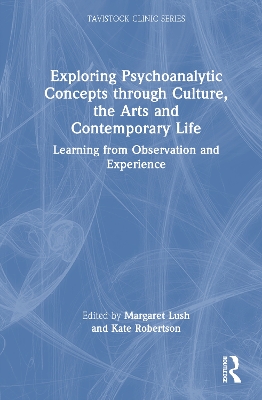
E-raamat: Exploring Psychoanalytic Concepts through Culture, the Arts and Contemporary Life: Learning from Observation and Experience

Edited by , Edited by
  • Formaat: PDF+DRM
  • Sari: Tavistock Clinic Series
  • Ilmumisaeg: 24-Apr-2025
  • Kirjastus: Routledge
  • Keel: eng
  • ISBN-13: 9781040273685
  • Formaat - PDF+DRM
  • Hind: 38,99 €*
  • * hind on lõplik, st. muud allahindlused enam ei rakendu
  • Lisa ostukorvi
  • Lisa soovinimekirja
  • See e-raamat on mõeldud ainult isiklikuks kasutamiseks. E-raamatuid ei saa tagastada.
  • Formaat: PDF+DRM
  • Sari: Tavistock Clinic Series
  • Ilmumisaeg: 24-Apr-2025
  • Kirjastus: Routledge
  • Keel: eng
  • ISBN-13: 9781040273685

DRM piirangud

  • Kopeerimine (copy/paste):

    ei ole lubatud

  • Printimine:

    ei ole lubatud

  • Kasutamine:

    Digitaalõiguste kaitse (DRM)
    Kirjastus on väljastanud selle e-raamatu krüpteeritud kujul, mis tähendab, et selle lugemiseks peate installeerima spetsiaalse tarkvara. Samuti peate looma endale  Adobe ID Rohkem infot siin. E-raamatut saab lugeda 1 kasutaja ning alla laadida kuni 6'de seadmesse (kõik autoriseeritud sama Adobe ID-ga).

    Vajalik tarkvara
    Mobiilsetes seadmetes (telefon või tahvelarvuti) lugemiseks peate installeerima selle tasuta rakenduse: PocketBook Reader (iOS / Android)

    PC või Mac seadmes lugemiseks peate installima Adobe Digital Editionsi (Seeon tasuta rakendus spetsiaalselt e-raamatute lugemiseks. Seda ei tohi segamini ajada Adober Reader'iga, mis tõenäoliselt on juba teie arvutisse installeeritud )

    Seda e-raamatut ei saa lugeda Amazon Kindle's. 

This book explores how psychoanalytic ideas and thinking enhance our understanding and engagement with the creative arts and contemporary life.


This book explores how psychoanalytic ideas and thinking enhance our understanding and engagement with the creative arts and contemporary life.?

Many of us love to read poetry and novels and enjoy the performing arts. All of us take part in contemporary life. But how might a psychoanalytic perspective deepen our understanding or enhance our experience in these areas? What might we discover when we explore the unconscious dimensions of particular cultural artefacts and activities. Based on the work of the longstanding Psychoanalytic Studies Course at the Tavistock Clinic, contributing authors draw on their experience of infant observation and psychoanalytic theory and apply them to explorations of culturally diverse and wide-ranging topics such as social work, literature, the act of littering, a Palestinian poem, and even a chart-topping Korean pop song.

Blending a deep understanding of clinical work and a broad range of artistic endeavours, this book will be key reading for psychoanalysts, psychotherapists, and any interested in understanding how psychoanalysis can inform art and life.

Arvustused

'How might psychoanalytic ideas and thinking enhance our understanding and engagement with the creative arts and contemporary life? Based on the work of the longstanding Psychoanalytic Studies Course at the Tavistock Clinic, this book provides a surprisingly fresh approach to exploring this question.

Rarely have I read a book that so captured my imagination exposing me to new and unexpected topics such as base jumping or the inner world of littering and to such culturally diverse subjects as a moving Palestinian poem or a chart-topping Korean pop video. Drawing on their experience of close observation of infants and psychoanalytic theory, the contributors to this book delve deep, eliciting the readers engagement.

I loved it! It is relevant and accessible to anyone interested in thinking more deeply about complex states of mind and the world we live in.'

Dr. Debbie Hindle, child and adolescent psychotherapist, Human Development Scotland

'This book illustrates how psychoanalytical skills developed through the experience of infant observation can be used in many cultural contexts from poetry and opera to music videos, extreme sports and social work. The idea that artists and imaginative writers are primary researchers into the mind, exploring psychic change, is held in focus throughout.

The use of material from infant observations is moving and non-judgmental, clearly showing how the inner world of the observer is affected by the experience of observation. The book explores the value and use of these affective responses to further our understanding of human interaction and cultural experience, as well as offer pointers for how individuals and organizations can foster self-reflective practice, consider anti-oppressive approaches, face our own racism, shift from tracking achievement of competence to understanding the process of learning with all its uncertainties and anxieties.

This is important reading for those working in public and private sectors'

Susanne Lansman, PhD, poet, and fellow of British Psychoanalytical Society. 'How might psychoanalytic ideas and thinking enhance our understanding and engagement with the creative arts and contemporary life? Based on the work of the longstanding Psychoanalytic Studies Course at the Tavistock Clinic, this book provides a surprisingly fresh approach to exploring this question.

Rarely have I read a book that so captured my imagination exposing me to new and unexpected topics such as base jumping or the inner world of littering and to such culturally diverse subjects as a moving Palestinian poem or a chart-topping Korean pop video. Drawing on their experience of close observation of infants and psychoanalytic theory, the contributors to this book delve deep, eliciting the readers engagement.

I loved it! It is relevant and accessible to anyone interested in thinking more deeply about complex states of mind and the world we live in.'

Dr. Debbie Hindle, child and adolescent psychotherapist, Human Development Scotland

'This book illustrates how psychoanalytical skills developed through the experience of infant observation can be used in many cultural contexts from poetry and opera to music videos, extreme sports and social work. The idea that artists and imaginative writers are primary researchers into the mind, exploring psychic change, is held in focus throughout.

The use of material from infant observations is moving and non-judgmental, clearly showing how the inner world of the observer is affected by the experience of observation. The book explores the value and use of these affective responses to further our understanding of human interaction and cultural experience, as well as offer pointers for how individuals and organizations can foster self-reflective practice, consider anti-oppressive approaches, face our own racism, and shift from tracking achievement of competence to understanding the process of learning with all its uncertainties and anxieties.

This is important reading for those working in public and private sectors'

Susanne Lansman, PhD, poet, and Fellow of British Psychoanalytical Society.

Introduction Part I. Learning through infant observation
1. Teaching
infant observation
2. Sam: Observations and reflections on the first eighteen
months of life
3. An exploration of a nursery song The Police Dog as a
container 4.Mother-less: a psychoanalytic observation of an installation by
Cathy Wilkes
5. The is-ness of things: reflections on observation used in
contexts where words are hard to find Part II. Poetry
6. "This is not for
tears: thinking"poetry and psychoanalysis in orbit
7. "Of Mutability",
mourning, and containment
8. Resistance through mourning: a poem by Mahmoud
Darwish In Her Absence I Created Her Image Part III. Literature and the
performing arts
9. The teaching of drama, psychoanalysis, and society on the
Psychoanalytic Studies course
10. Rockaby: Eros and Thanatos
11. The
narcissistic world of Turandot
12. Identity, identification, and narcissistic
phantasy in the novels of Kazuo Ishiguro Part IV. Contemporary life
13. Psys
Gentleman: between the ugly and the beautiful
14. Living the dream: a
psychoanalytic exploration of the sport of BASE jumping
15. The hidden inner
world of littering
16. Beyond competence in social work: where are we now?
Afterword
Dr Margaret Lush trained as a child and adolescent psychotherapist at the Tavistock and has worked in clinical and educational settings. She has taught on several Tavistock courses and is currently Joint Course Lead for the Tavistock pre-clinical training course for child psychotherapists. She works in private practice and supervises in Britain and abroad.

Kate Robertson trained as a child and adolescent psychotherapist at the Tavistock and became Head of Child Psychotherapy in Hammersmith and Fulham CAMHS, Course Lead for the Tavistock Psychoanalytic Studies course, and Chair of the Association of Child Psychotherapists. She had to retire early because of health concerns and passed away in October 2023.