Muutke küpsiste eelistusi

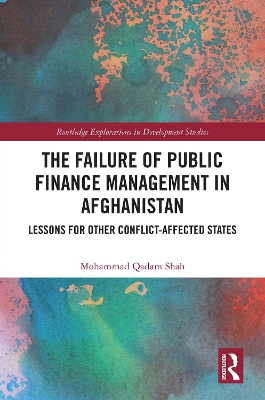
E-raamat: Failure of Public Finance Management in Afghanistan: Lessons for Other Conflict-Affected States

  • Formaat - PDF+DRM
  • Hind: 59,79 €*
  • * hind on lõplik, st. muud allahindlused enam ei rakendu
  • Lisa ostukorvi
  • Lisa soovinimekirja
  • See e-raamat on mõeldud ainult isiklikuks kasutamiseks. E-raamatuid ei saa tagastada.
  • Raamatukogudele

DRM piirangud

  • Kopeerimine (copy/paste):

    ei ole lubatud

  • Printimine:

    ei ole lubatud

  • Kasutamine:

    Digitaalõiguste kaitse (DRM)
    Kirjastus on väljastanud selle e-raamatu krüpteeritud kujul, mis tähendab, et selle lugemiseks peate installeerima spetsiaalse tarkvara. Samuti peate looma endale  Adobe ID Rohkem infot siin. E-raamatut saab lugeda 1 kasutaja ning alla laadida kuni 6'de seadmesse (kõik autoriseeritud sama Adobe ID-ga).

    Vajalik tarkvara
    Mobiilsetes seadmetes (telefon või tahvelarvuti) lugemiseks peate installeerima selle tasuta rakenduse: PocketBook Reader (iOS / Android)

    PC või Mac seadmes lugemiseks peate installima Adobe Digital Editionsi (Seeon tasuta rakendus spetsiaalselt e-raamatute lugemiseks. Seda ei tohi segamini ajada Adober Reader'iga, mis tõenäoliselt on juba teie arvutisse installeeritud )

    Seda e-raamatut ei saa lugeda Amazon Kindle's. 

In rebuilding conflict-affected states, a major portion of foreign aid focuses on reforming public finance management systems and supporting annual budgets. But how budgets are allocated and how reforms take shape in practice remain critical questions.

This book analyses the politics of reform and budget allocation in the most expensive liberal state building effort in history: Afghanistan. Through a detailed political economy analysis, it explores the origin, continuity, and evolution of Afghanistan’s centralized public finance management system. Such centralization, readopted in the 2004 Constitution, constrained local participation, perpetuated inequities, and undermined predictability and transparency. Key reforms including the “Provincial Development Planning Guideline” and “Provincial Budgeting Policy” aimed to address these shortcomings but failed due to political resistance, elite capture, and structural inefficiencies. The analysis reveals informal dynamics behind the allocation of discretionary development budget consisting of the Afghan central government’s political considerations (political relationship, political importance, and strength and weakness of local administrations) and lobbying strategies of local actors. This dynamic enabled the central government to continue to use public funds for purchasing political legitimacy to remain in power.

Afghanistan’s case highlights the limits of externally driven state-building that prioritizes centralization over local dynamics. The book offers key lessons on inclusive governance, structural barriers, and sustainable public finance reforms in conflict-affected states. It appeals to donors, development experts, and researchers in public finance, foreign aid, security, and development studies.


In rebuilding conflict-affected states, a major portion of foreign aid focuses on reforming public finance management systems and supporting annual budgets. The book explores budgets are allocated and how reforms take shape in practice. It appeals to donors and researchers in public finance, foreign aid, security, and development studies.

Arvustused

This book offers a critical examination of Afghanistans public finance system, illustrating how political motives, rather than technical reforms, dictated the distribution of public funds. By employing a historical institutional approach and drawing on extensive fieldwork, the author reveals how centralized planning persisted despite numerous attempts at reform, shedding light on the complex dynamics that shaped Afghanistans state-building process. This insightful analysis is essential for anyone studying the intersection of politics, aid, and governance in conflict-affected states.

Scott Fritzen, President, Fulbright University Vietnam

Mohammad Qadam Shahs The Failure of Public Finance Management in Afghanistan is essential reading for anyone interested in public finance reform under challenging conditions. This book offers a meticulously researched explanation of why the reconstruction effort in Afghanistan from 2001 until 2021 ultimately failed to prevent the Talibans return to power. Qadam Shahs book emphasizes that the main reasons for the failures of post-conflict reconstruction lie in timeless questions about public administration and the perils of centralized public administration. It is an impassioned and thoughtful call to devote more attention to getting public administration reform "right" to promote peace and prosperity in conflict-affected states.

Ilia Murtazashvili, Professor, Graduate School of Public and International Affairs; Associate Director, Center for Governance and Markets, Campbell Visiting Fellow at the Hoover Institution, Stanford University

1. State Building and Public Finance Reform in Conflict-Affected States
2. The Origins of Afghanistans Fiscal Capacity (1747-2001)
3. Enduring
Centralization: Public Finance Reforms and the Struggle for Decentralization
in Afghanistan (20012021)
4. Deconcentrated Planning and Budgeting in
Action: Evaluating Afghanistans PDPG and PBP Performance (2016-2019)
5.
Unveiling Informal Dynamics: The Politics and Strategies Behind Afghanistans
Discretionary Development Budget Allocation
6. Informal Dynamics in Action:
The Tale of Four Afghan Provinces
7. The Talibans Return to Power in 2021:
Governance, Humanitarian Aid, and Public Finance
8. Lessons for Other
Conflict-Affected States
Mohammad Qadam Shah is Assistant Professor of Global Development at Seattle Pacific University, USA.