Muutke küpsiste eelistusi

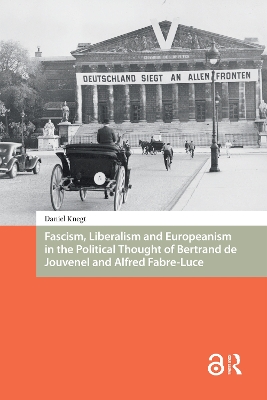
E-raamat: Fascism, Liberalism and Europeanism in the Political Thought of Bertrand de Jouvenel and Alfred Fabre-Luce

  • Formaat - EPUB+DRM
  • Hind: 55,89 €*
  • * hind on lõplik, st. muud allahindlused enam ei rakendu
  • Lisa ostukorvi
  • Lisa soovinimekirja
  • See e-raamat on mõeldud ainult isiklikuks kasutamiseks. E-raamatuid ei saa tagastada.

DRM piirangud

  • Kopeerimine (copy/paste):

    ei ole lubatud

  • Printimine:

    ei ole lubatud

  • Kasutamine:

    Digitaalõiguste kaitse (DRM)
    Kirjastus on väljastanud selle e-raamatu krüpteeritud kujul, mis tähendab, et selle lugemiseks peate installeerima spetsiaalse tarkvara. Samuti peate looma endale  Adobe ID Rohkem infot siin. E-raamatut saab lugeda 1 kasutaja ning alla laadida kuni 6'de seadmesse (kõik autoriseeritud sama Adobe ID-ga).

    Vajalik tarkvara
    Mobiilsetes seadmetes (telefon või tahvelarvuti) lugemiseks peate installeerima selle tasuta rakenduse: PocketBook Reader (iOS / Android)

    PC või Mac seadmes lugemiseks peate installima Adobe Digital Editionsi (Seeon tasuta rakendus spetsiaalselt e-raamatute lugemiseks. Seda ei tohi segamini ajada Adober Reader'iga, mis tõenäoliselt on juba teie arvutisse installeeritud )

    Seda e-raamatut ei saa lugeda Amazon Kindle's. 

Despite the recent rise in studies that approach fascism as a transnational phenomenon, the links between fascism and internationalist intellectual currents have only received scant attention. This book explores the political thought of Bertrand de Jouvenel and Alfred Fabre-Luce, two French intellectuals, journalists and political writers who, from 1930 to the mid-1950s, moved between liberalism, fascism and Europeanism. Daniel Knegt argues that their longing for a united Europe was the driving force behind this ideological transformation—and that we can see in their thought the earliest stages of what would become neoliberalism.
 

Arvustused

"An innovative volume, which is admirable for its original focus and out of the box thinking. ... Daniel Knegt has produced a well-conceived and attractive book. ... In it, Knegt persuasively shows how fascism functioned during the first half of the twentieth century, allowing us to explore the entanglements of different manifestations of fascism in Europe." Pablo del Hierro, Journal of Modern History, December 2019 "This is an intellectual history of the highest order by a genuine scholar who provides a powerful case study in the turbulent ideological dynamics of fascism which should interest all those interested in fascism as a project not of reaction and anti-modernism, but of national and social transformation and renewal, of creating an alternative modernity. It is also a remarkable case study in the bad faith and moral cowardice that forces individuals to redact their own past once they survive into a liberal age." - Roger Griffin, professor of modern history and political theorist at Oxford Brookes University, England. "This is a thoughtful, well-written monograph on the lives and political activities of Bertrand de Jouvenel and Alfred Fabre-Luce." - Constantin Lordachi, professor of history at the Central European University, Budapest

Preface 9(4)
List of Abbreviations
11(2)
Introduction: Fascism in France and Beyond 13(32)
Intellectual Fascism?
13(4)
Between Immunity and Pan-Fascism
17(10)
New Perspectives
27(7)
Europeanism, Fascism and Neoliberalism
34(11)
1 `En Faisant l'Europe': Internationalism and the Fascist Drift
45(24)
`La Nouvelle Generation Europeenne': Generational Politics in 1920s France
45(8)
Reconciliation with Germany at All Costs?
53(8)
Metaphysical Europeanism
61(8)
2 Planning, Fascism and the State: 1930-1939
69(26)
From Liberalism to `l'Economie Dirigee'
69(5)
A National and Social Revolution
74(10)
Party Intellectuals at the Service of Fascism
84(11)
3 Facing a Fascist Europe: 1939-1943
95(64)
Defeat and Readjustment
95(10)
Tracing the Origins of Defeat
105(13)
`On the Threshold of a New World'
118(8)
New Rulers, Old Acquaintances
126(11)
Collaboration and Attentisme
137(22)
4 A European Revolution?: Liberation and the Post-War Extreme Right
159(62)
Liberation and Persecution
159(15)
Exile and Exclusion
174(9)
`Beyond Nazism': Monarchism and the Heritage of Fascism
183(10)
Reinventing the Extreme Right
193(16)
Europeanism, Federalism and the Reconfiguration of the Extreme Right
209(12)
5 Europeanism, Neoliberalism and the Cold War
221(38)
On Private Life and Facial Hair
221(5)
On Power: Pessimism, Aristocracy and the Distrust of Democracy
226(9)
A Mountain in Switzerland: Neoliberalism and the Mont Pelerin Society
235(13)
`This General Feeling of Open Conspiracy'
248(11)
Conclusion: From the Sohlberg to Mont Pelerin 259(8)
Bibliography 267(14)
Index 281
Daniel Knegt is history lecturer at the University of Amsterdam. In 2015, he received his PhD at the European University Institute. His principle research interests include transnational fascism, alternative currents in Europeanist thought, the intellectual history of mid-twentieth-century France and the early neoliberal movement.