Muutke küpsiste eelistusi

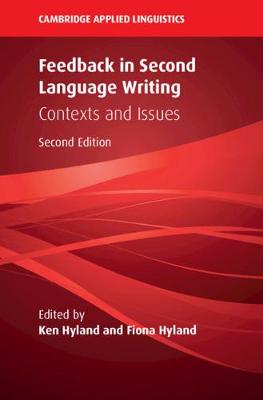
E-raamat: Feedback in Second Language Writing: Contexts and Issues

Edited by (The University of Hong Kong), Edited by (The University of Hong Kong)
  • Formaat - EPUB+DRM
  • Hind: 38,29 €*
  • * hind on lõplik, st. muud allahindlused enam ei rakendu
  • Lisa ostukorvi
  • Lisa soovinimekirja
  • See e-raamat on mõeldud ainult isiklikuks kasutamiseks. E-raamatuid ei saa tagastada.

DRM piirangud

  • Kopeerimine (copy/paste):

    ei ole lubatud

  • Printimine:

    ei ole lubatud

  • Kasutamine:

    Digitaalõiguste kaitse (DRM)
    Kirjastus on väljastanud selle e-raamatu krüpteeritud kujul, mis tähendab, et selle lugemiseks peate installeerima spetsiaalse tarkvara. Samuti peate looma endale  Adobe ID Rohkem infot siin. E-raamatut saab lugeda 1 kasutaja ning alla laadida kuni 6'de seadmesse (kõik autoriseeritud sama Adobe ID-ga).

    Vajalik tarkvara
    Mobiilsetes seadmetes (telefon või tahvelarvuti) lugemiseks peate installeerima selle tasuta rakenduse: PocketBook Reader (iOS / Android)

    PC või Mac seadmes lugemiseks peate installima Adobe Digital Editionsi (Seeon tasuta rakendus spetsiaalselt e-raamatute lugemiseks. Seda ei tohi segamini ajada Adober Reader'iga, mis tõenäoliselt on juba teie arvutisse installeeritud )

    Seda e-raamatut ei saa lugeda Amazon Kindle's. 

Now in its second edition, this volume provides an up to date, accessible, yet authoritative introduction to feedback on second language writing for upper undergraduate and postgraduate students, teachers and researchers in TESOL, applied linguistics, composition studies and English for academic purposes (EAP). Chapters written by leading experts emphasise the potential that feedback has for helping to create a supportive teaching environment, for conveying and modelling ideas about good writing, for developing the ways students talk about writing, and for mediating the relationship between students' wider cultural and social worlds and their growing familiarity with new literacy practices. In addition to updated chapters from the first edition, this edition includes new chapters which focus on new and developing areas of feedback research including student engagement and participation with feedback, the links between SLA and feedback research, automated computer feedback and the use by students of internet resources and social media as feedback resources.

Muu info

Offers an up-to-date analysis of issues related to providing, using and researching feedback, including new developments in technology.
Contributor Bios vii
Acknowledgments xi
Author's Preface xiii
Series Editors' Preface xv
Introduction
1 Contexts and Issues in Feedback on L2 Writing
1(22)
Ken Hyland
Fiona Hyland
SECTION 1 SITUATING FEEDBACK: SOCIOCULTURAL DIMENSIONS
23(60)
2 Sociocultural Theory: A Framework for Understanding the Socio-Cognitive Dimensions of Peer Feedback
25(20)
Olga S. Villamil
Maria C. M. Guerrero
3 Culture and Peer Feedback
45(19)
Guangwei Hu
4 Appropriation, Ownership, and Agency: Negotiating Teacher Feedback in Academic Settings
64(19)
Christine M. Tardy
SECTION 2 SHAPING FEEDBACK: DELIVERY AND FOCUS DIMENSIONS
83(80)
5 The Intersection between SLA and Feedback Research
85(21)
John Bitchener
6 Does Error Feedback Help L2 Writers? Latest Evidence on the Efficacy of Written Corrective Feedback
106(19)
Dana Ferris
Kendon Kurzer
7 Automated Feedback and Second Language Writing
125(18)
Marie Stevenson
Aek Phakiti
8 Collaborative Writing as Peer Feedback
143(20)
Neomy Storch
SECTION 3 NEGOTIATING FEEDBACK: INTERPERSONAL AND INTERACTIONAL DIMENSIONS
163(82)
9 Interpersonality and Teacher-Written Feedback
165(19)
Ken Hyland
Fiona Hyland
10 Fostering Formative Online Forums: Feedback, Dialogue and Disciplinarity
184(22)
Ann Hewings
Caroline Coffin
11 Supervisory Feedback: Building Writing Scaffolds with Doctoral Students
206(20)
Sue Starfield
12 Reviewers' Feedback on Second-Language Writers' Submissions to Academic Journals
226(19)
Brian Paltridge
SECTION 4 ENGAGING WITH FEEDBACK: STUDENT PARTICIPATION DIMENSIONS
245(60)
13 Learner Engagement with Written Feedback: A Sociocognitive Perspective
247(18)
Ye Han
Fiona Hyland
14 What Messages do Students Take from Teacher Feedback?
265(20)
Ken Hyland
15 Students Initiating Feedback: The Potential of Social Media
285(20)
Soobin Yim
Mark Warschauer
Index 305
Ken Hyland is Professor of Applied Linguistics in Education at the University of East Anglia. His primary research area is written discourse analysis, particularly in academic context. He has written and edited over twenty-five books, including Second Language Writing (Cambridge, 2003) and Disciplinary Identities (Cambridge, 2012). Fiona Hyland was an associate professor in the Faculty of Education at The University of Hong Kong until her retirement in 2015. She has more than thirty-five years of experience teaching and researching applied linguistics and teacher education in a variety of international contexts.