Muutke küpsiste eelistusi

E-raamat: Flagellant Confraternities and Italian Art, 1260-1610: Ritual and Experience

  • Formaat - EPUB+DRM
  • Hind: 59,79 €*
  • * hind on lõplik, st. muud allahindlused enam ei rakendu
  • Lisa ostukorvi
  • Lisa soovinimekirja
  • See e-raamat on mõeldud ainult isiklikuks kasutamiseks. E-raamatuid ei saa tagastada.

DRM piirangud

  • Kopeerimine (copy/paste):

    ei ole lubatud

  • Printimine:

    ei ole lubatud

  • Kasutamine:

    Digitaalõiguste kaitse (DRM)
    Kirjastus on väljastanud selle e-raamatu krüpteeritud kujul, mis tähendab, et selle lugemiseks peate installeerima spetsiaalse tarkvara. Samuti peate looma endale  Adobe ID Rohkem infot siin. E-raamatut saab lugeda 1 kasutaja ning alla laadida kuni 6'de seadmesse (kõik autoriseeritud sama Adobe ID-ga).

    Vajalik tarkvara
    Mobiilsetes seadmetes (telefon või tahvelarvuti) lugemiseks peate installeerima selle tasuta rakenduse: PocketBook Reader (iOS / Android)

    PC või Mac seadmes lugemiseks peate installima Adobe Digital Editionsi (Seeon tasuta rakendus spetsiaalselt e-raamatute lugemiseks. Seda ei tohi segamini ajada Adober Reader'iga, mis tõenäoliselt on juba teie arvutisse installeeritud )

    Seda e-raamatut ei saa lugeda Amazon Kindle's. 

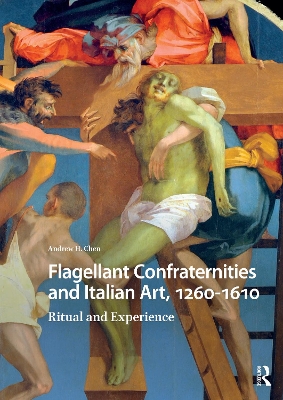
This book examines the art and ritual of flagellant confraternities in Italy from the fourteenth to the seventeenth centuries. Meeting regularly to beat themselves with whips, members of these confraternities concentrated on the suffering of Christ in the most extreme and committed way, and the images around them provided visual prompts of the Passion and the model suffering body. This study presents new findings related to a variety of artworks including altarpieces, banners, wall paintings, illuminated manuscripts, and paintings for the condemned, many from outside the Florence-Rome-Venice triangle.

Arvustused

"Chens book does an impressive job of presenting a series of studies that offer a view onto the large and varied terrain of the Italian flagellant companies art patronage. Chen is to be commended especially for his inclusion and careful analysis of objects that art historians sometimes overlook." - Douglas N. Dow, Renaissance Quarterly, Volume LXXIII, No. 1 "Chens is a rich, interdisciplinary study of the visual and material culture found in flagellant confraternities. Through detailed analyses of arts and rituals, he paints a clear picture of public flagellant processions and private devotions. ... Chens analyses, along with the plates, make this volume a strong contribution to art and flagellation history, as well as to religious and confraternity studies." - Nilab Ferozan, Renaissance and Reformation, Fall 2019 "The book makes an original contribution to our knowledge of Italian flagellant confraternities and their art by offering a fresh perspective from which to examine a subject that does, indeed, deserve more attention = an innovative work of great interest that contributes significantly to the history of Italian art and confraternities in the late Middle Ages and the Renaissance." - Marco Piana, Confraternitas, Volume 30, 2019 "[ This is] an interesting volume with many little-known images in good reproduction and meaningful text passages, which promotes knowledge of the piety exercises and works of art of the penitential brothers." - Prof. Dr. habil. Peter Dinzelbacher, Mediaevistik, 32 . 2019 (translated from German)

Abbreviations 9(10)
List of illustrations
11(8)
Acknowledgements 19(2)
Introduction 21(10)
Part I Art and ritual, to 1450
31(120)
1 Flagellation and its settings
33(51)
2 Images at entrances, and ascesis
84(20)
3 Mass
104(19)
4 Comforting
123(18)
5 Processions
141(10)
Part II Transformations
151(48)
6 Changes in ritual before Trent
153(9)
7 Changes in imagery before Trent: Sansepolcro and Volterra
162(24)
8 After Trent: Florence and Milan
186(13)
Epilogue: Global flagellation 199(6)
Bibliography 205(22)
Index of illuminated manuscripts (by location) 227(2)
Index of paintings (by location) 229(2)
Index of topics 231
Andrew Chen is Assistant Professor of Early Modern Art at Texas State University. In 2020-21 he was CRIA Fellow at Villa I Tatti, the Harvard University Center for Italian Renaissance Studies.