Muutke küpsiste eelistusi

E-raamat: Flying Fast Jets: Human Factors and Performance Limitations

  • Formaat: PDF+DRM
  • Sari: Human Factors in Defence
  • Ilmumisaeg: 01-Nov-2017
  • Kirjastus: Ashgate Publishing Limited
  • Keel: eng
  • ISBN-13: 9781317134718
  • Formaat - PDF+DRM
  • Hind: 221,00 €*
  • * hind on lõplik, st. muud allahindlused enam ei rakendu
  • Lisa ostukorvi
  • Lisa soovinimekirja
  • See e-raamat on mõeldud ainult isiklikuks kasutamiseks. E-raamatuid ei saa tagastada.
  • Raamatukogudele
  • Formaat: PDF+DRM
  • Sari: Human Factors in Defence
  • Ilmumisaeg: 01-Nov-2017
  • Kirjastus: Ashgate Publishing Limited
  • Keel: eng
  • ISBN-13: 9781317134718

DRM piirangud

  • Kopeerimine (copy/paste):

    ei ole lubatud

  • Printimine:

    ei ole lubatud

  • Kasutamine:

    Digitaalõiguste kaitse (DRM)
    Kirjastus on väljastanud selle e-raamatu krüpteeritud kujul, mis tähendab, et selle lugemiseks peate installeerima spetsiaalse tarkvara. Samuti peate looma endale  Adobe ID Rohkem infot siin. E-raamatut saab lugeda 1 kasutaja ning alla laadida kuni 6'de seadmesse (kõik autoriseeritud sama Adobe ID-ga).

    Vajalik tarkvara
    Mobiilsetes seadmetes (telefon või tahvelarvuti) lugemiseks peate installeerima selle tasuta rakenduse: PocketBook Reader (iOS / Android)

    PC või Mac seadmes lugemiseks peate installima Adobe Digital Editionsi (Seeon tasuta rakendus spetsiaalselt e-raamatute lugemiseks. Seda ei tohi segamini ajada Adober Reader'iga, mis tõenäoliselt on juba teie arvutisse installeeritud )

    Seda e-raamatut ei saa lugeda Amazon Kindle's. 

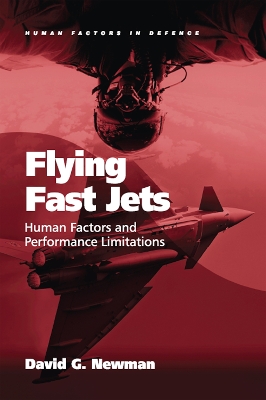
This book provides a detailed general overview of the human factors and performance limitations associated with flying fast jets, integrating all the latest available research literature on the demanding operational tasks faced by such pilots and aircrews. As such, it has a strong military focus, dealing with pilots of fighter aircraft, attack aircraft and lead-in fighter trainer aircraft that are traditionally only single or dual pilot operations. The book deals not only with the issue of G force, but discusses ejection and escape/survival, disorientation, high altitude physiology, pilot training and selection, helmet-mounted equipment, situational awareness, data fusion and multi-sensor integration, human machine interface issues and advanced cockpit design. It examines the human performance issues associated with the technological advances made in fast jets, such as increased manoeuvrability, increased use of the pilots head as a mounting platform for sensor and weapons systems, and the complexities involved in the human-machine interface within these aircraft.

Arvustused

The big plus of the book is that it is written for everyone, independently of their field of expertise. Newsletter of the Europe Chapter of the Human Factors and Ergonomics Society, no. 2, 2014 Flying Fast Jets will be a valuable contribution to the knowledge of aviation medicine, and it will provide much of the foundational knowledge that will be useful in the clinical practice of aviation medicine as it relates to fast-jet aircrew. Journal of the Australasian Society of Aerospace Medicine, no. 9, November 2014 David Newman is deservedly well known in aeromedical circles, and this book will enhance his stature ... sufficient basic explanation for the novice, and detailed aeromedical psycho-physiology for an aeromedical specialist ... This book is the most useful small volume in years, concisely presenting the stresses of the most demanding aviation environment. It will be of great interest to novice and expert alike, and David is to be congratulated for his worthy effort. Aerospace Medicine and Human Performance, Vol. 86, No. 2, February 2015 As well as giving the general reader an insight into the world of high performance military aircraft, this book will be a useful handbook for those more actively involved in whatever capacity on a fast jet squadron. Aerospace, June 2015

List of Figures
ix
Abbreviations xi
Foreword xv
Preface xvii
Acknowledgements xix
1 The Fast Jet Environment
1(16)
Fighter Operations
1(11)
Definition of a Fighter Aircraft
1(1)
Fighter Aircraft Generations
2(1)
Weapons Systems
3(1)
Guidance system
4(2)
Warhead
6(1)
Propulsion system
6(1)
Fighter Tactics
6(5)
Fighter Missions
11(1)
Fighter sweep
11(1)
Point defence
11(1)
Strike escort
12(1)
Intercepts
12(1)
Attack Aircraft Operations
12(4)
Definition of an Attack Aircraft
12(1)
Weapons Systems
13(1)
Attack Missions
14(1)
Attack Aircraft Tactics
15(1)
Super-Agile Flight
16(1)
2 Altitude
17(16)
Atmospheric Physics
17(1)
Low Pressure
18(2)
Hypoxia
20(5)
Incidence
21(1)
Signs and Symptoms
22(2)
Tolerance to Hypoxia
24(1)
Time of Useful Consciousness
25(1)
Training
25(1)
Cockpit Pressurisation
25(3)
The Fast Jet Pressurisation System
26(1)
Cockpit Pressurisation Failure
27(1)
The Oxygen System
28(2)
Other Altitude Problems
30(1)
Decompression Illness
30(1)
Ebullism
31(1)
Case Study
31(2)
3 Acceleration
33(16)
The Physics of G
33(3)
Magnitude of G
34(1)
Direction of G
34(2)
Physiological Effects of G
36(5)
Visual Effects of
37(1)
A-LOC
38(1)
G-LOC
38(2)
Prevalence of G-LOC
40(1)
Clinical G Problems
41(2)
Induced Neck Injuries
41(1)
Respiratory Effects
41(1)
Miscellaneous G Effects
42(1)
G Tolerance
43(1)
G Protection Measures
44(3)
G-Suits
44(1)
Anti-G Straining Manoeuvre
45(1)
Positive Pressure Breathing
46(1)
Centrifuge Training
47(1)
A Glimpse into the High G Future
47(1)
Case Study
48(1)
4 Spatial Disorientation
49(16)
Definitions
49(1)
Type I (Unrecognised)
49(1)
Type II (Recognised)
50(1)
Type III (Incapacitating)
50(1)
Prevalence of Spatial Disorientation
50(1)
Underlying Mechanisms
51(3)
Illusions by Phase of Flight
54(5)
Take-off
54(1)
In-flight Phase
55(3)
Landing
58(1)
Risk Factors
59(2)
Pilot Factors
59(1)
Aircraft Factors
60(1)
Operational Factors
61(1)
Countermeasures
61(2)
Training
61(1)
Technology
62(1)
Case Study
63(2)
5 Life Support Equipment
65(16)
The Flight Suit
65(1)
The Flight Helmet
66(5)
Impact Protection
68(1)
Helmet-Mounted Sighting and Display Systems
69(1)
Advanced Helmet Design Options
70(1)
The Oxygen Mask
71(1)
The G-Suit
72(1)
Chest Counterpressure Garment
73(1)
The Survival Vest
74(1)
The Immersion Suit
74(1)
The Liquid Cooling Garment
75(1)
The CBRN Ensemble
76(1)
Anthropometry
77(1)
Aircrew Equipment Integration
78(3)
6 Situational Awareness
81(16)
Defining Situational Awareness
81(2)
The Fast Jet Cockpit
83(3)
Sensor Systems
86(3)
Aircraft Performance Sensors
86(1)
Tactical Situation Sensors
86(1)
Radar
87(1)
Infra-red search and track
88(1)
Targeting FLIR
88(1)
Threat detection
89(1)
Displays
89(6)
Head-Up Displays
89(2)
Helmet-Mounted Display and Sighting Systems
91(1)
Joint Helmet-Mounted Cueing System (JHMCS)
92(1)
Night Vision Goggles
92(2)
Challenges and Limitations
94(1)
Sensor Fusion
95(2)
7 Escape
97(18)
History of Escape from Aircraft
97(2)
The Modern Ejection Seat
99(2)
Anatomy
99(1)
Performance Specifications
100(1)
Typical Ejection Sequence
101(2)
Ejection Posture
103(1)
Survival Outcomes
103(3)
Ejection Injuries
106(4)
The Catapult Phase
106(2)
The Aircraft Separation Phase
108(1)
The In-Seat Flight Phase
109(1)
The Parachute Descent Phase
109(1)
The Landing Phase
109(1)
Post-Ejection Considerations
110(1)
Next-Generation Seats
111(1)
Case Study
112(3)
8 Selection and Training
115(16)
Selecting the Fast Jet Pilot
115(3)
Review of Selection Methodologies
116(2)
Training the Fast Jet Pilot
118(13)
Fast Jet Flight Training
118(3)
Use of Flight Simulators
121(1)
Human Factors Training
122(2)
Ejection seat training
124(1)
Spatial disorientation training
124(1)
Hypoxia training
125(2)
Centrifuge training
127(2)
NVG training
129(2)
References 131(16)
Index 147
Associate Professor David G. Newman is Head of the Aviation Medicine Unit in the School of Public Health and Preventive Medicine at Monash University in Melbourne, Australia. He is also the Head of Research in the Department of Aviation, Faculty of Science, Engineering and Technology at Swinburne University of Technology, Melbourne, Australia. His 13 years as an aviation medicine specialist in the Royal Australian Air Force, in both Australia and on exchange in the UK, include 2 years as Chief Instructor at the RAAF Institute of Aviation Medicine, where he was responsible for the training of all Australian Defence Force aircrew and medical officers. He holds a medical degree from Monash University, a Diploma in Aviation Medicine from the Royal College of Physicians of London and a PhD from the University of Newcastle. He has won several awards for his aviation medicine efforts over the years, including the 2000 Buchanon-Barbour Award from the Royal Aeronautical Society and the 2012 A. Howard Hasbrook Award from the Aerospace Medical Association.