Muutke küpsiste eelistusi

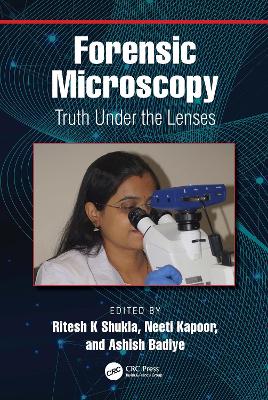
E-raamat: Forensic Microscopy: Truth Under the Lenses

Edited by (Ahmedabad University, India), Edited by (Government Institute of Forensic Science, India), Edited by (Government Institute of Forensic Science, India)
  • Formaat: PDF+DRM
  • Ilmumisaeg: 12-Jul-2022
  • Kirjastus: CRC Press
  • Keel: eng
  • ISBN-13: 9781000600148
  • Formaat - PDF+DRM
  • Hind: 109,19 €*
  • * hind on lõplik, st. muud allahindlused enam ei rakendu
  • Lisa ostukorvi
  • Lisa soovinimekirja
  • See e-raamat on mõeldud ainult isiklikuks kasutamiseks. E-raamatuid ei saa tagastada.
  • Formaat: PDF+DRM
  • Ilmumisaeg: 12-Jul-2022
  • Kirjastus: CRC Press
  • Keel: eng
  • ISBN-13: 9781000600148

DRM piirangud

  • Kopeerimine (copy/paste):

    ei ole lubatud

  • Printimine:

    ei ole lubatud

  • Kasutamine:

    Digitaalõiguste kaitse (DRM)
    Kirjastus on väljastanud selle e-raamatu krüpteeritud kujul, mis tähendab, et selle lugemiseks peate installeerima spetsiaalse tarkvara. Samuti peate looma endale  Adobe ID Rohkem infot siin. E-raamatut saab lugeda 1 kasutaja ning alla laadida kuni 6'de seadmesse (kõik autoriseeritud sama Adobe ID-ga).

    Vajalik tarkvara
    Mobiilsetes seadmetes (telefon või tahvelarvuti) lugemiseks peate installeerima selle tasuta rakenduse: PocketBook Reader (iOS / Android)

    PC või Mac seadmes lugemiseks peate installima Adobe Digital Editionsi (Seeon tasuta rakendus spetsiaalselt e-raamatute lugemiseks. Seda ei tohi segamini ajada Adober Reader'iga, mis tõenäoliselt on juba teie arvutisse installeeritud )

    Seda e-raamatut ei saa lugeda Amazon Kindle's. 

Forensic Microscopy: Truth Under the Lenses provides an overview and understanding of the various types of microscopes and their techniques employed in forensic science. The book emphasizes both the theoretical and practical aspects of microscopy to enrich the readers understanding of the various tools, techniques, and utilityincluding strengths and weaknessesof types of microscopes in analyzing certain forms of evidence.

The book begins with the history of microscopes, the basic optics for microscopy, then moves to advanced microscopies such as electron microscopes and atomic force microscopes. In addition to the various types of microscopes and how to use and best utilize them, the book looks at the analysis of specific types of evidence, including hair, fiber, fingerprint, body fluids, tool marks, ink, pollen grains, spores, diatoms, bullets, cartridges, among other evidence types. Since forensic science is an applied, hands-on discipline, the book includes both a theoretical and a practical approach to the topic.

Key Features:


Addresses simple to advanced microscopy techniques for the effective analyses of trace evidence Pairs chapters on a particular type of microscopy, explaining it thoroughly, before delving into specific usage for forensic applications Presents theories and as well as real-world application of concepts Provides abundant micro-photographs, including graphical representations and flow charts, to illustrate concepts clearly

Forensic Microscopy serves as a helpful reference for undergraduate and postgraduate students in forensic science, forensic biology, forensic chemistry and related programs. It is also recommended for research students, academicians, technicians, industry and laboratory professionals working on trace evidence analysis.
1: Introduction to Microscopy 2: Optical Components of a Light
Microscope 3: Introduction to Simple (Handheld) Microscopes 4: Forensic
Applications of Simple (Handheld) Microscopes 5: Introduction to Compound
Microscope 6: Forensic Applications of Compound Microscope 7: Introduction to
Comparison Microscope 8: Forensic Applications of Comparison Microscope 9:
Introduction to Fluorescence Microscope 10: Forensic Applications of
Fluorescence Microscope 11: Introduction to Stereo Microscope 12: Forensic
Applications of Stereo Microscope 13: Introduction to Polarized Light
Microscope 14: Forensic Applications of Polarized Microscope 15: Introduction
to Dark-field Microscope 16: Forensic Applications of Darkfield Microscope
17: Introduction to Phase-Contrast Microscope 18: Forensic Applications of
Phase-Contrast Microscope 19: Introduction to Electron Microscope 20:
Forensic Applications of Electron Microscope 21: Introduction to Atomic Force
Microscope: Basc Concepts and Applications 22: Forensic Applications of
Atomic Force Microscope 23: Forensic Histopathology
Dr. Ritesh K Shukla holds a PhD and Masters degree in Forensic Science and is presently working as an Assistant Professor in the Biological and Life Sciences, School of Arts and Sciences of Ahmedabad University. He has authored more than 50 research articles and book chapters in peer-reviewed journals and edited two books. He serves as a reviewer of various international peer-reviewed journals. He is the recipient of the Early Career Research Award from DST-SERB, Government of India; Chairmans awards for Excellence in Teaching and Experiment to Advance Active Learning (Innovation in Teaching) Ahmedabad University.

Dr. Neeti Kapoor holds a PhD, Masters and Bachelors degree in Forensic Science and is presently serving as an Assistant Professor at the Government Institute of Forensic Science, Nagpur. She has above 50 international research and review papers and chapters to her credit. She serves as a reviewer for many esteemed international publishers. She has delivered over 150 invited talks, guest lectures, and practical demonstrations on various aspects of forensic science to police officers and academic institutions. She is the recipient of Special Recognition Awards for her contribution to Scientific Aid to Investigation and the Best Young Woman Faculty Award.

Dr. Ashish Badiye holds a PhD, Masters and Bachelors degree in Forensic Science and is presently serving as the Head and Assistant Professor, Department of Forensic Science, Government Institute of Forensic Science, Nagpur. He has over 50 international research and review articles and chapters to his credit. He serves as a reviewer for several revered international journals. He has delivered over 250 invited talks, workshops, demonstrations to police officers and various academic institutions across India. He is the recipient of the Young Scientist Award, Best Young Faculty Award and Special Recognition Awards for Scientific Aid to Investigation.