Muutke küpsiste eelistusi

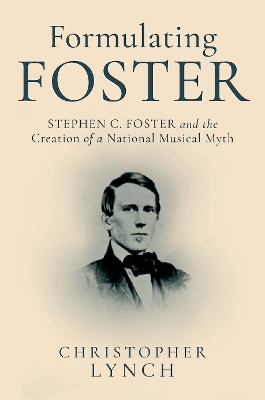
E-raamat: Formulating Foster: Stephen C. Foster and the Creation of a National Musical Myth

(Head of the Theodore M. Finney Music Library, University of Pittsburgh Library System)
  • Formaat: PDF+DRM
  • Ilmumisaeg: 29-Jul-2025
  • Kirjastus: Oxford University Press Inc
  • Keel: eng
  • ISBN-13: 9780197811719
  • Formaat - PDF+DRM
  • Hind: 34,11 €*
  • * hind on lõplik, st. muud allahindlused enam ei rakendu
  • Lisa ostukorvi
  • Lisa soovinimekirja
  • See e-raamat on mõeldud ainult isiklikuks kasutamiseks. E-raamatuid ei saa tagastada.
  • Formaat: PDF+DRM
  • Ilmumisaeg: 29-Jul-2025
  • Kirjastus: Oxford University Press Inc
  • Keel: eng
  • ISBN-13: 9780197811719

DRM piirangud

  • Kopeerimine (copy/paste):

    ei ole lubatud

  • Printimine:

    ei ole lubatud

  • Kasutamine:

    Digitaalõiguste kaitse (DRM)
    Kirjastus on väljastanud selle e-raamatu krüpteeritud kujul, mis tähendab, et selle lugemiseks peate installeerima spetsiaalse tarkvara. Samuti peate looma endale  Adobe ID Rohkem infot siin. E-raamatut saab lugeda 1 kasutaja ning alla laadida kuni 6'de seadmesse (kõik autoriseeritud sama Adobe ID-ga).

    Vajalik tarkvara
    Mobiilsetes seadmetes (telefon või tahvelarvuti) lugemiseks peate installeerima selle tasuta rakenduse: PocketBook Reader (iOS / Android)

    PC või Mac seadmes lugemiseks peate installima Adobe Digital Editionsi (Seeon tasuta rakendus spetsiaalselt e-raamatute lugemiseks. Seda ei tohi segamini ajada Adober Reader'iga, mis tõenäoliselt on juba teie arvutisse installeeritud )

    Seda e-raamatut ei saa lugeda Amazon Kindle's. 

Decades after his death, Stephen C. Foster's (1826--64) family and fans seized upon his birth on the fiftieth anniversary of the Declaration of Independence and his role in the burgeoning US music industry to mythologize him as a founding father in American cultural history. Hailing him as the father of American music and symbol of US democracy at the end of the nineteenth century required the collective forgetting of certain facts of his life, particularly his initial rise to fame through controversial minstrel songs depicting nostalgia for enslavement.

In Formulating Foster, musicologist and librarian Christopher Lynch re-examines the myth of the founding of American music, drawing upon previously unknown archival materials and oral histories to uncover the myth's origins and expose the deliberate work of the Foster family and the wealthy philanthropist Josiah K. Lilly in embedding it in American institutions. By gathering and contextualizing all the remembrances written by acquaintances of the composer, Lynch lays out a roughly ninety-year process following Foster's death that gradually engrained the myth in American popular consciousness. Stripping away the myth's artificiality, Formulating Foster presents a richer, more humanizing portrait of the composer, illuminating important aspects of his life and character and proposing new ways to understand his music.

Formulating Foster humanizes the composer Stephen C. Foster (1826--64), long regarded as a founding father in American cultural history, pulling him down from the pedestal on which he has been placed to thoughtfully examine what we actually know about him versus what has been said. To that end, Christopher Lynch investigates the origins of myths portraying him as the father of American music and a symbol of American democracy, exposing them to have been deliberately designed to conceal troubling aspects of his life and music.
Introductory Essay: Remembering the Life and Works of Stephen C. Foster
Part I. Competing Narratives after Foster's Death 1: An Obituary of Stephen
C. Foster (1864) 2: Two Letters by Henry Baldwin Foster (1864) 3:
Reminiscences of George W. Birdseye (1867) 4: Reminiscences of Robert P.
Nevin (1867) 5: Reminiscences of John Mahon (1877) 6: An Interview with an
Anonymous Pittsburgh Acquaintance (1879) 7: An Interview with Rebecca Shiras
Morris and Joan Sloan Shiras (1879) 8: An Interview with Samuel S. Sanford
(1882) 9: An "Anonymous" Interview with Morrison Foster and George C. Cooper
(ca. 1888) 10: An Interview with an Anonymous "Acquaintance" (1889) Part II.
Memorializing Foster at the Turn of the Twentieth Century 11: Reminiscences
of Kit Clarke (1893) 12: An Interview with Jane Foster Wiley (1895) 13: An
Interview with Frank Dumont and a Pittsburgh Lady (1895) 14: Two Interviews
with Susan Pentland Robinson (1895) 15: An Interview with John H. Cassidy
(1895) 16: An Interview with J. William Pope (1895) 17: An Interview with a
"Prosperous Merchant" (1895) 18: An Interview with Jehu Haworth (1895) 19: An
Interview with Marion Foster Welch (1895) 20: Two Interviews with William
Hamilton (1895) 21: An Interview with an Art Dealer (1895) 22: An Interview
with a St. Louis Businessman (1895) 23: An Interview with a "Prominent
Pittsburgher" (1895) 24: Morrison Foster's Sketch of His Brother's Life
(1896) 25: An Interview with the "Foster Serenaders" (1900) 26: An Interview
with Rachel E. Woods (1900) 27: An Interview with the Daughter of a Friend
(1900) 28: An Interview with William P. T. Jope (1900) 29: An Interview with
Maria Beabout (1900) 30: Reminiscences of George C. Cooper (1902) 31:
Recollections from Classmates at the Athens Academy (1905/1911) Part III.
Remembering Foster after the NAACP's 1914 Protests 32: Reminiscences of
Susan McFarland Parkhurst (1916) 33: A "Letter" by W. W. Kingsbury
(1905/1916) 34: An Interview with B. D. M. Eaton (ca. 1916) 35: Harry
Houdini's Take on Kit Clarke's Memories of Foster (1916) 36: Reminiscences of
John W. Robinson (1920) 37: More Reminiscences from George C. Cooper (1920)
38: An Interview with Marion Foster Welch (1924) 39: An Interview with Marion
Foster Welch (1929) 40: Family Memories Relayed by the Grandson of Thomas
"Daddy" Rice (1931) 41: An Interview with Katherine Schoenberger Mygatt and
Martha Stough (1934) 42: Jessie Welsh Rose Relays Her Grandmother's Memories
(1926/1934) Conclusion: After Archival Amnesty: Toward a New View of Stephen
C. Foster Appendices
Christopher Lynch, PhD, is a musicologist and Head of the Theodore M. Finney Music Library in the University of Pittsburgh Library System, where he helps curate the Stephen Foster Memorial museum and archive. His research examines minstrelsy, popular song, and music theater as sites for contesting American ideals. He is co-editor of Listening Across Borders: Musicology in the Global Classroom and his work has been published in numerous journals.