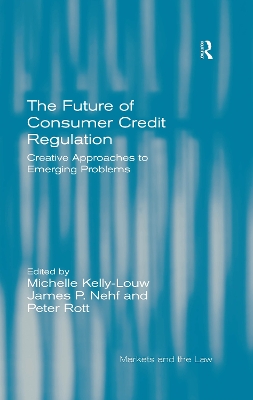
Effective regulation of consumer credit in modern society is an ever-changing challenge. As new forms of credit emerge in free societies, regulation often lags behind. This volume explores contemporary problems related to the regulation of consumer credit in market economies with a focus on credit extended to the most vulnerable and poorest members of the community. Written by experts in the field of consumer credit regulation from Europe, North America, Australia and South Africa, the book examines some of the most important consumer credit issues facing consumers today and proposes innovative ways to protect the consumer interest in those markets.
Arvustused
'Consumer credit reforms seem to be everywhere in the contemporary world. This book is brimming with comparative ideas on reform and international reflections on the increasing financialization of our daily lives.' Iain Ramsay, University of Kent, UK 'The Future of Consumer Credit Regulation is extremely well-written meaning that complex topics are explained logically. Each essay is superbly researched meaning it can form an excellent starting point for further research...[ this book] is an indispensable text for anyone studying or practising in this challenging and interesting area of law.' The Student Law Journal
Contents: Preface; Introduction; Part I Emerging Paradigms: Financial
literacy and the creation of financial citizens, Gail Pearson; Broad
standards as a vehicle for consumer rights: the case of financial products in
the United Kingdom, Iain MacNeil; From status to contract: evolving paradigms
for regulating consumer credit, Rashmi Dyal-Chand; The EU financial services
policy and its effect on consumer law, Manfred Westphal. Part II Responsible
Lending: Responsible lending or restrictive lending practices? Balancing
concerns regarding over-indebtedness with addressing financial exclusion,
Therese Wilson; Payday loans: unintended consequences of American efforts to
tame the beast, Mary Spector; Credit alternatives and micro-lending in
American immigrant communities, James P. Nehf. Part III Debt Relief and
Insolvency: Better consumer protection under the statutory 'in duplum' rule,
Michelle Kelly-Louw; A struggling social safety net: global lessons from
bankruptcy and healthcare reforms in the United States, France and England,
Robert J. Landry III and Amy K. Yarborough; The reform of administration
orders within a new consumer credit framework, André Boraine; Defining the
unincorporated business in financial distress: should it be treated as a
business or a consumer?, Anneli Loubser; Index.
Michelle Kelly-Louw is Associate Professor in the Department of Mercantile Law, UNISA, South Africa. James P. Nehf is Professor of Law and Cleon H. Foust Fellow, Indiana University School of Law. Peter Rott is Professor of Law, UniversitƤt Bremen.

 Lisainfo e-raamatute kohta