Muutke küpsiste eelistusi

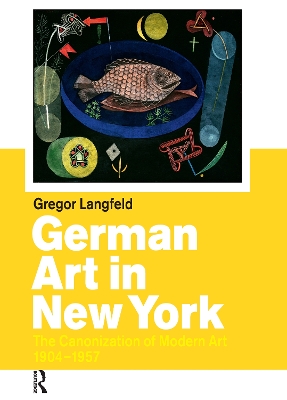
E-raamat: German Art in New York: The Canonization of Modern Art 1904-1957

  • Formaat: EPUB+DRM
  • Ilmumisaeg: 01-Oct-2025
  • Kirjastus: Pallas Publications
  • Keel: eng
  • ISBN-13: 9781040789001
  • Formaat - EPUB+DRM
  • Hind: 89,69 €*
  • * hind on lõplik, st. muud allahindlused enam ei rakendu
  • Lisa ostukorvi
  • Lisa soovinimekirja
  • See e-raamat on mõeldud ainult isiklikuks kasutamiseks. E-raamatuid ei saa tagastada.
  • Raamatukogudele
  • Formaat: EPUB+DRM
  • Ilmumisaeg: 01-Oct-2025
  • Kirjastus: Pallas Publications
  • Keel: eng
  • ISBN-13: 9781040789001

DRM piirangud

  • Kopeerimine (copy/paste):

    ei ole lubatud

  • Printimine:

    ei ole lubatud

  • Kasutamine:

    Digitaalõiguste kaitse (DRM)
    Kirjastus on väljastanud selle e-raamatu krüpteeritud kujul, mis tähendab, et selle lugemiseks peate installeerima spetsiaalse tarkvara. Samuti peate looma endale  Adobe ID Rohkem infot siin. E-raamatut saab lugeda 1 kasutaja ning alla laadida kuni 6'de seadmesse (kõik autoriseeritud sama Adobe ID-ga).

    Vajalik tarkvara
    Mobiilsetes seadmetes (telefon või tahvelarvuti) lugemiseks peate installeerima selle tasuta rakenduse: PocketBook Reader (iOS / Android)

    PC või Mac seadmes lugemiseks peate installima Adobe Digital Editionsi (Seeon tasuta rakendus spetsiaalselt e-raamatute lugemiseks. Seda ei tohi segamini ajada Adober Reader'iga, mis tõenäoliselt on juba teie arvutisse installeeritud )

    Seda e-raamatut ei saa lugeda Amazon Kindle's. 

Why did the Museum of Modern Art and the Guggenheim in New York, as well as art collectors and curators such as Katherine Dreier and Alfred Barr, collect German art in the first half of the twentieth century? And why did certain works of art belong to the canon while others did not?

In this book, Gregor Langfeld argues that National Socialism played a crucial role in the canonization of German art between 1904 and 1957. He shows that art promoters depicted artists condemned by the Nazis as standing against fascism while proclaiming art linked with them ?unworthy of the canon.” As a result, the post-1945 reputations of many artists associated with Neue Sachlichkeit, the New Objectivity movement, suffered. Ultimately, Langfeld offers important insights into the political and ideological motivations behind the New York art world’s fluctuations in opinion, fashion, and price.


Why did the Museum of Modern Art and the Guggenheim in New York, as well as art collectors and curators such as Katherine Dreier, Hilla Rebay, William Valentiner, and Alfred Barr collect German art in the first half of the twentieth century? And why did certain works of art and movements belong to the canon while others did not? Gregor Langfeld examines how modern German art was received, collected, and assessed. In the process he questions the political and ideological motivations. The National Socialist period gave crucial impetus to American collecting of German art. Promoters of art stylized the artists who had been condemned by the National Socialists as the opposite pole of fascism. The political attitudes of artists close to National Socialism were systematically obscured, downplayed, or reinterpreted in order to justify their art in this way. Conversely, the promoters of such art tabooed art associated with National Socialism that was thus considered "unworthy of the canon." As a result, after 1945 the reputation of many artists associated with Neue Sachlichkeit (New Objectivity) and sculpture who had previously been more highly esteemed waned.

Arvustused

"Offers a useful analysis of a key aspect of modern German art heretofore unexplored in the literature. Langfeld clearly outlines the scope of his inquiry, and his approach is well organized and well documented with primary material. Recommended." -- Choice

Introduction 7(16)
Questions and Hypotheses
9(4)
Methodological Foundations
13(2)
The Current State of Research
15(8)
Harvard University
23(6)
From the First Exhibitions of German Art to the First World War
29(8)
Promoting German Art in the 1920s: The International versus the National Position
37(30)
Katherine Dreier
38(4)
Dreier's Understanding of Art
42(1)
International Exhibition of Modern Art (1926--1927)
43(17)
William R. Valentiner
58(2)
Valentiner's Understanding of Art
60(1)
Modern German Art at the Anderson Galleries (1923)
61(6)
Promoting German Art around 1930: The National Position
67(36)
The Harvard Society for Contemporary Art: Modern German Art and Bauhaus (1930--1931)
68(3)
The Museum of Modern Art and Alfred H. Barr Jr.
71(2)
Barr's Development and Understanding of Art
73(1)
The Collecting Strategies of the Museum's Founders
74(1)
Barr's Reputation
75(1)
German Painting and Sculpture (1931)
76(27)
The Influence of National Socialism on Canonization
103(48)
Reactions to National Socialist Art Policy through 1937
104(2)
Barr's Early Assessments
106(2)
Art Criticism, 1937
108(3)
The Canonization of the Bauhaus
111(1)
Bauhaus, 1919--1928 at the Museum of Modern Art (1938--1939)
111(6)
Former Members of the Bauhaus in the Educational System
117(6)
Roosevelt's Opening Speech at the Museum of Modern Art (1939)
118(3)
Hilla Rebay and Solomon R. Guggenheim: An Apolitical Perspective
121(2)
Rebay's Understanding of Art
123(1)
Acquisitions
124(1)
The Reception among Art Critics
125(14)
Acquisitions of "Exile Art" by the Museum of Modern Art (1939)
127(11)
Protests by American Artists
138(1)
Exhibitions of "Degenerate Art" outside of New York (1939--1940)
139(1)
The Traveling Exhibition of 20th Century (Banned) German Art
139(2)
Modern German Art at the Springfield Museum of Fine Arts
141(3)
Contemporary German Art at the Institute of Modern Art, Boston
144(7)
The Affirmation of the Canon
151(41)
The Museum of Modern Art during the Second World War
152(11)
Free German Art (1942)
163(5)
The Postwar Era
167(1)
German Art of the Twentieth Century at the Museum of Modern Art (1957)
168(15)
The Collecting Strategies of the Busch-Reisinger Museum
183(1)
The Canonization of Other Art Forms
184(4)
Looking Ahead
188(4)
Conclusions 192(6)
Notes 198(16)
Bibliography 214(9)
Acknowledgments 223(1)
Index of Names 224(4)
List of Illustrations 228
Gregor Langfeld is Assistant Professor History of Modern Art at the University of Amsterdam