Muutke küpsiste eelistusi

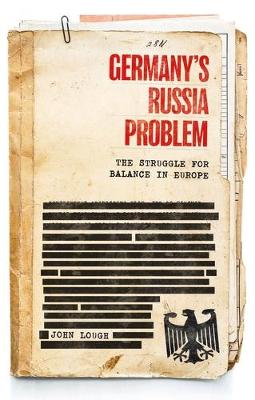
E-raamat: Germany's Russia problem: The struggle for balance in Europe

  • Formaat: EPUB+DRM
  • Sari: Russian Strategy and Power
  • Ilmumisaeg: 29-Jun-2021
  • Kirjastus: Manchester University Press
  • Keel: eng
  • ISBN-13: 9781526151490
Teised raamatud teemal:
  • Formaat - EPUB+DRM
  • Hind: 15,20 €*
  • * hind on lõplik, st. muud allahindlused enam ei rakendu
  • Lisa ostukorvi
  • Lisa soovinimekirja
  • See e-raamat on mõeldud ainult isiklikuks kasutamiseks. E-raamatuid ei saa tagastada.
  • Formaat: EPUB+DRM
  • Sari: Russian Strategy and Power
  • Ilmumisaeg: 29-Jun-2021
  • Kirjastus: Manchester University Press
  • Keel: eng
  • ISBN-13: 9781526151490
Teised raamatud teemal:

DRM piirangud

  • Kopeerimine (copy/paste):

    ei ole lubatud

  • Printimine:

    ei ole lubatud

  • Kasutamine:

    Digitaalõiguste kaitse (DRM)
    Kirjastus on väljastanud selle e-raamatu krüpteeritud kujul, mis tähendab, et selle lugemiseks peate installeerima spetsiaalse tarkvara. Samuti peate looma endale  Adobe ID Rohkem infot siin. E-raamatut saab lugeda 1 kasutaja ning alla laadida kuni 6'de seadmesse (kõik autoriseeritud sama Adobe ID-ga).

    Vajalik tarkvara
    Mobiilsetes seadmetes (telefon või tahvelarvuti) lugemiseks peate installeerima selle tasuta rakenduse: PocketBook Reader (iOS / Android)

    PC või Mac seadmes lugemiseks peate installima Adobe Digital Editionsi (Seeon tasuta rakendus spetsiaalselt e-raamatute lugemiseks. Seda ei tohi segamini ajada Adober Reader'iga, mis tõenäoliselt on juba teie arvutisse installeeritud )

    Seda e-raamatut ei saa lugeda Amazon Kindle's. 

The relationship between Germany and Russia is Europe’s most important link with the largest country on the continent. But despite Germany’s unparalleled knowledge and historical experience, its policymakers struggle to accept that Moscow’s efforts to rebalance Europe at the cost of the cohesion of the EU and NATO are an attack on Germany’s core interests. This book explains the scale of the challenge facing Germany in managing relations with a changing Russia. It analyses how successive German governments from 1991 to 2014 misread Russian intentions, until Angela Merkel sharply recalibrated German and EU policy towards Moscow. The book also examines what lies behind efforts to revise Merkel’s bold policy shift, including attitudes inherited from the GDR and the role of Russian influence channels in Germany.

The relationship between Germany and Russia is Europe’s most important link with the largest country on the continent. This book analyses how successive German governments from 1991 to 2014 have misread Russian intentions, until Angela Merkel sharply recalibrated German and EU policy towards Moscow.

Arvustused

'I have found John Lough's Germany's Russia Problem an ideal book as we contemplate the source of energy we will draw on for heat and light in the decades ahead.' TLS

'Germanys Russia Problem astutely explores Germanys many centuries-old traumatic phobias, romantic fixations, rough disillusionments and incapacitating paralyses in its relations with Russia. It is a crisply and fairly written book vital to our understanding of the nature and progression of Germanys and, with it, Europes Russia problem.' Andriy Tyushka, LSE Review of Books

'The title of John Loughs book itself makes clear that this is not another academic sand box exercise. He wants to make things better.' Die Welt

'John Lough has written a stimulating book rich in knowledge. Frankfurter Allgemeine

'In this trenchant analysis, John Lough traces three decades of what he views as highly consistent but ineffective German policy toward Russia informed by fear, sentimentality, ambivalence, economic complementarity, residual Ostpolitik reasoning and a sense of obligation to Moscow for allowing Germany to reunify. Survival

'Suffused with nostalgia for the glory days of Ostpolitik, Germanys approach to Russia bogs down in what might more aptly be called Lost-politik. Cliches, wishful thinking and neuroses are its hallmarks. John Lough nails them all. With admirable clarity, fairness and insight, he lays bare the roots and results of Germanys failure to think strategically about Russia, and the price that everyone else pays as a result.' Edward Lucas, author of The New Cold War

Provocative and brilliantly written, this book examines the deep relationship between two mutually indispensable nations and explains how Russia triggers reflexes in Germany that distort its policy thinking and produce contradictory results. With courage, honesty and insight, John Lough navigates one of the most sensitive areas of global politics today and sees a crucial role for Germany in creating a transformative environment around Russia that can facilitate its return to Europe. Lilia Shevtsova, author of Putin's Russia

'John Loughs book is nuanced, astute and fair. That makes his account of how hope keeps triumphing over experience in Germanys Russia policy all the more devastating.' Constanze Stelzenmüller, Fritz Stern Chair, Brookings Institution

'John Loughs book has made a valuable contribution to understanding Germanys foreign policy towards Russia.' Zeitschrift für Außen- und Sicherheitspolitik -- .

Introduction
1 The weight of history
2 The development of German attitudes towards Russia
3 The miracle of reunification
4 A failure to read Russia correctly
5 2014: abandonment of illusions
6 An unfulfilled economic relationship
7 Russian influence in Germany
8 The outlook
Conclusion
Index

John Lough is an Associate Fellow of the Russia & Eurasia Programme at Chatham House (since 2009) and a regular commentator on Russian and Ukrainian affairs. He spent six years with NATO managing information programmes aimed at Central and Eastern Europe, including a posting to Moscow, where he set up NATOs Information Office in Russia and was the first Alliance official to be permanently based in the country. He runs his own consultancy business, advising clients on political and investment risk in Russia, Ukraine and other countries of the former Soviet Union. He studied German and Russian literature at Cambridge University. -- .