Muutke küpsiste eelistusi

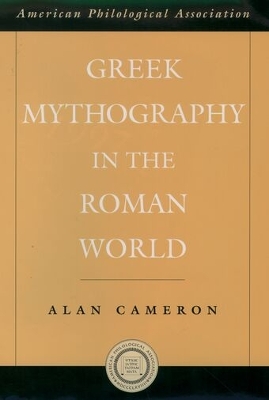
E-raamat: Greek Mythography in the Roman World

(Charles Anthon Professor of the Latin Language and Literature, Columbia University)
  • Formaat - EPUB+DRM
  • Hind: 120,11 €*
  • * hind on lõplik, st. muud allahindlused enam ei rakendu
  • Lisa ostukorvi
  • Lisa soovinimekirja
  • See e-raamat on mõeldud ainult isiklikuks kasutamiseks. E-raamatuid ei saa tagastada.

DRM piirangud

  • Kopeerimine (copy/paste):

    ei ole lubatud

  • Printimine:

    ei ole lubatud

  • Kasutamine:

    Digitaalõiguste kaitse (DRM)
    Kirjastus on väljastanud selle e-raamatu krüpteeritud kujul, mis tähendab, et selle lugemiseks peate installeerima spetsiaalse tarkvara. Samuti peate looma endale  Adobe ID Rohkem infot siin. E-raamatut saab lugeda 1 kasutaja ning alla laadida kuni 6'de seadmesse (kõik autoriseeritud sama Adobe ID-ga).

    Vajalik tarkvara
    Mobiilsetes seadmetes (telefon või tahvelarvuti) lugemiseks peate installeerima selle tasuta rakenduse: PocketBook Reader (iOS / Android)

    PC või Mac seadmes lugemiseks peate installima Adobe Digital Editionsi (Seeon tasuta rakendus spetsiaalselt e-raamatute lugemiseks. Seda ei tohi segamini ajada Adober Reader'iga, mis tõenäoliselt on juba teie arvutisse installeeritud )

    Seda e-raamatut ei saa lugeda Amazon Kindle's. 

By the Roman age the traditional stories of Greek myth had long since ceased to reflect popular culture. Mythology had become instead a central element in elite culture. If one did not know the stories one would not understand most of the allusions in the poets and orators, classics and contemporaries alike; nor would one be able to identify the scenes represented on the mosaic floors and wall paintings in your cultivated friends' houses, or on the silverware on their tables at dinner.

Mythology was no longer imbibed in the nursery; nor could it be simply picked up from the often oblique allusions in the classics. It had to be learned in school, as illustrated by the extraordinary amount of elementary mythological information in the many surviving ancient commentaries on the classics, notably Servius, who offers a mythical story for almost every person, place, and even plant Vergil mentions. Commentators used the classics as pegs on which to hang stories they thought their students should know.

A surprisingly large number of mythographic treatises survive from the early empire, and many papyrus fragments from lost works prove that they were in common use. In addition, author Alan Cameron identifies a hitherto unrecognized type of aid to the reading of Greek and Latin classical and classicizing texts--what might be called mythographic companions to learned poets such as Aratus, Callimachus, Vergil, and Ovid, complete with source references. Much of this book is devoted to an analysis of the importance evidently attached to citing classical sources for mythical stories, the clearest proof that they were now a part of learned culture. So central were these source references that the more unscrupulous faked them, sometimes on the grand scale.

Arvustused

...a valuable monograph to set beside recent editions of mythographers by Fowler and Lightfoot. * Bob Cowan, Journal of Hellenic Studies *

Abbreviations xv
An Anonymous Ancient Commentary on Ovid's Metamorphoses?
3(30)
The Greek Sources of Hyginus and Narrator
33(19)
Mythological Summaries and Companions
52(18)
Narrator and His Greek Predecessors
70(19)
Historiae and Source References
89(35)
Bogus Citations
124(40)
Myth in the Margins
164(20)
Mythographus Vergilianus
184(33)
Myth and Society
217(36)
The Roman Poets
253(51)
Conclusion
304(9)
Appendix
1. Lactantius Placidus
313(4)
Appendix
2. Three Versions of Hyginus
317(2)
Appendix
3. The Text of the Narrationes
319(2)
Appendix
4. Marginal Source Citations in Parthenius and Antoninus Liberalis
321(7)
Appendix
5. Source Citations in the Origo Gentis Romanae
328(7)
Appendix
6. Anonymus Florentinus
335(6)
Index 341


Alan Cameron is Charles Anthon Professor of the Latin Language and Literature at Columbia University.