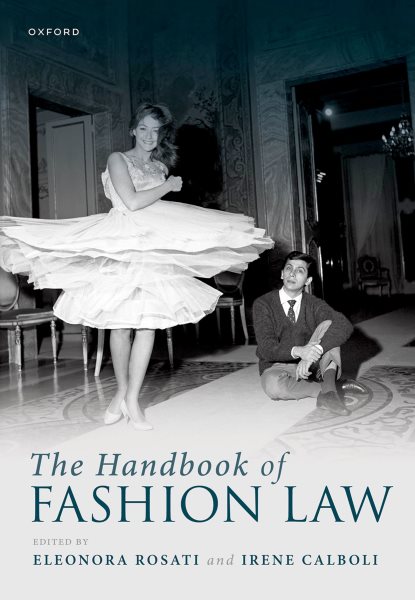
The Handbook of Fashion Law offers readers a comprehensive and multidisciplinary commentary on the legal challenges facing the fashion sector across a range of jurisdictions. Bringing together a diverse range of experts, its contributions consolidate the study, research, and practice of fashion law around the world.
Over the past few years, 'fashion law' has emerged as a vibrant field of inquiry. The legal and policy issues affecting the fashion sector have been investigated with increasing intensity, while a growing number of private practice lawyers and in-house counsel regard themselves as practising fashion law. But what is fashion law? And what are the specific legal challenges facing the fashion sector, as well as related solutions? The Handbook of Fashion Law seeks to answer these questions by bringing together multiple voices, approaches, and jurisdictions. Its contributions are organized into four thematic areas. Part I considers the legal infrastructure of the fashion and luxury industries, addressing issues related to intellectual property (IP) as well as the demands of the circular economy, protection of cultural heritage, and freedom of expression and information. Part II maps the IP dimensions of fashion by reviewing the application of design rights, copyright, trade marks, geographical indications, plant variety rights, and trade secrets. Part III analyses specific contractual issues arising in the fashion sector. It examines the application of principles and rules found in regulatory frameworks, including those governing advertising, competition, consumer, and tax laws. Finally, Part IV dissects and evaluates the role of new and emerging technologies in the fashion sector from a legal perspective. It considers concepts such as e-commerce, 3D printing, counterfeiting, artificial intelligence, non-fungible tokens (NFTs), the metaverse, gaming, and wearable technology. The Handbook of Fashion Law offers readers a multidisciplinary and multijurisdictional understanding of legal challenges facing the fashion sector. Bringing together a diverse range of experts, its contributions offer readers an in-depth, critical, and strategic understanding of the fashion industry's legal intricacies.

 Lisainfo e-raamatute kohta