Muutke küpsiste eelistusi

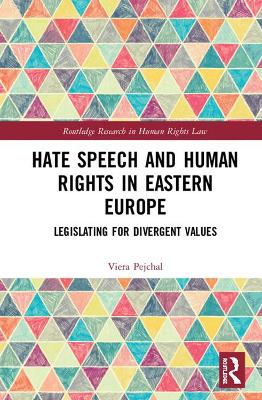
E-raamat: Hate Speech and Human Rights in Eastern Europe: Legislating for Divergent Values

  • Formaat - EPUB+DRM
  • Hind: 58,49 €*
  • * hind on lõplik, st. muud allahindlused enam ei rakendu
  • Lisa ostukorvi
  • Lisa soovinimekirja
  • See e-raamat on mõeldud ainult isiklikuks kasutamiseks. E-raamatuid ei saa tagastada.

DRM piirangud

  • Kopeerimine (copy/paste):

    ei ole lubatud

  • Printimine:

    ei ole lubatud

  • Kasutamine:

    Digitaalõiguste kaitse (DRM)
    Kirjastus on väljastanud selle e-raamatu krüpteeritud kujul, mis tähendab, et selle lugemiseks peate installeerima spetsiaalse tarkvara. Samuti peate looma endale  Adobe ID Rohkem infot siin. E-raamatut saab lugeda 1 kasutaja ning alla laadida kuni 6'de seadmesse (kõik autoriseeritud sama Adobe ID-ga).

    Vajalik tarkvara
    Mobiilsetes seadmetes (telefon või tahvelarvuti) lugemiseks peate installeerima selle tasuta rakenduse: PocketBook Reader (iOS / Android)

    PC või Mac seadmes lugemiseks peate installima Adobe Digital Editionsi (Seeon tasuta rakendus spetsiaalselt e-raamatute lugemiseks. Seda ei tohi segamini ajada Adober Reader'iga, mis tõenäoliselt on juba teie arvutisse installeeritud )

    Seda e-raamatut ei saa lugeda Amazon Kindle's. 

Hate Speech and Human Rights. Democracies need to understand these terms to properly adapt their legal frameworks. Regulation of hate speech exposes underlining and sometimes invisible societal values such as security and public order, equality and non-discrimination, human dignity, and other democratic vital interests.

The spread of hatred and hate speech has intensified in many corners of the world over the last decade and its regulation presents a conundrum for many democracies. This book presents a three-prong theory describing three different but complementary models of hate speech regulation which allows stakeholders to better address this phenomenon. It examines international and national legal frameworks and related case law as well as pertinent scholarly literature review to highlight this development.

After a period of an absence of free speech during communism, post-communist democracies have sought to build a framework for the exercise of free speech while protecting public goods such as liberty, equality and human dignity. The three-prong theory is applied to identify public goods and values underlining the regulation of hate speech in the Czech Republic and Slovakia, two countries that share a political, sociological, and legal history, as an example of the differing approaches to hate speech regulation in post-communist societies due to divergent social values, despite identical legal frameworks.

This book will be of great interest to scholars of human rights law, lawyers, judges, government, NGOs, media and anyone who would like to understand values that underpin hate speech regulations which reflect values that society cherishes the most.


This book applies a three-prong theory to identify public goods and values underlining the regulation of hate speech in the Czech Republic and Slovakia, two countries that share a political, sociological, and legal history.

Arvustused

"Hate Speech and Human Rights in Eastern Europe: Legislating for Divergent Values represents a carefully conducted research rich in detail and passionately structured as a critical study of racial hatred and hate speech in Czech and Slovak societies. It is intelligent, informative and full of legal sources discussed in political and historical contextsIt will contribute to the field of international human rights law, postcommunist constitutional and legal transformations and studies of Central and East European societies." - Jirí Pribán, Cardiff University, UK

"Pejchals approach to her topic is practical for real-world application... Her work could be a model for researchers looking to develop the issue, or aspects of the issue, further. Additionally, her structure could help NGO groups looking to build a grassroots movement fighting hate speech. What is true for the single reader is true for society. Education needs to be orderly to maintain the direction of learning." - Caroline Beshenich, Studies in East European Thought

Foreword By Jiri Priban;

Chapter I: Introduction;

Part I: Theoretical Framework;

Chapter II: Hate Speech Regulation In Democracy;

Chapter III: Historical, Political And Constitutional Context Of The Czech
And Slovak Republics;

Part II: International Responses To The Regulation Of Hate Speech;

Chapter IV: The United Nations Treaty Response To Regulation Of Hate
Speech;

Chapter V: European Responses To Hate Speech Regulation;

Chapter VI: International Soft Law And The Regulation Of Hate Speech;

Part III: The Czech And Slovak Frameworks On The Regulation Of Hate Speech;

Chapter VII: Dawn Of The Post-Communist Regulation Of Hate Speech;

Chapter VIII: Post-Communist Penal Regulation Of Hate Speech;

Chapter IX: General Conclusion;
Viera Pejchal (Ph.D) is a Human Rights Officer at the United Nations. She was an active member of the No Hate Council of Europe Youth Campaign, and has participated in many international conferences and lectured on human rights law. She has published extensively on hate speech and human rights in international academic journals and about extremism and democracy in Slovak newspapers and blogs.